Brown hair lowlights can shift a style in very different ways, from barely visible depth to ribboned contrast and cooler shadowing. These examples focus on what is actually visible in the cut, finish, and placement, so the color read stays grounded in the photo. You will see long waves, soft layered lengths, a shoulder-length lob, and a blunt bob, each showing a different way darker tones can break up lighter brown and blonde pieces without flattening the shape.
Peekaboo Blowout Curls
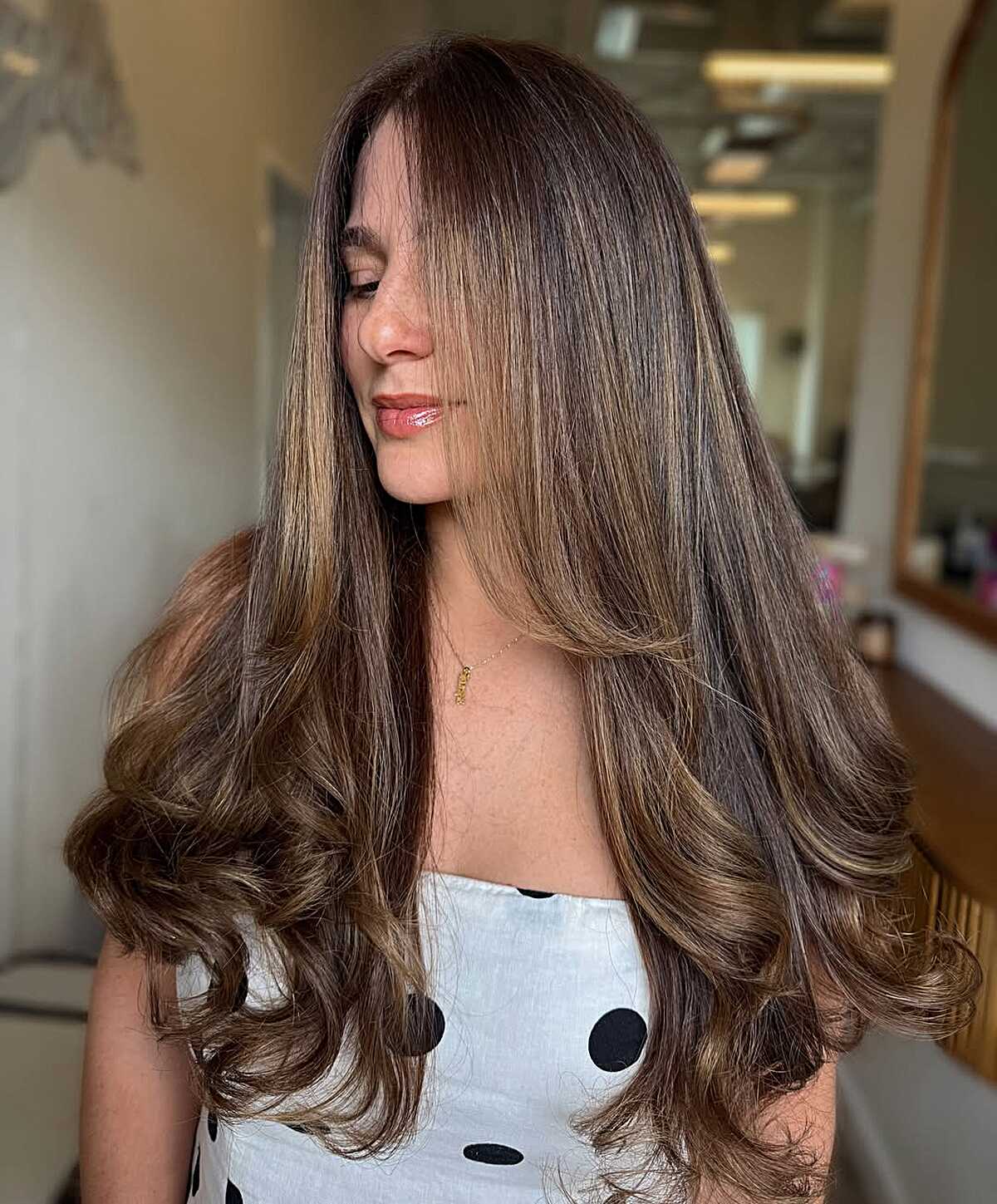
Long brunette hair is styled into large blowout curls with a sleek top and fuller movement from mid-length to ends. Warm lowlights hide beneath the surface, becoming more noticeable where the curls flip outward and where the layers separate. The result keeps the color mostly tucked inside the shape rather than placed on the outermost surface. A stylist can help decide how much hidden contrast you want to reveal in motion.
Classic Straight Bob
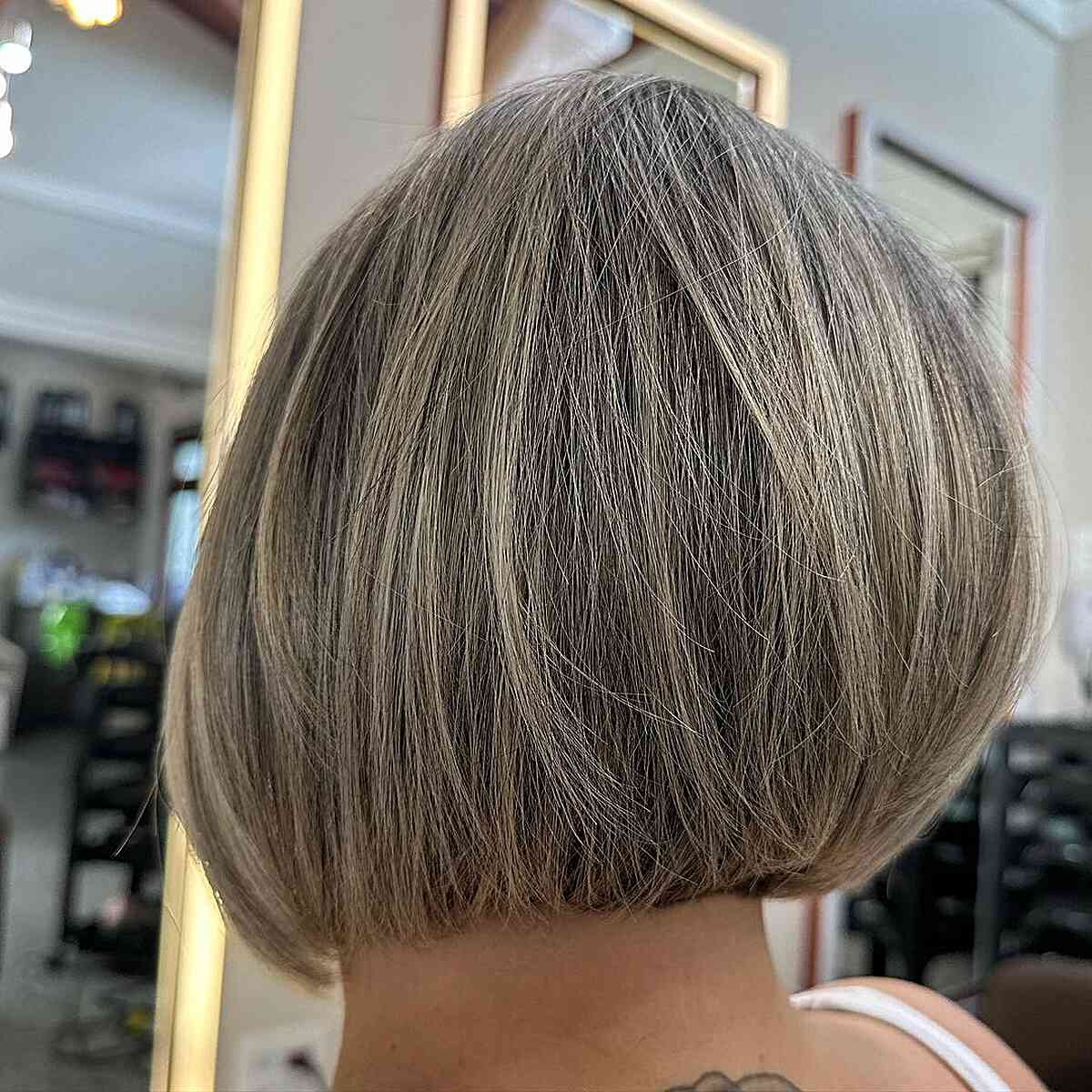
A rounded bob sits just below the jaw with a smooth, straight finish and tucked-under ends that create a compact silhouette. Fine lowlights add depth inside the neutral brown base, which keeps the shape from reading too one-note under indoor light. The haircut looks precise at the perimeter and slightly softer at the crown. Ask your stylist whether you want the lowlights concentrated through the lower half or distributed more evenly.
Toffee Textured Bob
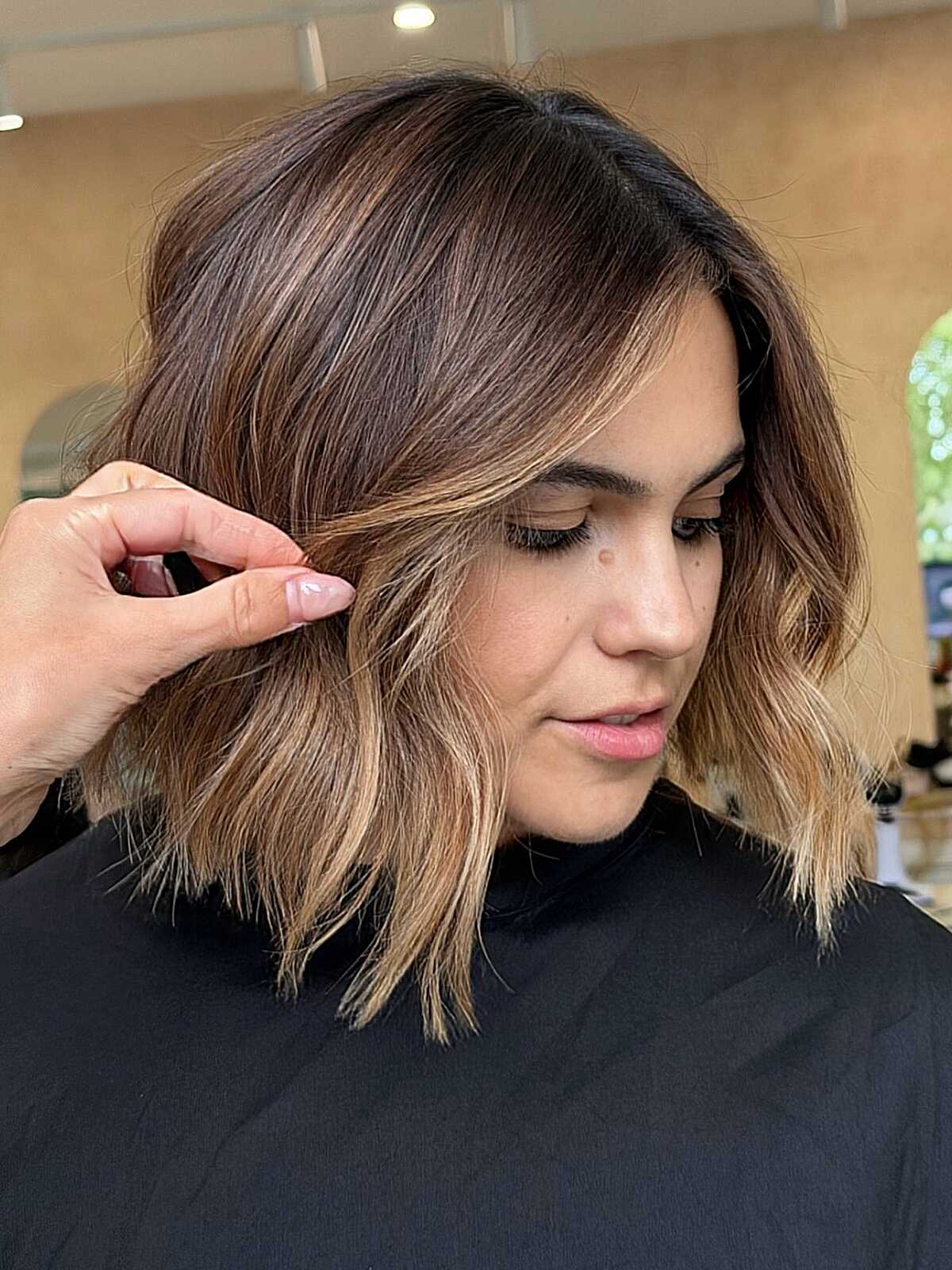
This chin-length bob has soft internal texture and slightly shattered ends that keep the outline from looking heavy. The brown base is lifted by toffee-toned lowlights and lighter face-framing pieces, creating a lived-in finish with visible separation through the waves. The shorter length exposes the color pattern clearly, so talk with your stylist about how much movement you want through the perimeter and crown.
Ash Brown S-Waves
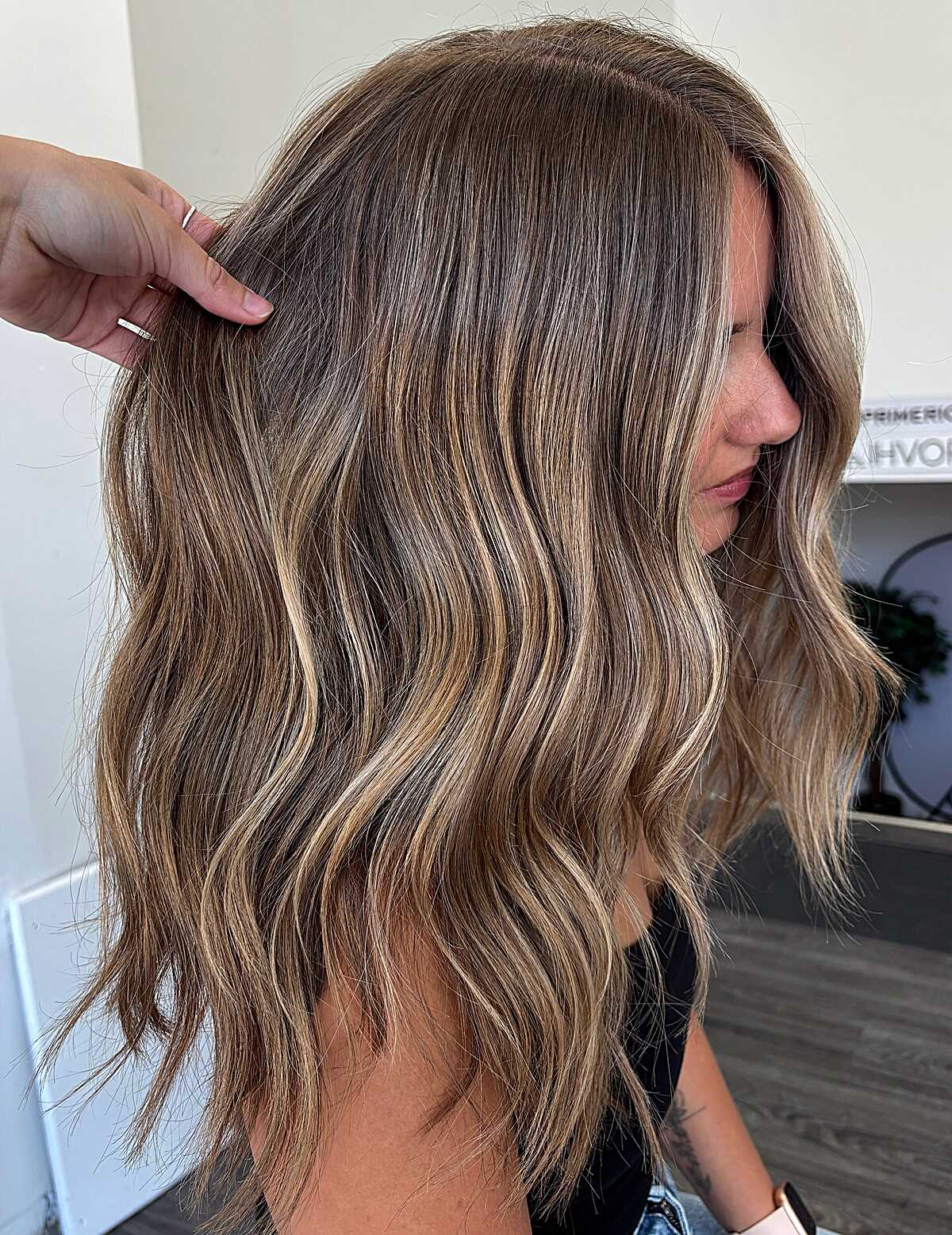
Mid-length waves show a cool ash-brown base with sandy lowlight depth threaded throughout the lengths. The texture is loose and brushed out, giving the color a soft, stripe-free look from root to ends. Lighter pieces are visible in thin vertical sections, while the darker lowlights help the waves read as fuller and more dimensional. If you want a similar effect, ask how cool or neutral the finish should lean.
Long Waved Brown Dimension
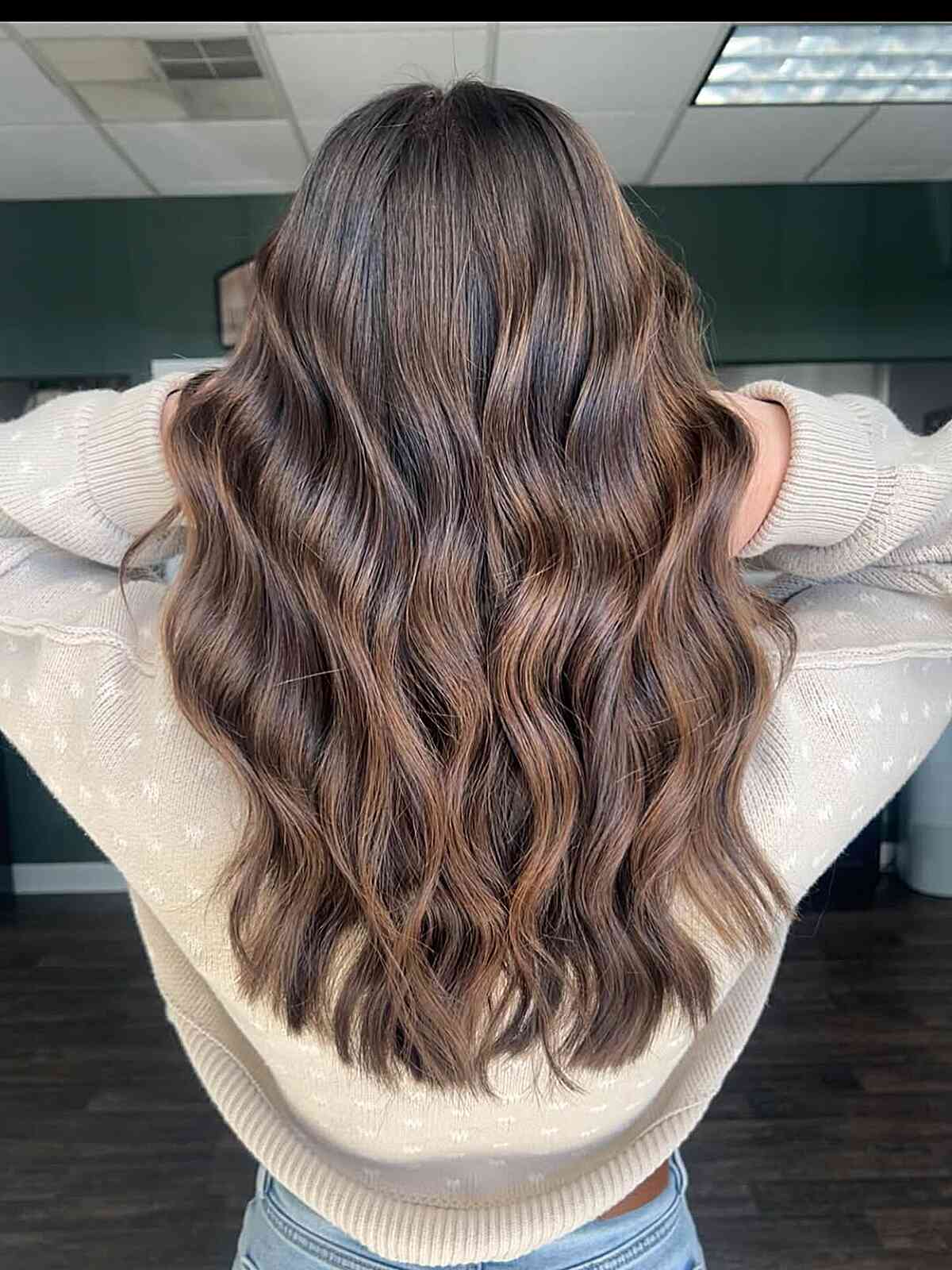
Long waves are photographed from the back, showing a dark brown base with lighter lowlight ribbons running through the surface and ends. The finish is soft and glossy, and the wave pattern creates a stacked, flowing shape that lets the color shift appear in broad bands. Since the ends are fully visible, the contrast reads clearly all the way down. Discuss whether you want that depth stronger near the top or lower through the length.
Chocolate Feathered Layers
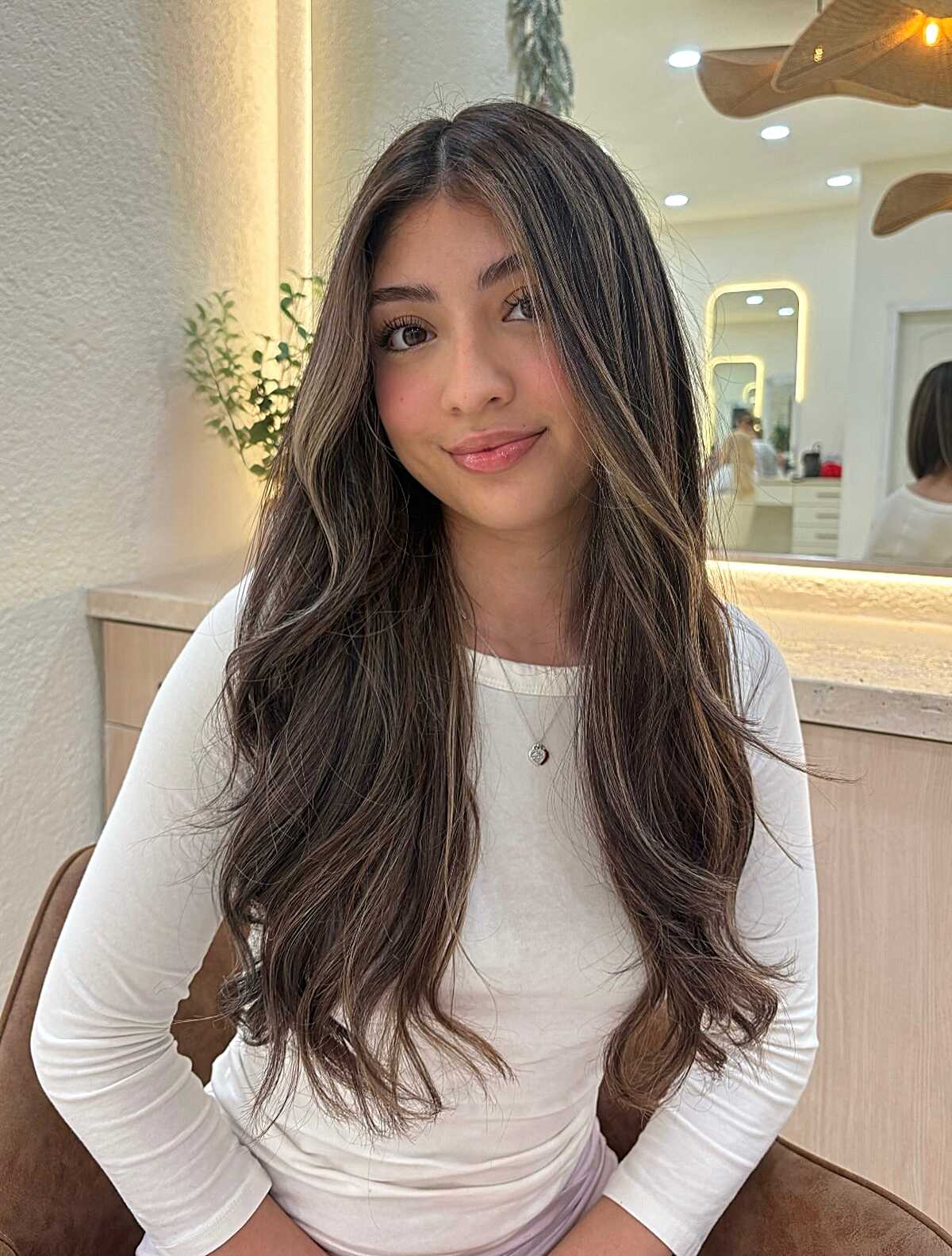
Very long chocolate-brown layers fall in soft, loose movement with subtle lowlights that blend into the darker lengths. The front pieces are slightly lighter at the edges, while the rest of the style stays deep and dimensional from crown to ends. The finish is natural and lightly tousled, with the layers creating gentle swing rather than a strong curl. Ask your stylist how much of the lowlight should stay visible after the hair moves.
Caramel Ribbon Lengths
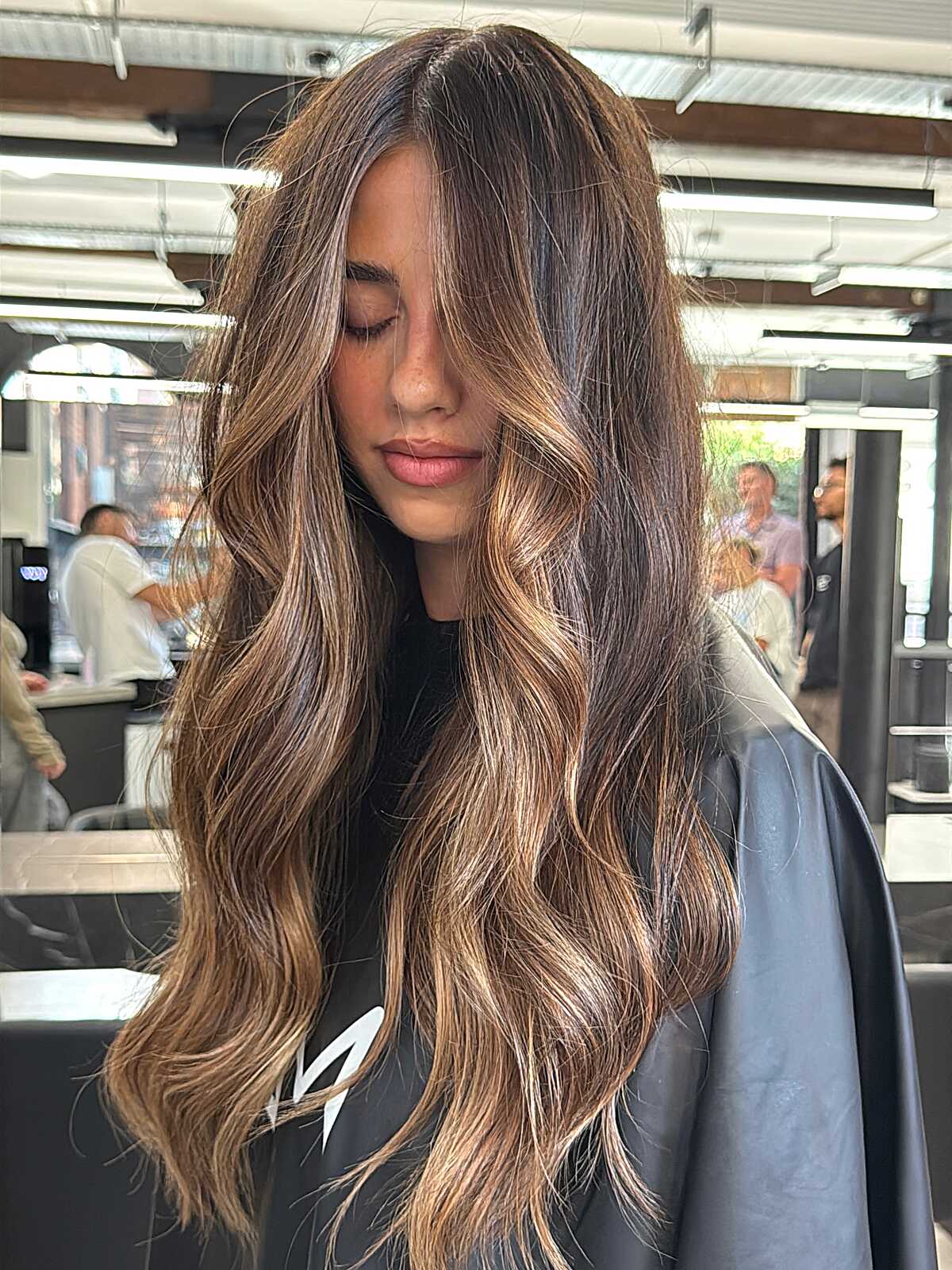
Extra-long waves carry a dark brunette base with warm caramel ribbons woven through the front and lower lengths. The texture looks loose and airy, with bendy S-shapes and subtle movement at the ends rather than tight curls. The brighter strands sit most visibly around the face and through the mid-lengths, so it is worth discussing how bold or blended those lighter pieces should read in salon lighting.
Smoky Layered Lengths
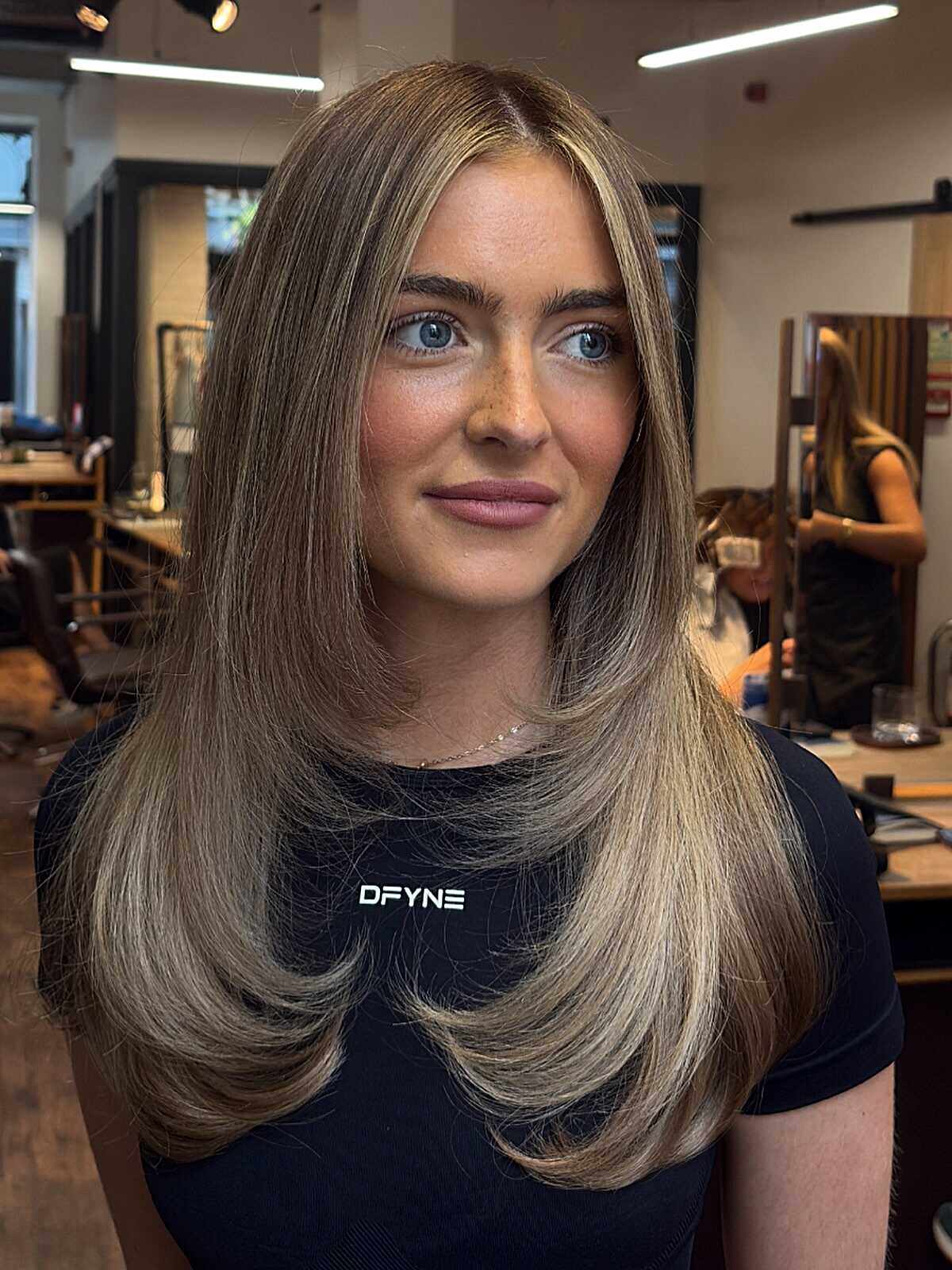
Long layered hair is worn sleek and smooth, with smoky brown lowlights and lighter blonde underlayers creating a cool-toned contrast. The straight finish shows every shift in color clearly, especially through the mid-lengths where the darker sections nest under brighter strands. The layering keeps the ends from looking blunt. Bring up whether you want the darker tone concentrated underneath or spread more evenly through the surface.
Voluminous Mushroom Waves
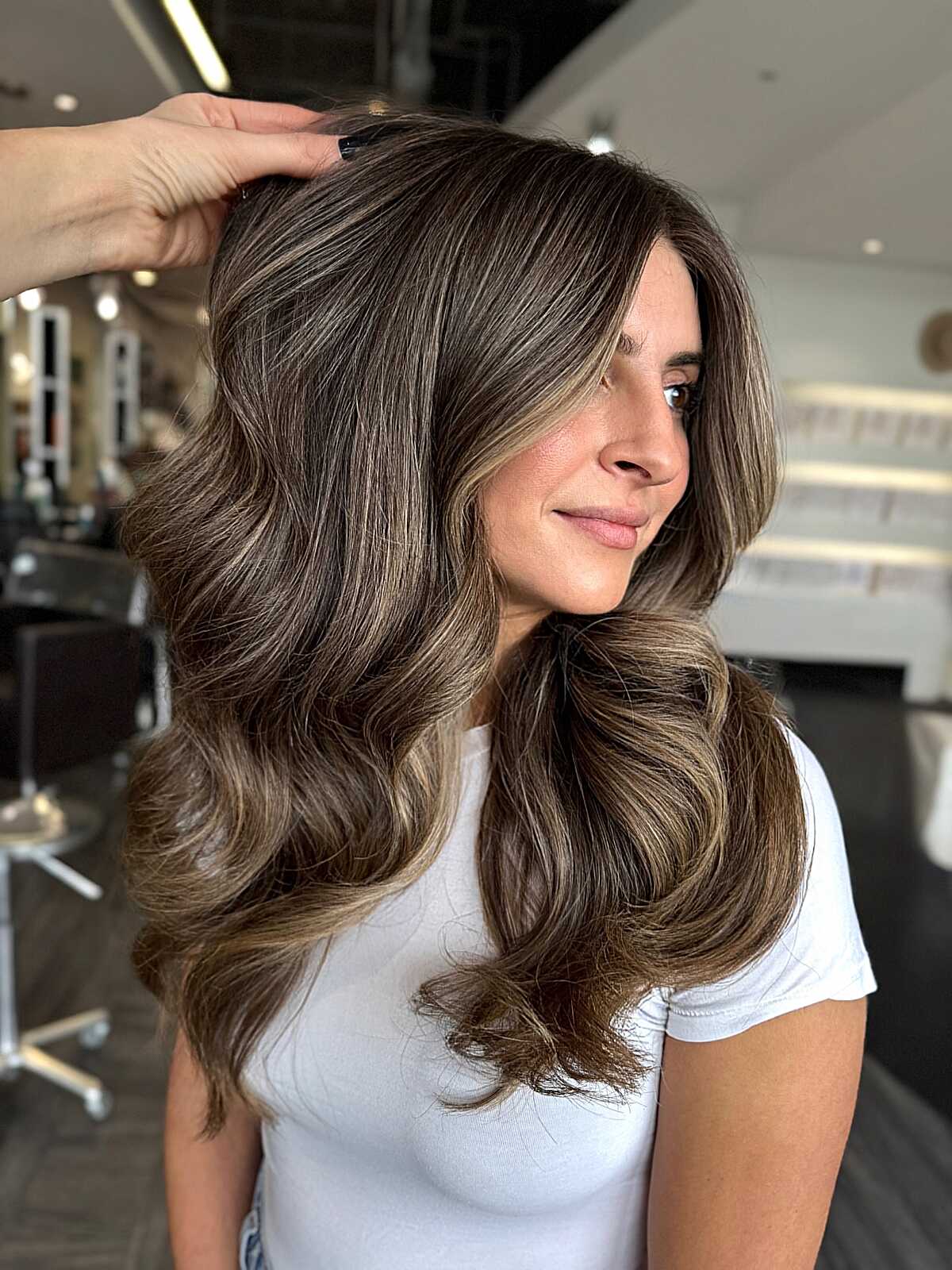
Long waves have a full, rounded shape with glossy movement and softly blended mushroom lowlights threaded through the brown base. The curl pattern is loose and broad, with the ends turning under just enough to show the color contrast at the perimeter. Darker strands are especially visible inside the waves, giving the style depth without harsh streaking. A salon conversation about placement can help keep the lowlights hidden or prominent where desired.
Root Shadow Bronde Waves
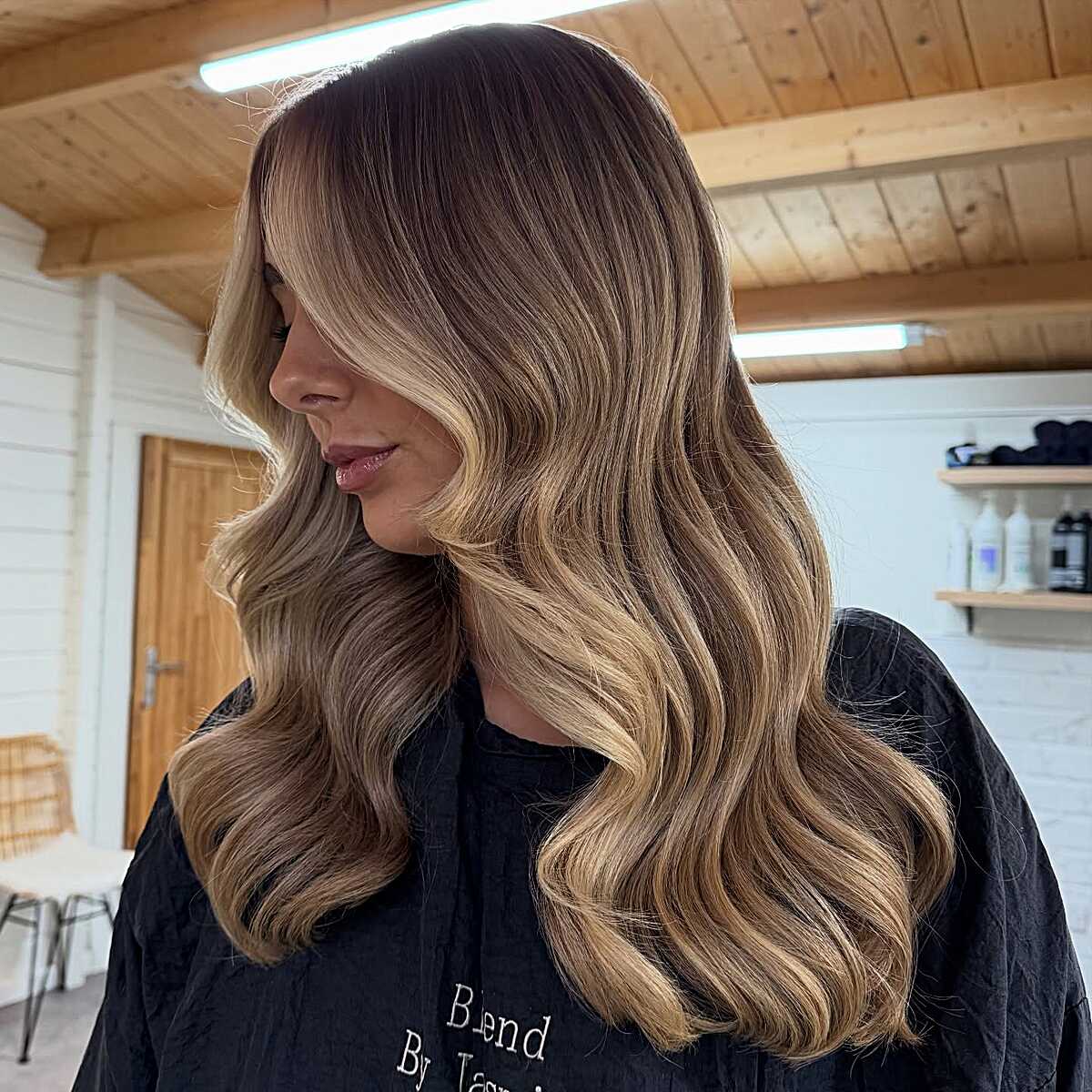
Long waves fall past the shoulders with a smooth, glossy finish and a deep brunette root that melts into beige-blonde mids and ends. The center part lets the face-framing pieces curve softly around the cheeks, while the darker top section adds visual depth against the lighter ribbons below. Ask your stylist how much contrast you want near the root versus through the length.
Bronde Curtain Waves
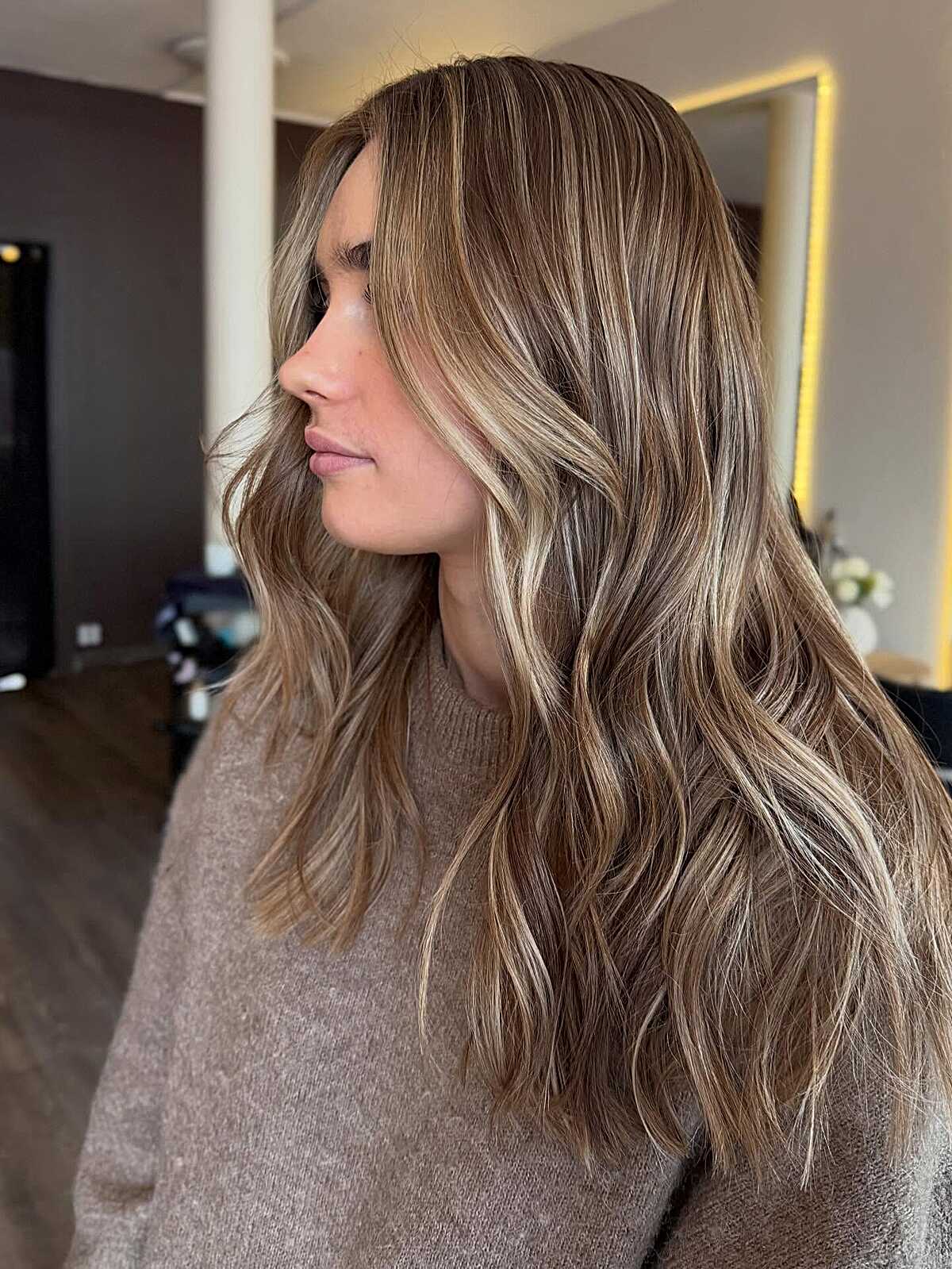
Long bronde waves feature delicate blonde and brown ribbons that alternate through the front and lower sections. The center part and soft curtain-like front pieces make the color placement easy to see, especially where the lighter strands trace the outer wave pattern. Ends stay long and slightly wispy, which keeps the look airy rather than dense. Ask your colorist where the brown ribbons should sit for the most visible separation.
Mushroom Brown Layers
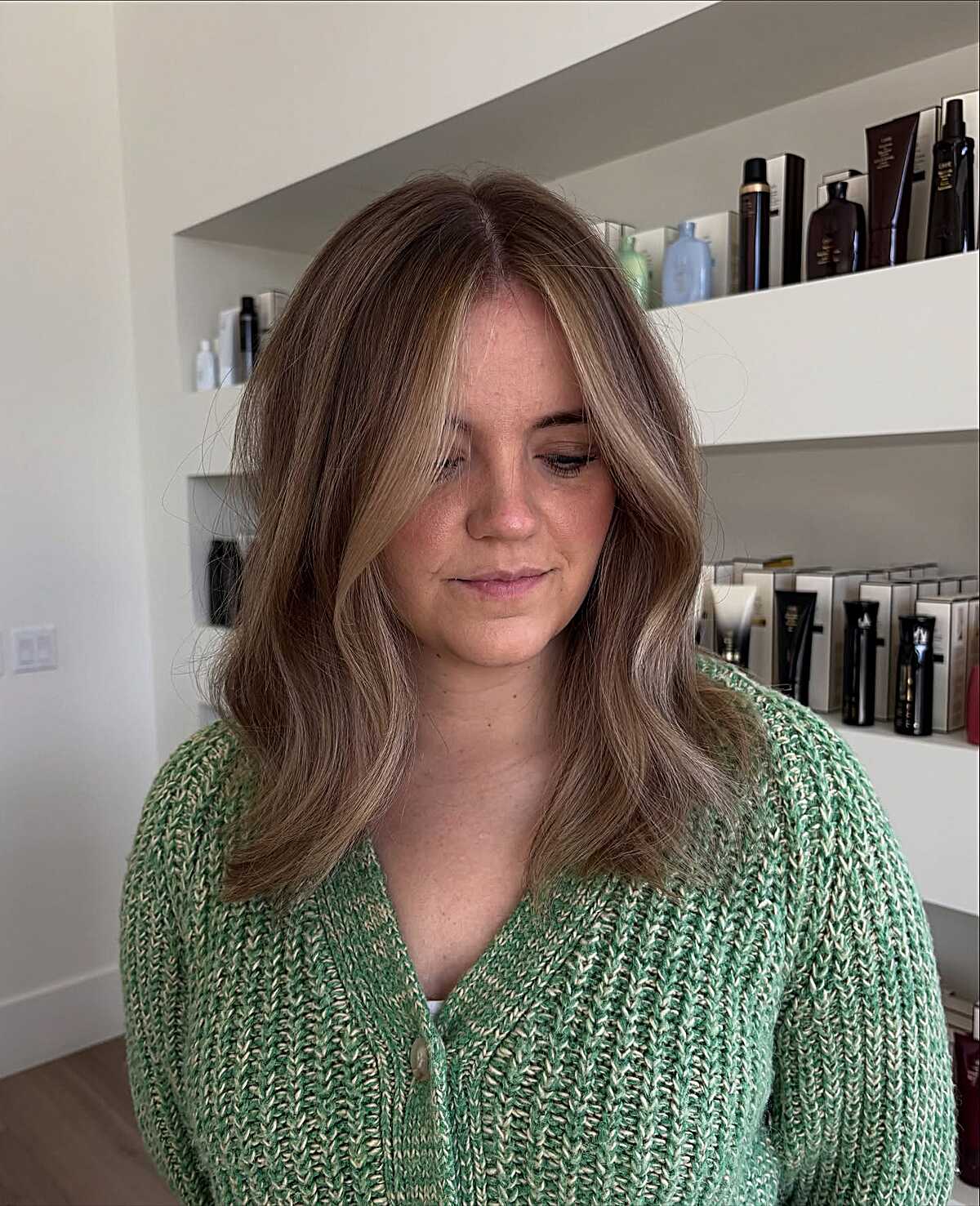
Medium-length layers fall around the shoulders with a muted mushroom-brown tone and soft cool shading woven through the surface. The shape is rounded and light at the ends, and the finish stays smooth rather than glossy or icy. Because the color placement is subtle, the overall effect depends on the cut’s movement as much as the tone. Bring photos that show how soft you want the shadowing to appear.
Shoulder Lob Dimension
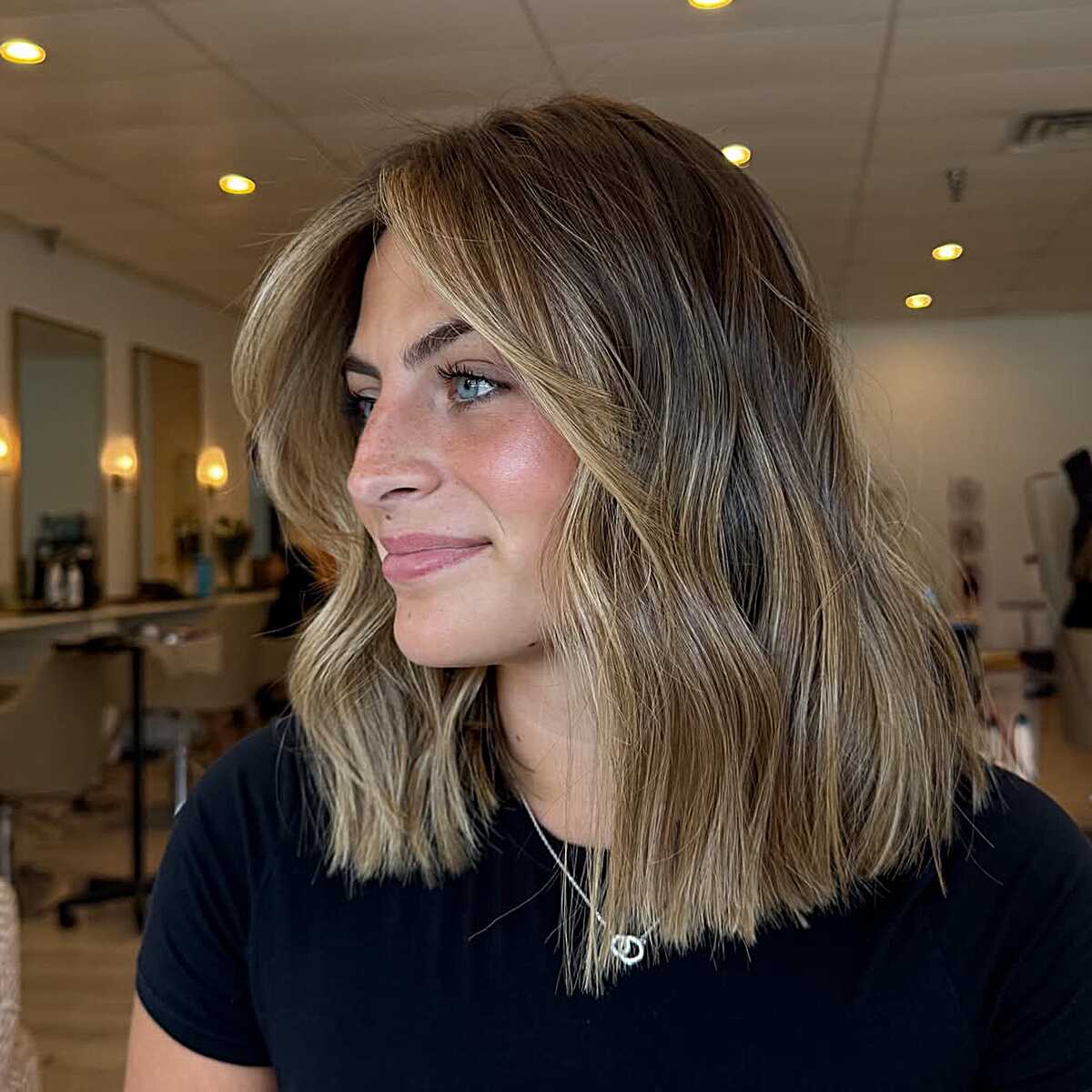
A shoulder-skimming lob sits with a soft bend through the ends and a center part that opens the front evenly. Blonde pieces brighten the front sections, while cooler brown lowlights sit underneath to keep the overall result from looking too flat. The finish is polished but not stiff, and the blunt-ish edge still reads cleanly. Ask about how much underlayer darkness you want if you prefer more depth.