Side parts can change a pixie cut more than people expect, shifting volume, directing fringe, and altering how the shape reads from the front and profile. The looks here show several ways short hair can be cut and styled around that parting, from smooth side-swept lengths to airy, choppy texture. Rather than chasing one ideal version, these examples make it easier to compare fringe weight, crown movement, and how much scalp or ear exposure feels right in the finished shape.
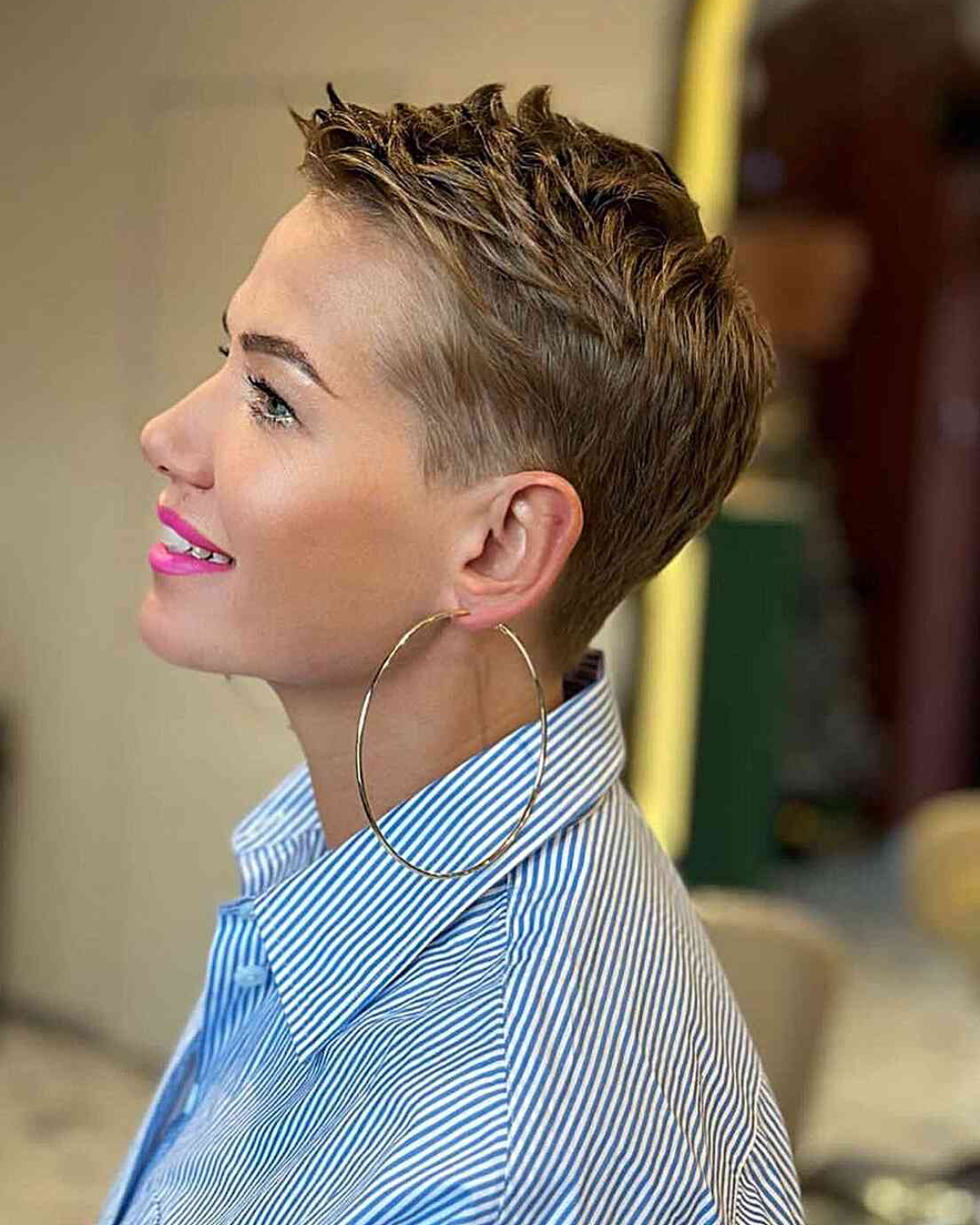
Sculpted Copper Side Part Pixie
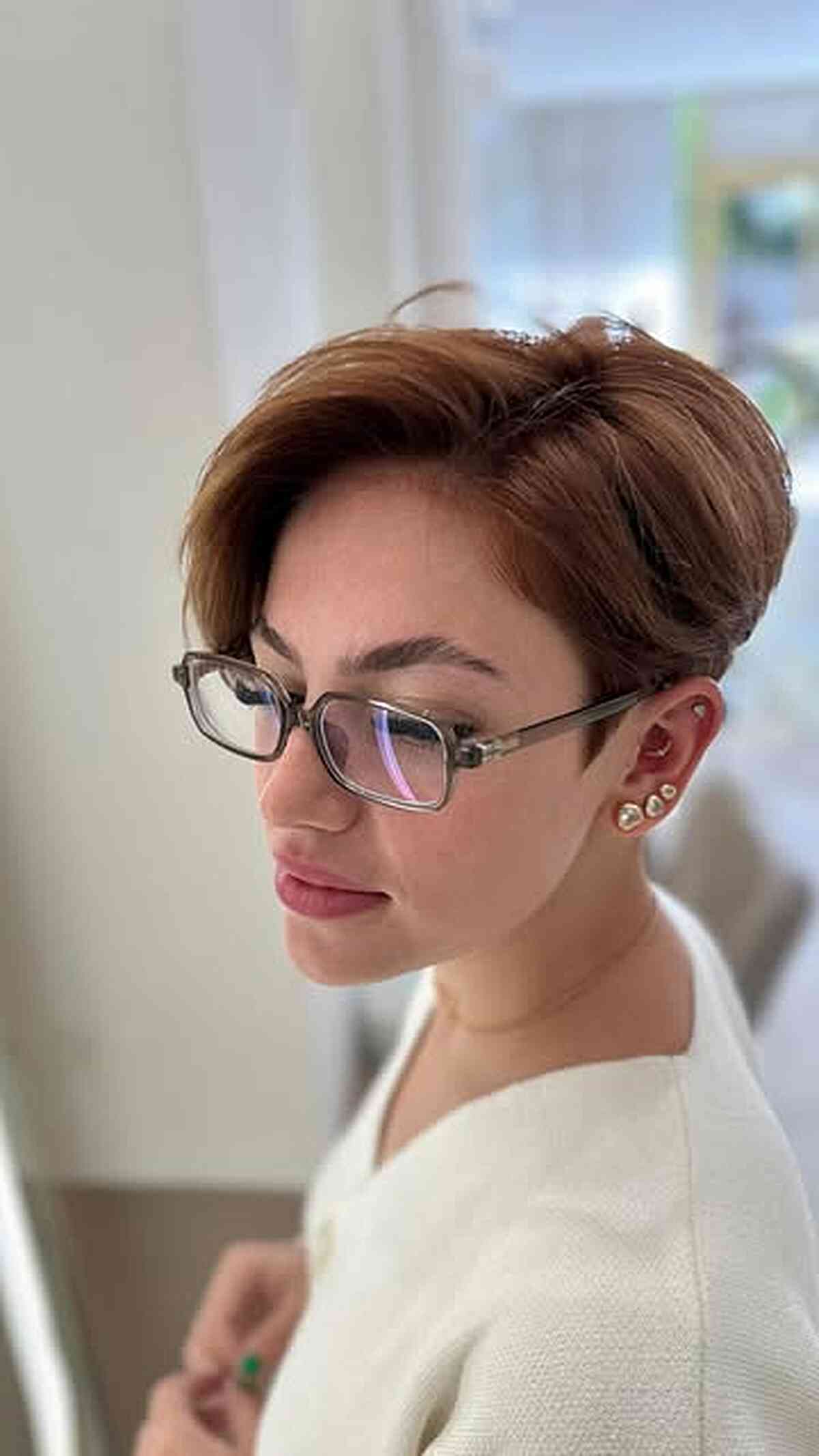
Rounded through the top and tapered close around the ears, this pixieshows a deep side part that lifts the front into a smooth sweep. The copper-brown color adds warmth, while the finish stays glossy and controlled. Ask your stylist about keeping enough length at the crown for that front volume without losing the neat neckline.
Platinum Swept Fringe Pixie

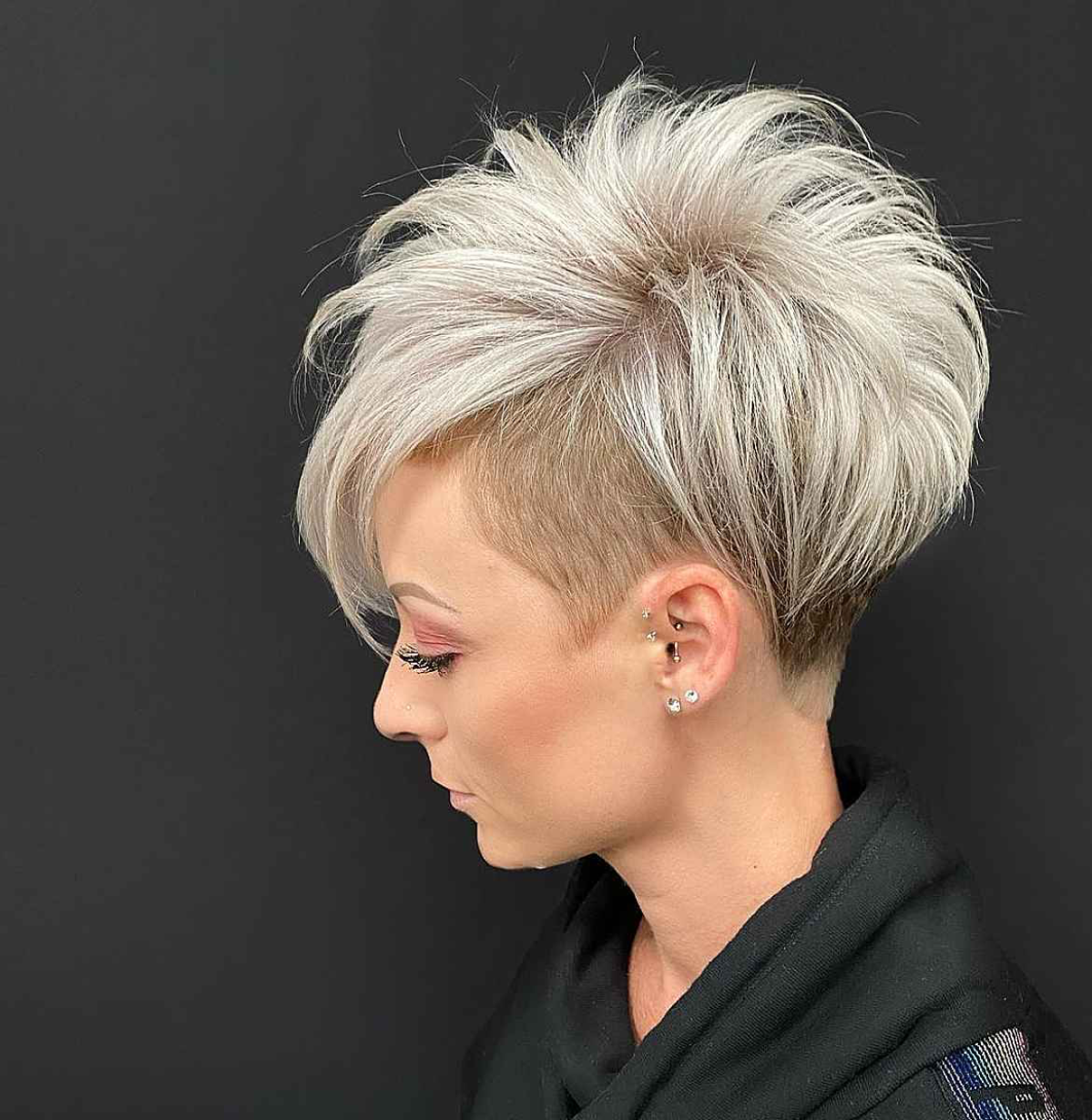
This short pixie pairs a side part with long, airy fringe pieces that fall across the forehead and break softly at the brow line. The platinum blonde color makes the layered ends stand out, and the styling leans slightly tousled rather than rigid. A stylist can fine-tune how much fringe coverage you want while keeping the sides close.
Chestnut Long Pixie Sweep
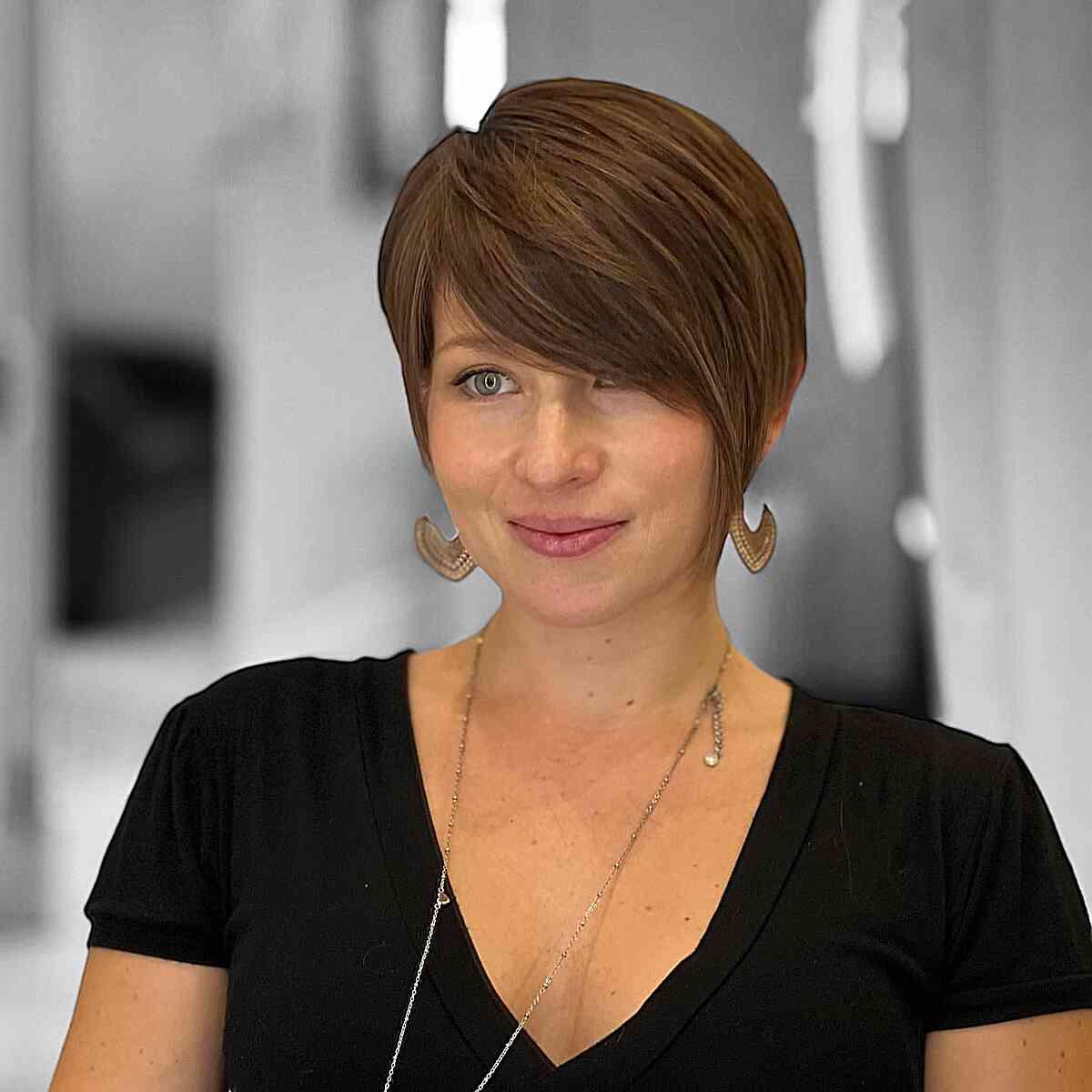
Longer on top and neatly shortened at the sides, this chestnut pixie creates a strong diagonal sweep over one eye. The silhouette feels polished, with the front length blending into the side rather than stopping abruptly. For upkeep, ask how much weight should stay in the fringe so the part still lies flat without collapsing forward.
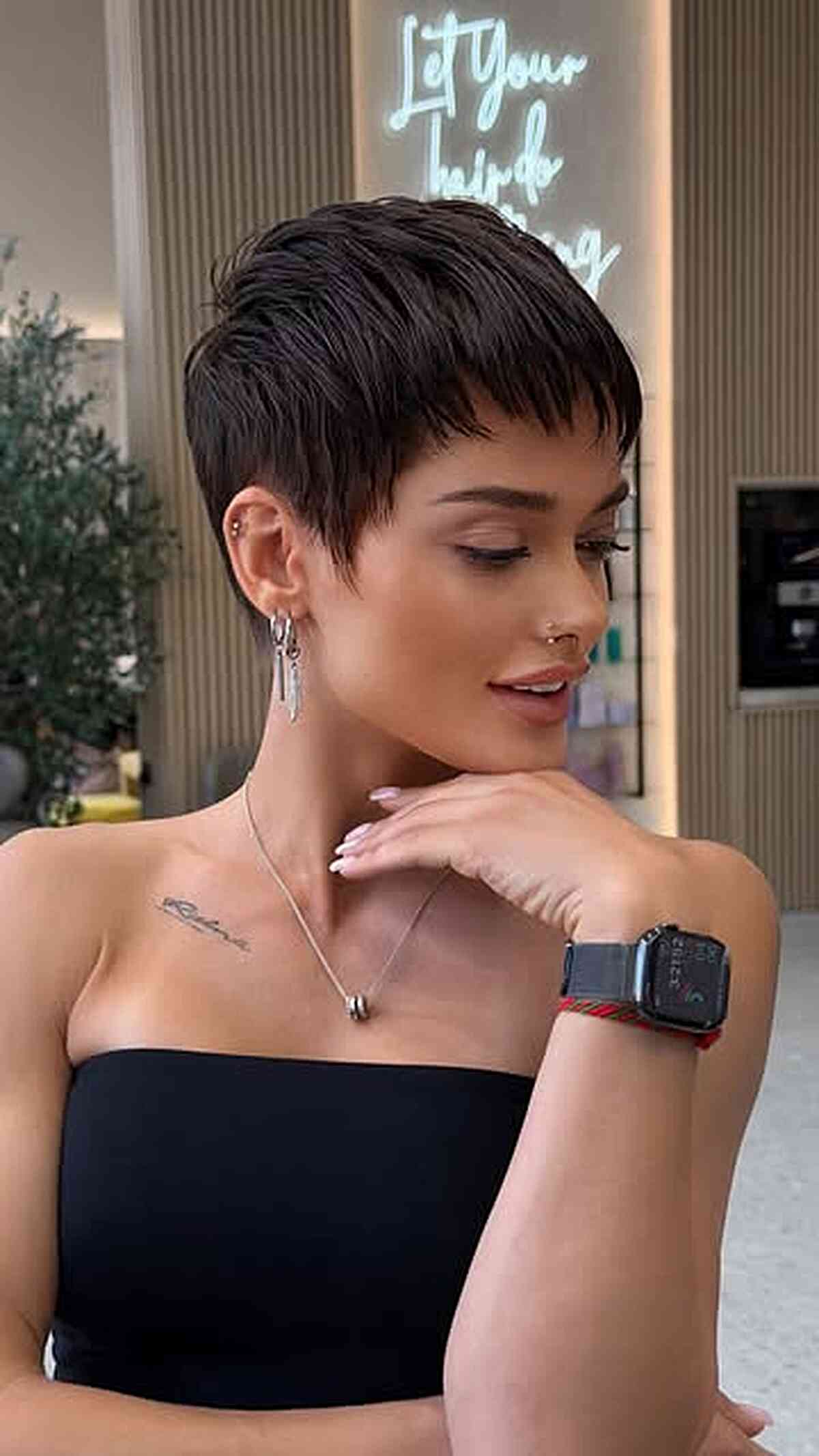
Close Cropped Side Bang Pixie
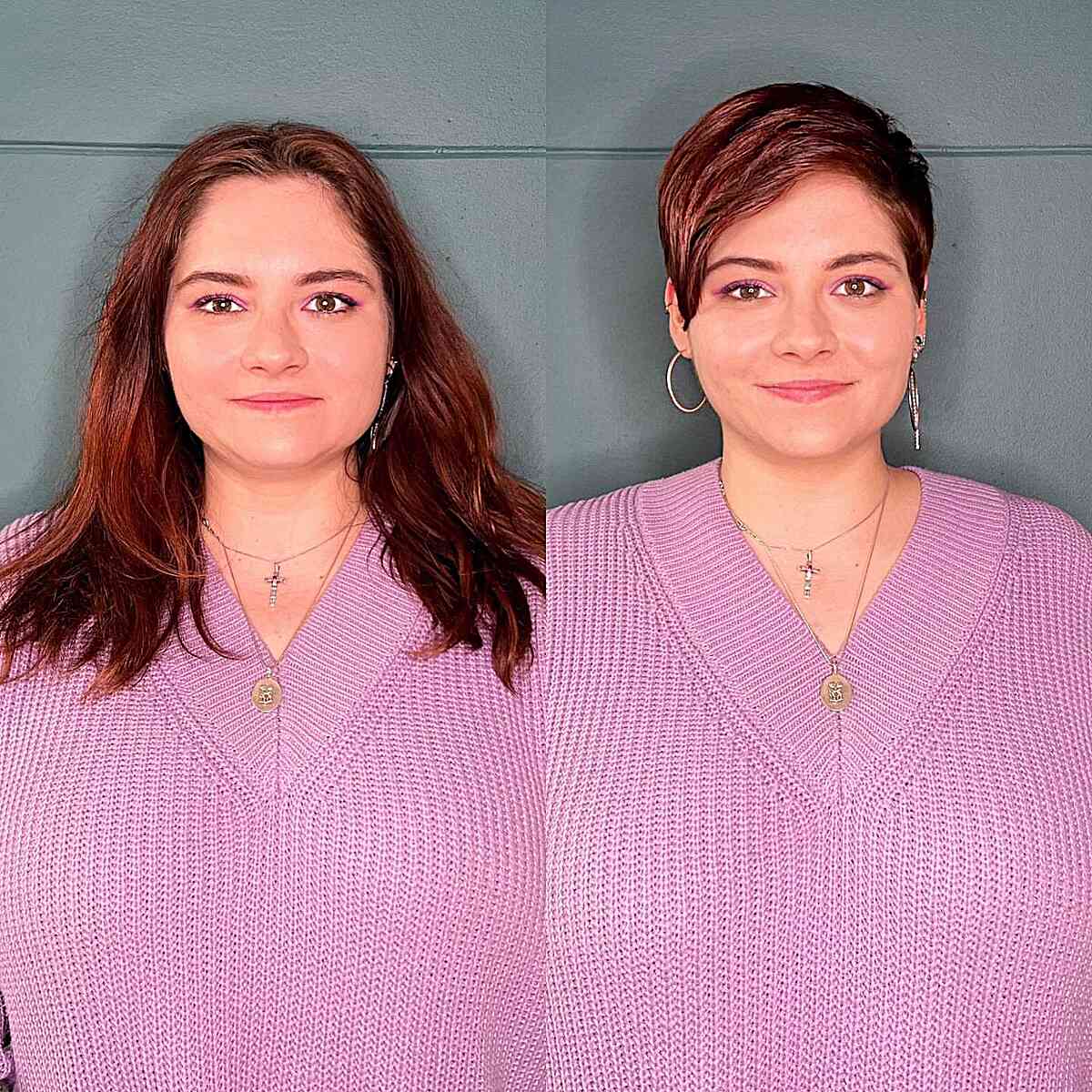
Very short through the back and sides, this pixie keeps the top length concentrated into a narrow side-swept bang. The front section lands lower than the rest of the cut, giving the style its main line of movement. If you like this shape, discuss how short the perimeter can go while still leaving enough front length for the bang to sit cleanly.
Tousled Soft Lixie Layers
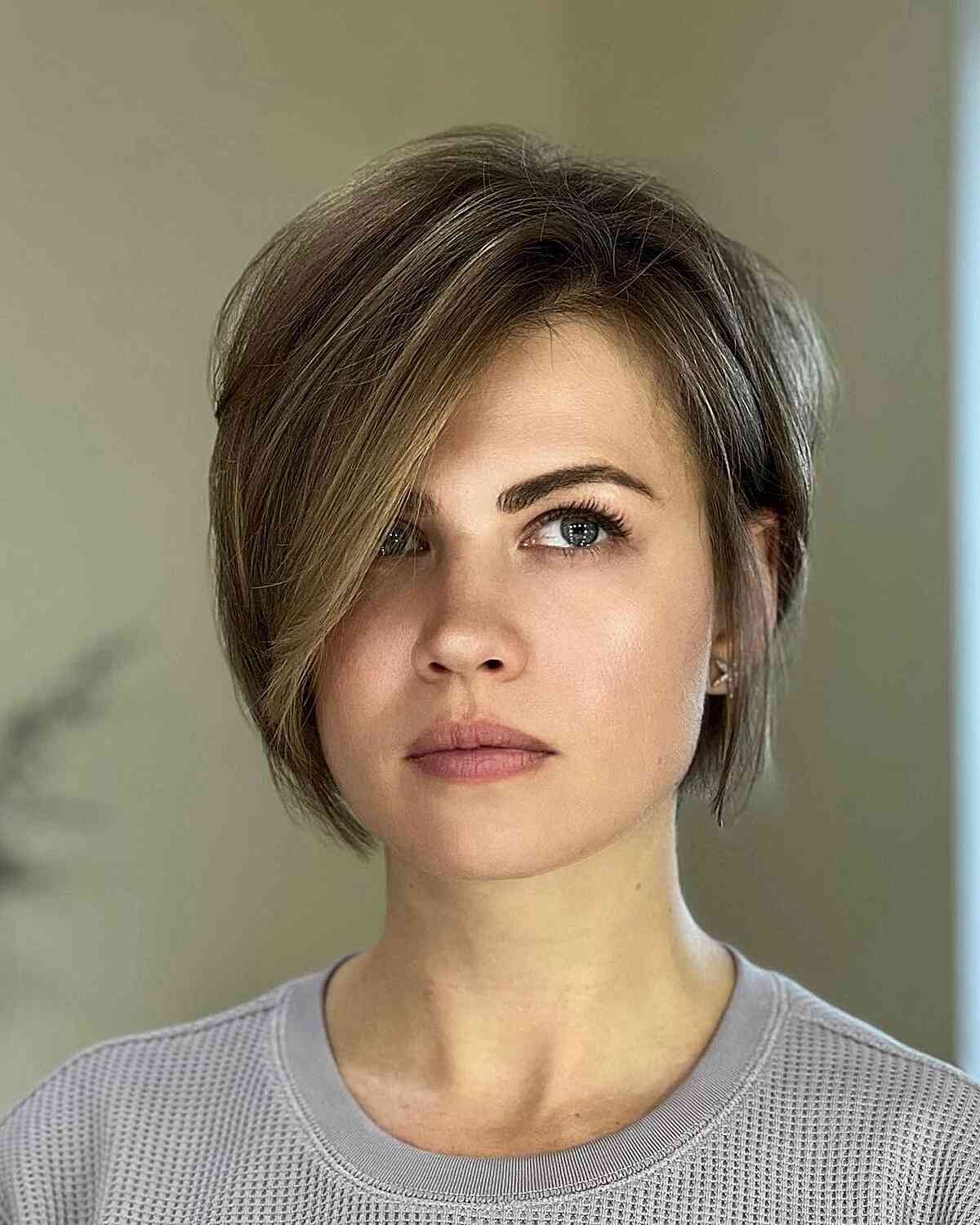
This slightly longer pixie-blend cut uses a side part to separate feathery layers and create a relaxed, piecey outline. The ends move away from the head instead of lying flat, giving the style a softer finish through the crown and sides. A stylist can adjust the top length if you want more lift or a more compact outline around the cheek area.
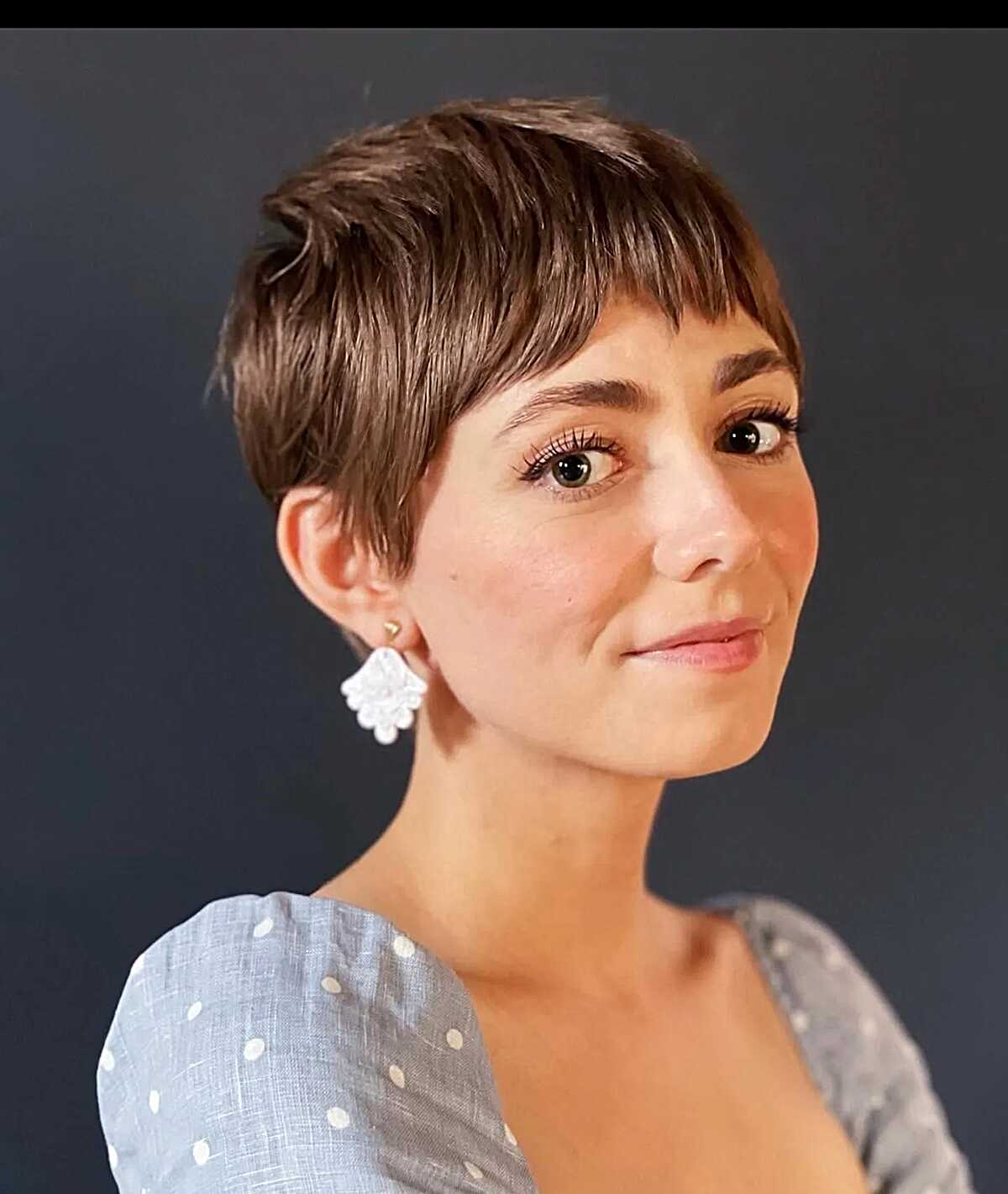
Layered Brunette Side Crop
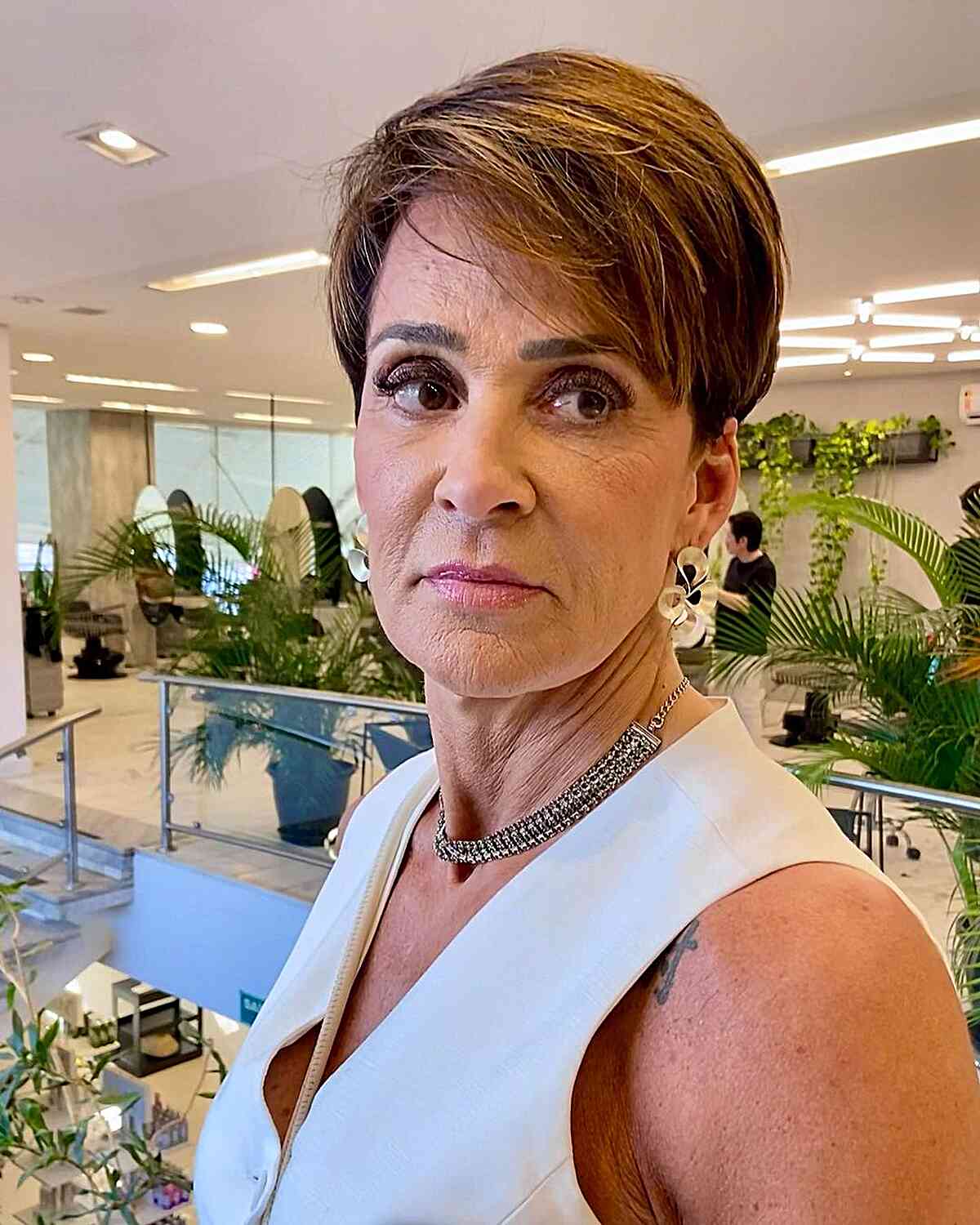
Short, layered pieces are stacked through the top and crown, then directed into a side part that keeps the shape compact. The brunette color shows subtle depth where the ends feather out near the temple and nape. Bring up how much texture you want at the crown, since the cut’s shape depends on those shorter interior layers and the way they sit after drying.
Platinum Side-Swept Pixie

A sweeping front section moves across the forehead while the sides stay closely cropped, creating a clean contrast between fullness and restraint. The platinum tone emphasizes the side-swept shape and the smooth, rounded top. If you want this level of fringe coverage, ask your stylist how much length should remain in front without overpowering the shorter side sections.
Textured Black Feathered Pixie
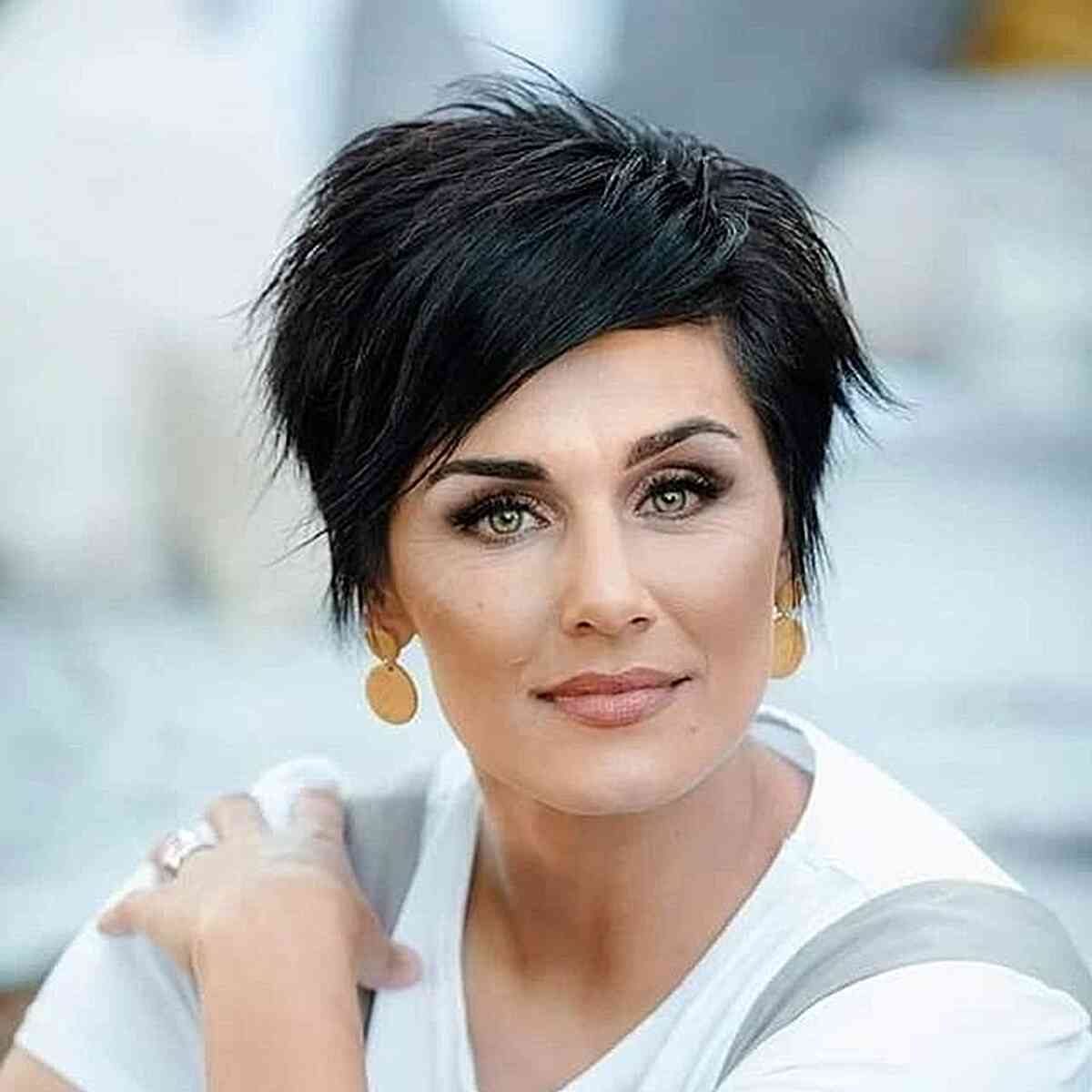
This dark pixie uses uneven, feathered layers to build volume through the crown and a loose side part for direction. The ends flick outward in small points, especially around the top and temple area, giving the cut a lightly spiky finish. A salon discussion about how much texture to remove can help keep the shape airy without making the outline too choppy.
Heavy Fringe Pixie Crop
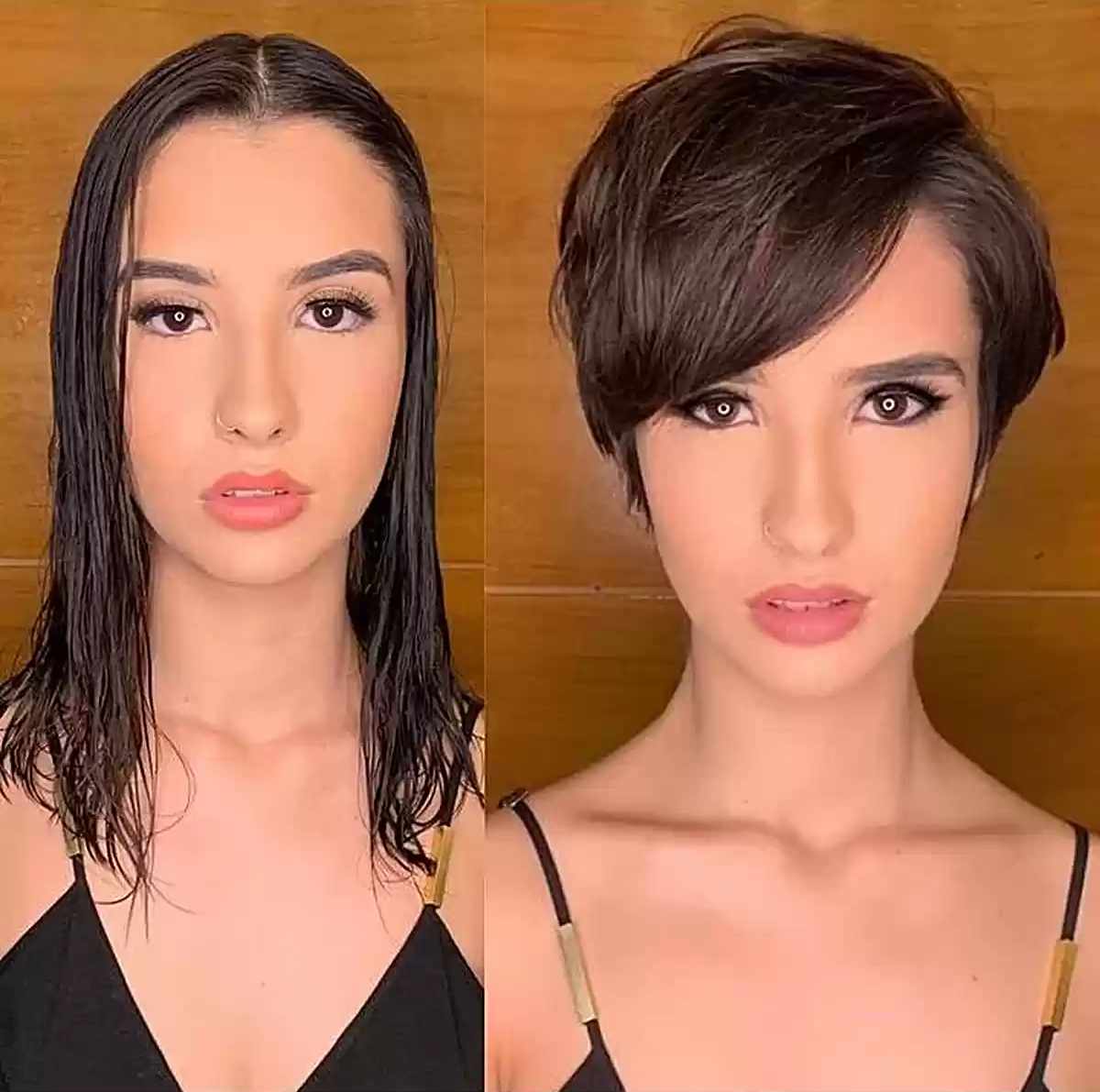
The front section is longer and fuller here, dropping diagonally across one side while the rest of the cut stays short and close to the head. That heavy fringe creates the main visual weight, with a smooth finish and minimal layering visible at the edges. If you want a similar look, ask how much front density should remain so the bang can sit across the face without blocking the whole forehead.
Golden Layered Side Pixie

Warm blonde tones and layered top pieces give this pixie a softly dimensional finish, while the side part directs the fringe into a gentle sweep. The sides are kept shorter, letting the textured crown stay visually dominant. A stylist can help balance the top length with the nape so the cut keeps its rounded profile as it grows out.