Short angled bobs rely on shape first, then finish. The images here show how a tighter nape, longer front pieces, blunt edges, soft layers, or a curved silhouette can change the entire read of the cut. Color also affects the outline: solid dark tones sharpen the perimeter, while highlights and lighter blondes make layers and movement easier to see. Each look below focuses on what is visible in the photo, along with one practical point to bring to a stylist.
Ruby Tousled Angle
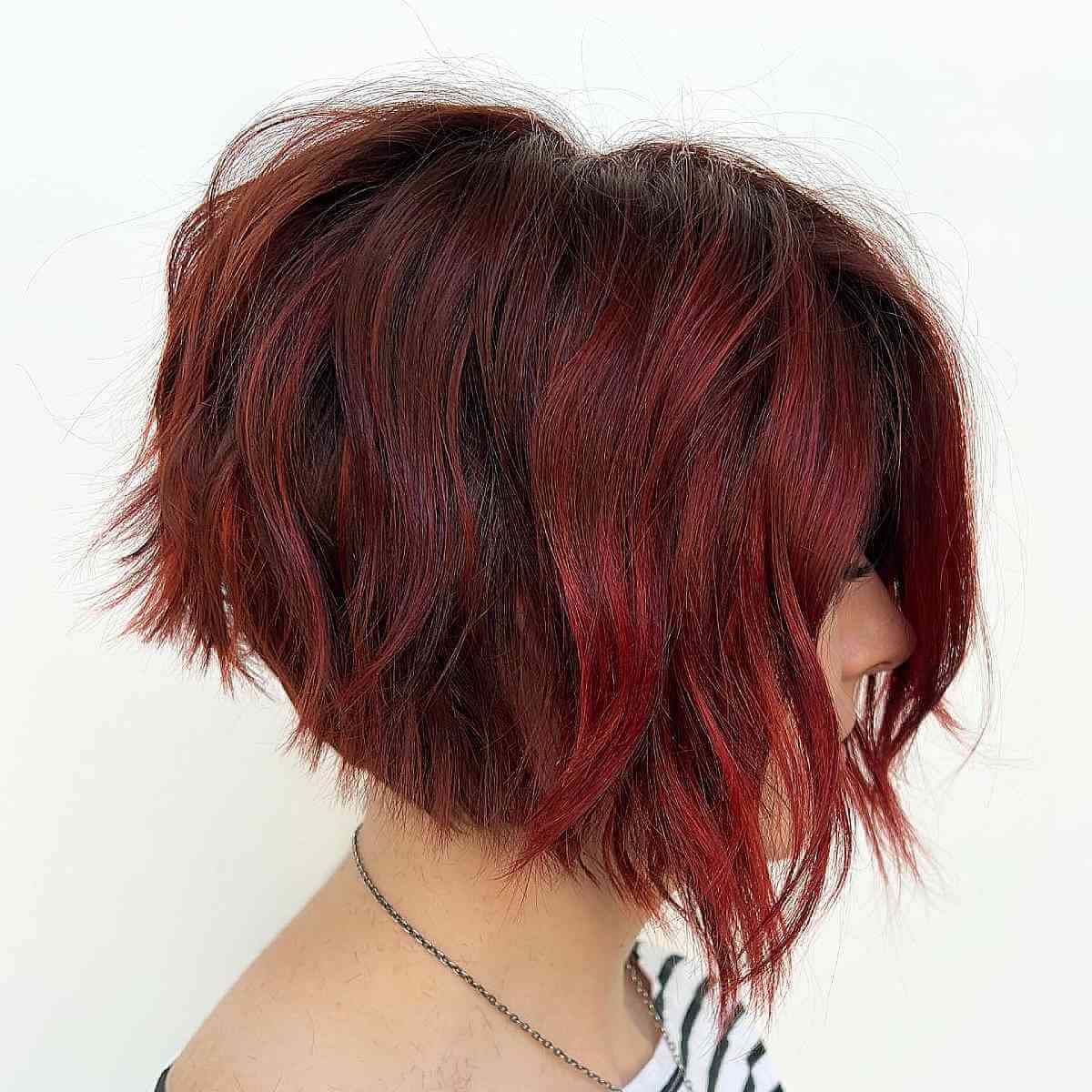
Deep ruby and auburn tones give this angled bob extra visual depth, while the top stays airy and the ends look choppy and lived-in. The back sits shorter than the front, creating a clear forward slope around the jaw. Soft separation through the lengths keeps the shape from reading too heavy. Ask about point-cutting or light texturizing if you want the same broken-up edge.
Platinum Crown Bob
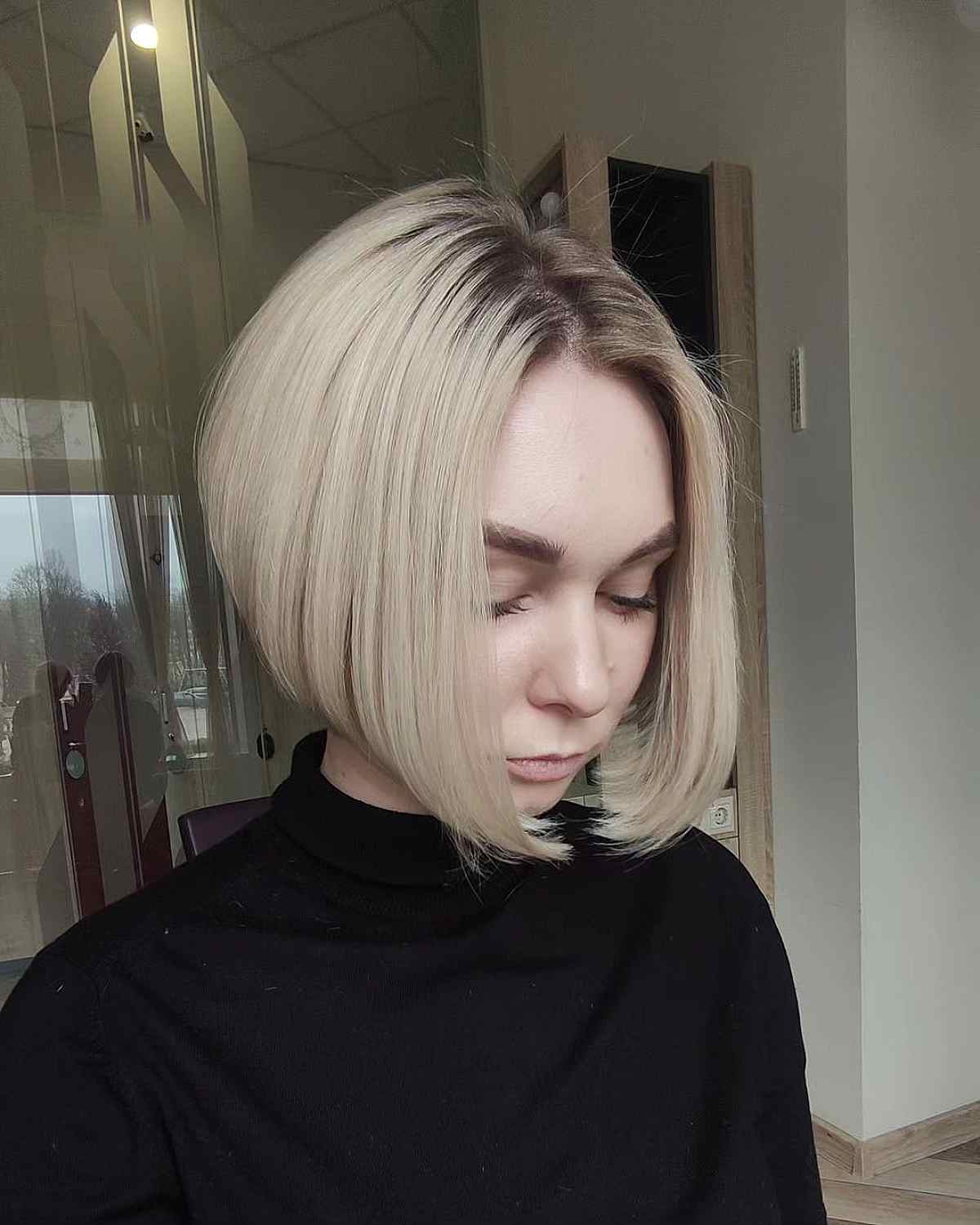
Platinum blonde color and a rounded outline make this bob look smooth and controlled, with noticeable lift through the crown and a tucked-in nape. The front pieces fall longer and curve inward near the chin, which keeps the silhouette sleek. A clean side profile shows minimal layering at the surface. If you want this effect, discuss crown volume and interior shaping with the stylist.
Glossy Tapered Blonde
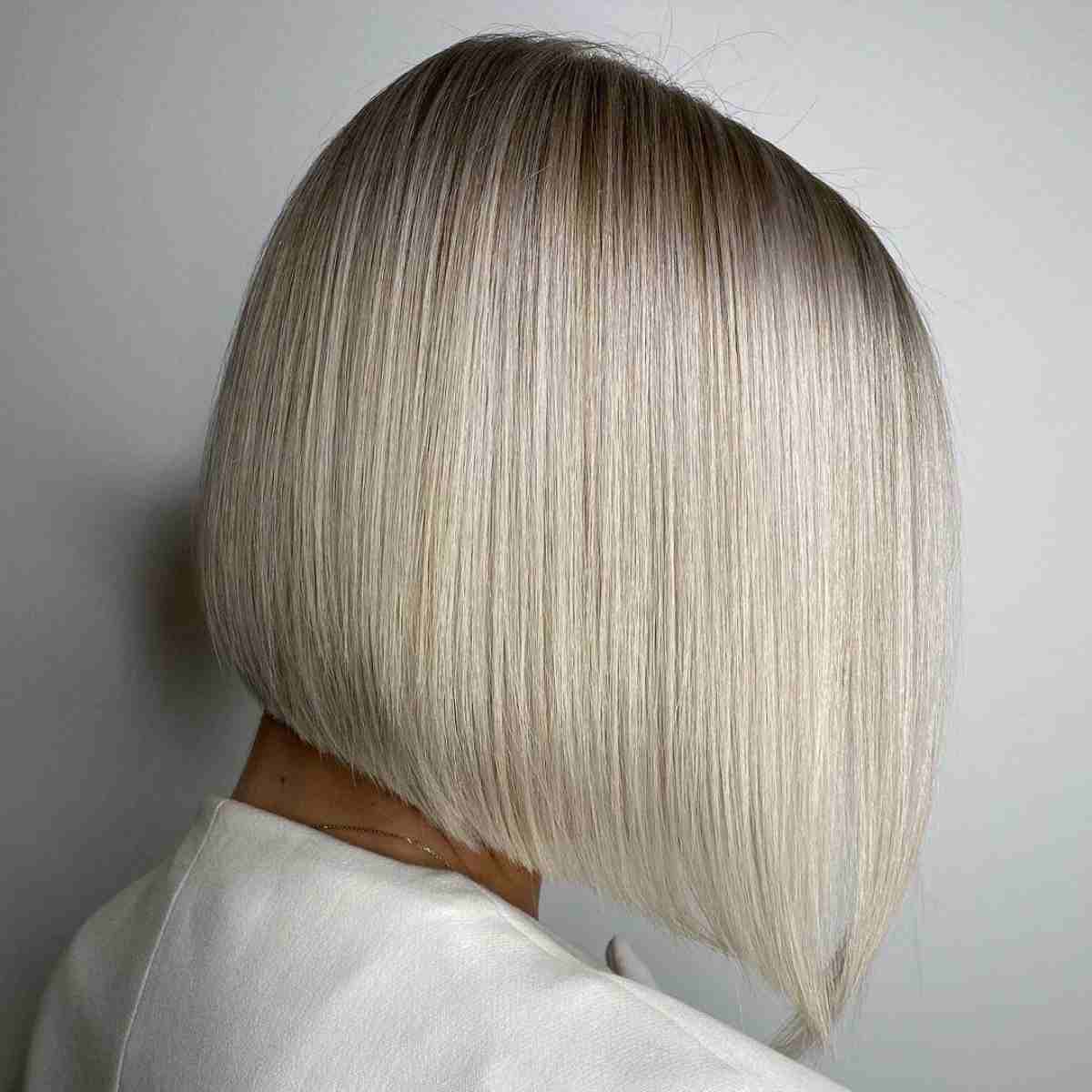
Bright blonde lengths sit in a smooth, glossy curtain that narrows toward a pointed front section. The back appears fuller and rounded, while the front edge drops in a precise line near the chin. Fine surface strands catch the light, which makes the outline look crisp. A polished blow-dry and a blunt perimeter are the visible features to mention when planning a similar cut.
Crimson Piecey Bob
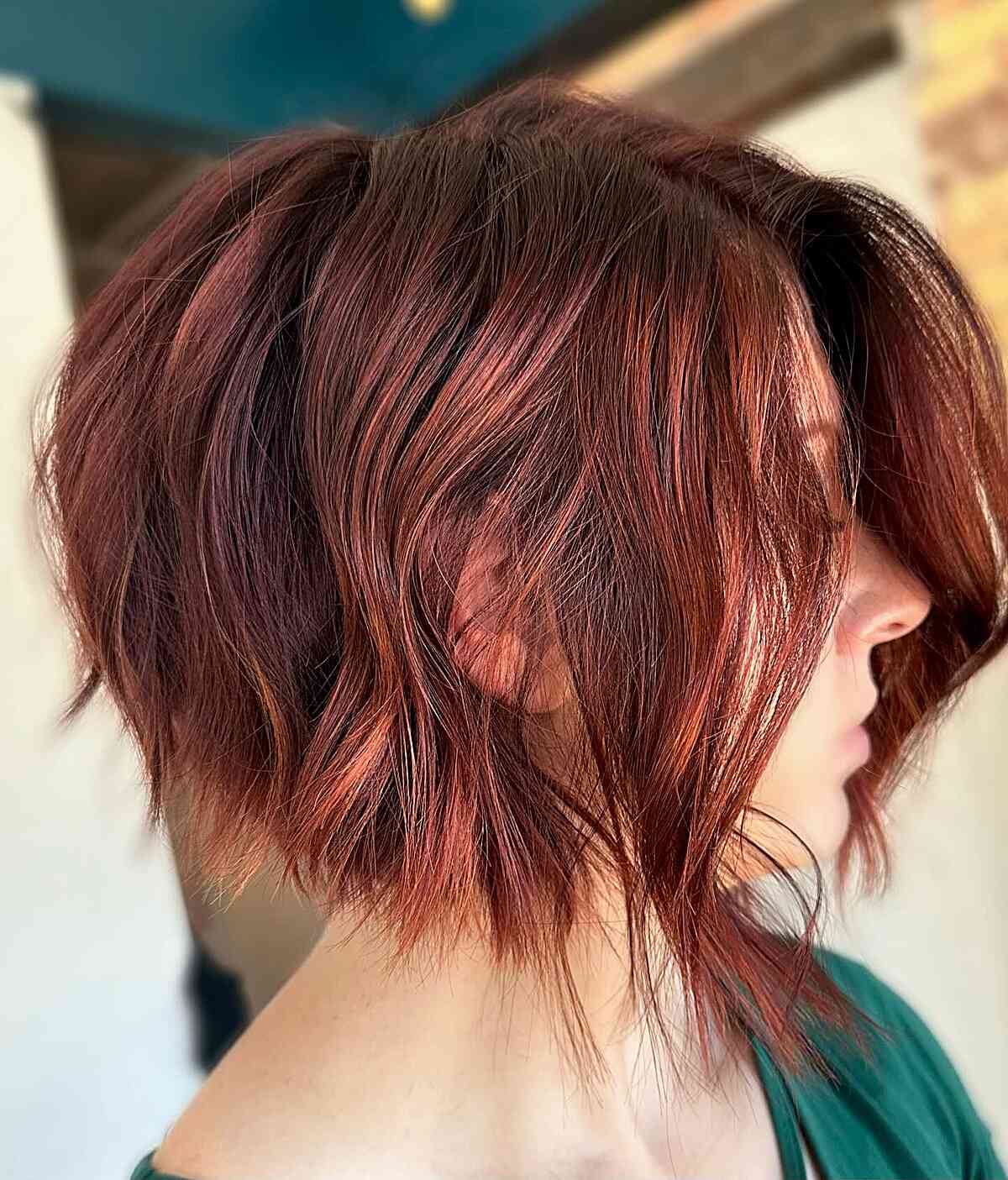
Crimson and copper accents break up the dark base, giving the bob a textured, dimensional finish. The layers are visibly uneven, with longer face-framing pieces and a lighter, feathered edge around the neck. The back holds some softness instead of a rigid line, so the cut reads relaxed rather than severe. Bring up layering through the sides if you want this kind of movement.
Stacked Noir Bob
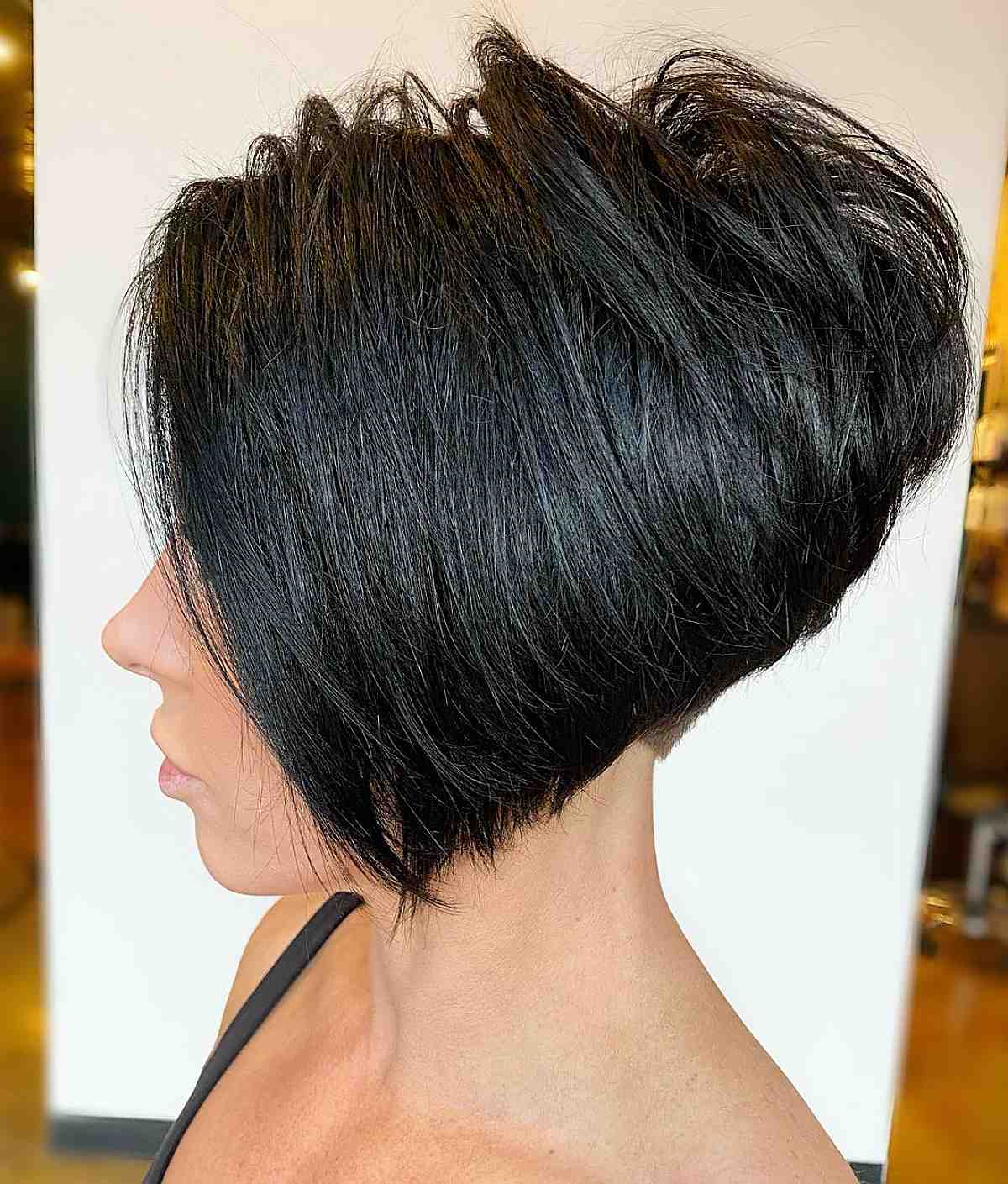
Dark hair shows a pronounced stacked back that lifts away from the neck before dropping into longer front lengths. The crown has a slightly fuller silhouette, while the front section stretches forward in a narrow point. Strands at the top keep some height, but the overall finish stays controlled. A stylist can refine how compact the nape feels if you want a stronger stacked profile.
Beige Pointed Bob
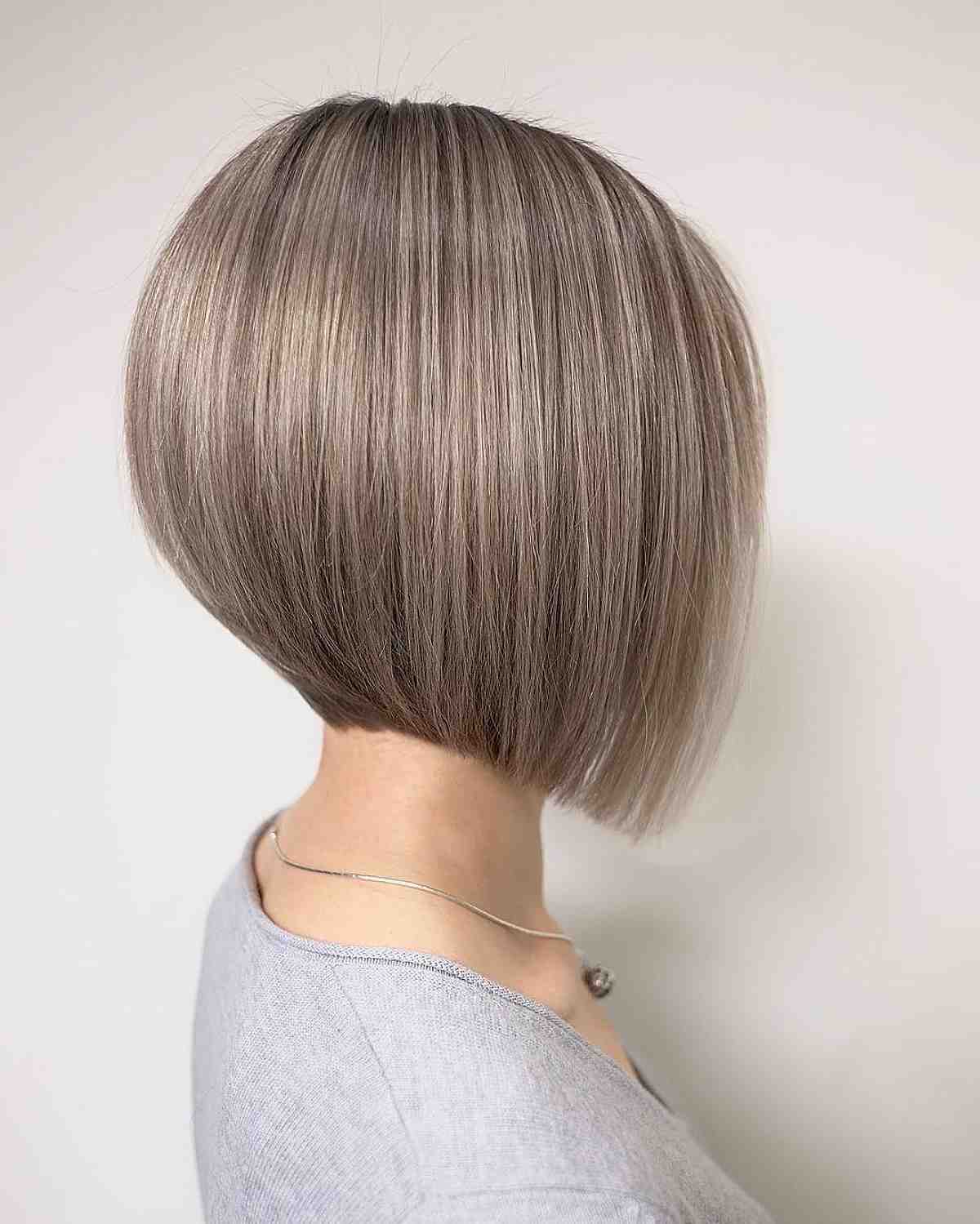
Beige-blonde color and a very clean outline make this bob look sleek and precise. The front tapers to a narrow point, while the body stays smooth and close to the head with little visible layering on top. The side profile shows a compact shape that sits neatly at the jaw. If precision matters, ask your stylist about keeping the perimeter sharp rather than overly feathered.
Streaked Rounded Bob
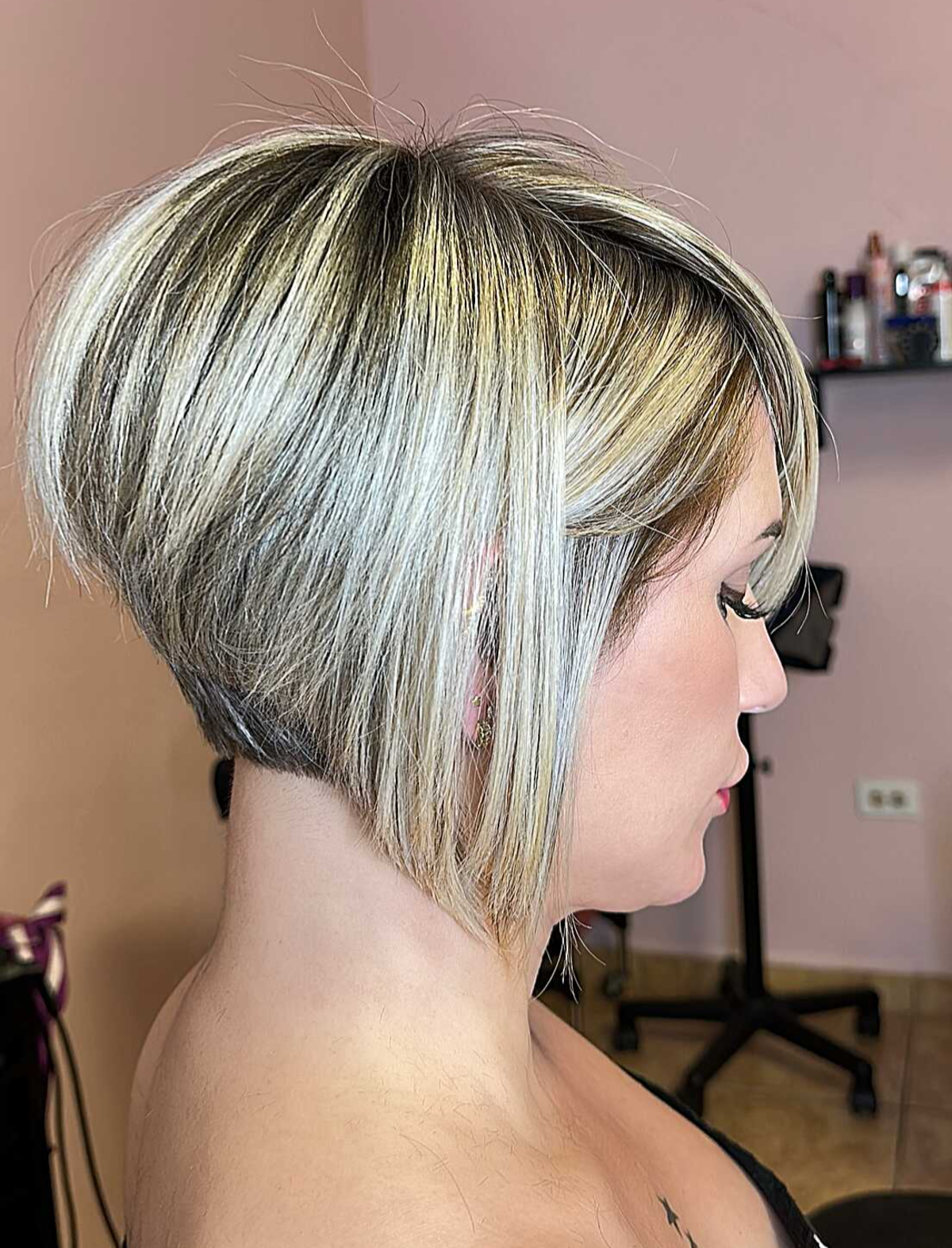
Blonde streaks run through a darker base, creating strong contrast over a rounded, lifted shape. The crown appears airy and slightly teased, while the nape stays tighter and more compact. Longer front pieces skim the cheek and neck, giving the cut a soft forward angle. Visible highlights help define the layers, so placement is worth discussing if you want dimension to read clearly.
Highlighted Smooth Angle
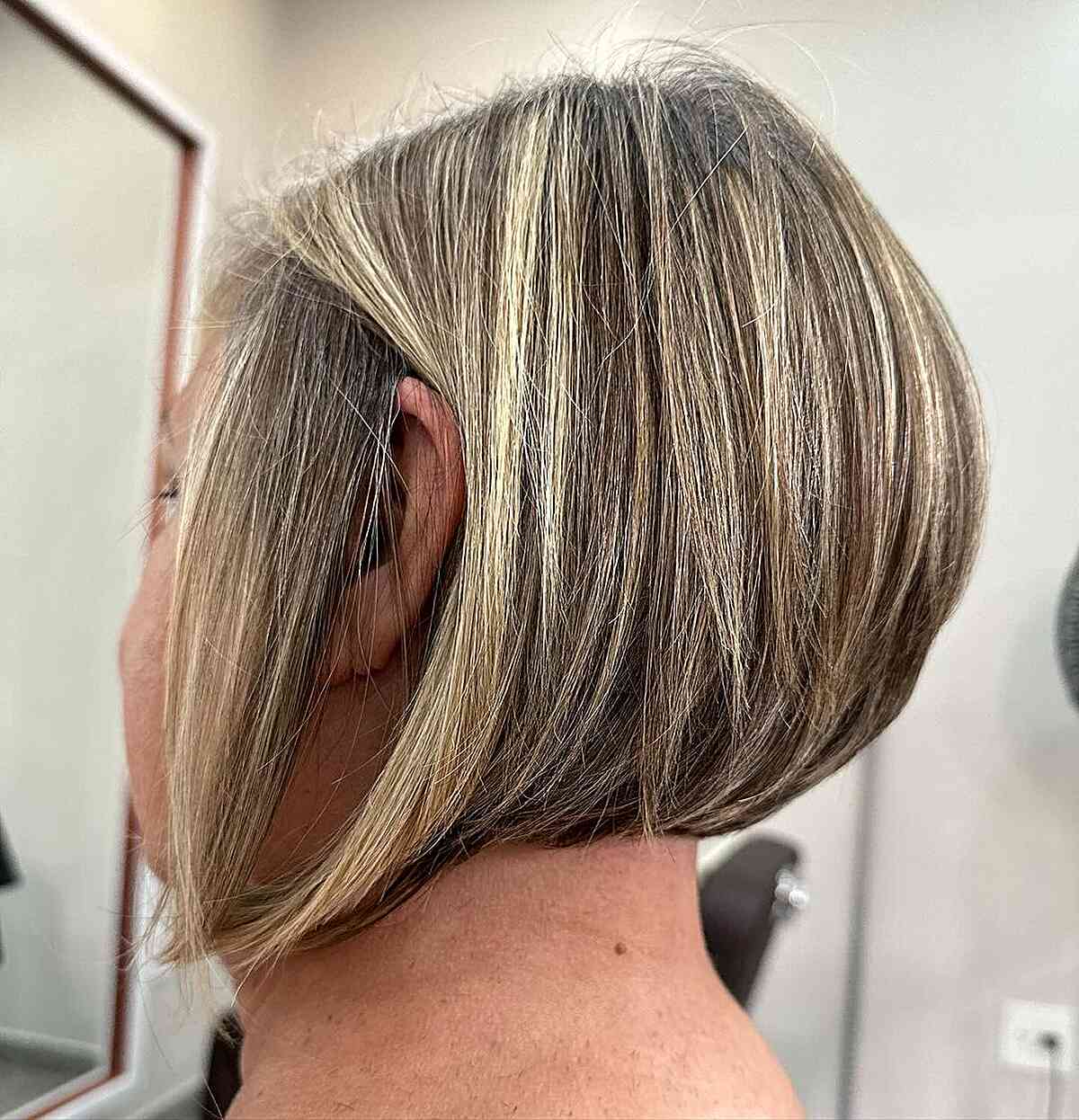
This short bob uses blonde highlights to break up a darker base, and the finish stays smooth from root to tip. The front lengths angle forward in clean, narrow panels, while the back keeps a subtle rounded fullness. Light surface texture is visible, but the overall shape remains polished. A stylist can place highlights to emphasize the line if you want the angle to stand out more.
Inverted Cocoa Bob
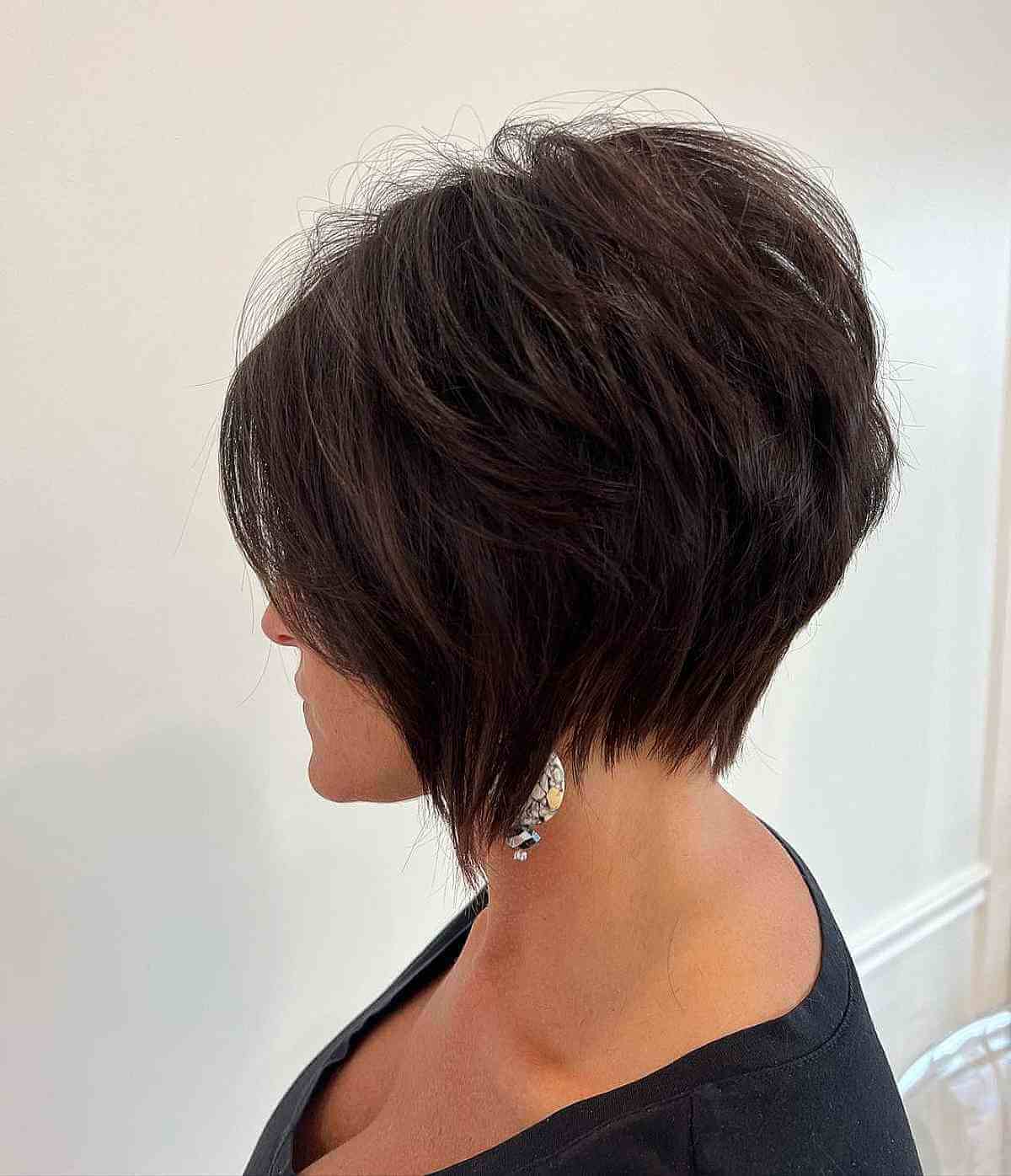
Dark brown hair forms a rounded back that collapses into a sharp, tapered front, creating a classic inverted profile. The surface looks softly tousled rather than glossy, which gives the shape a looser read. Ends at the nape are shorter and more compact, while the front falls toward the jawline. If you want this outline, talk through how steep the angle should be at the side.
Soft Graduation Blonde
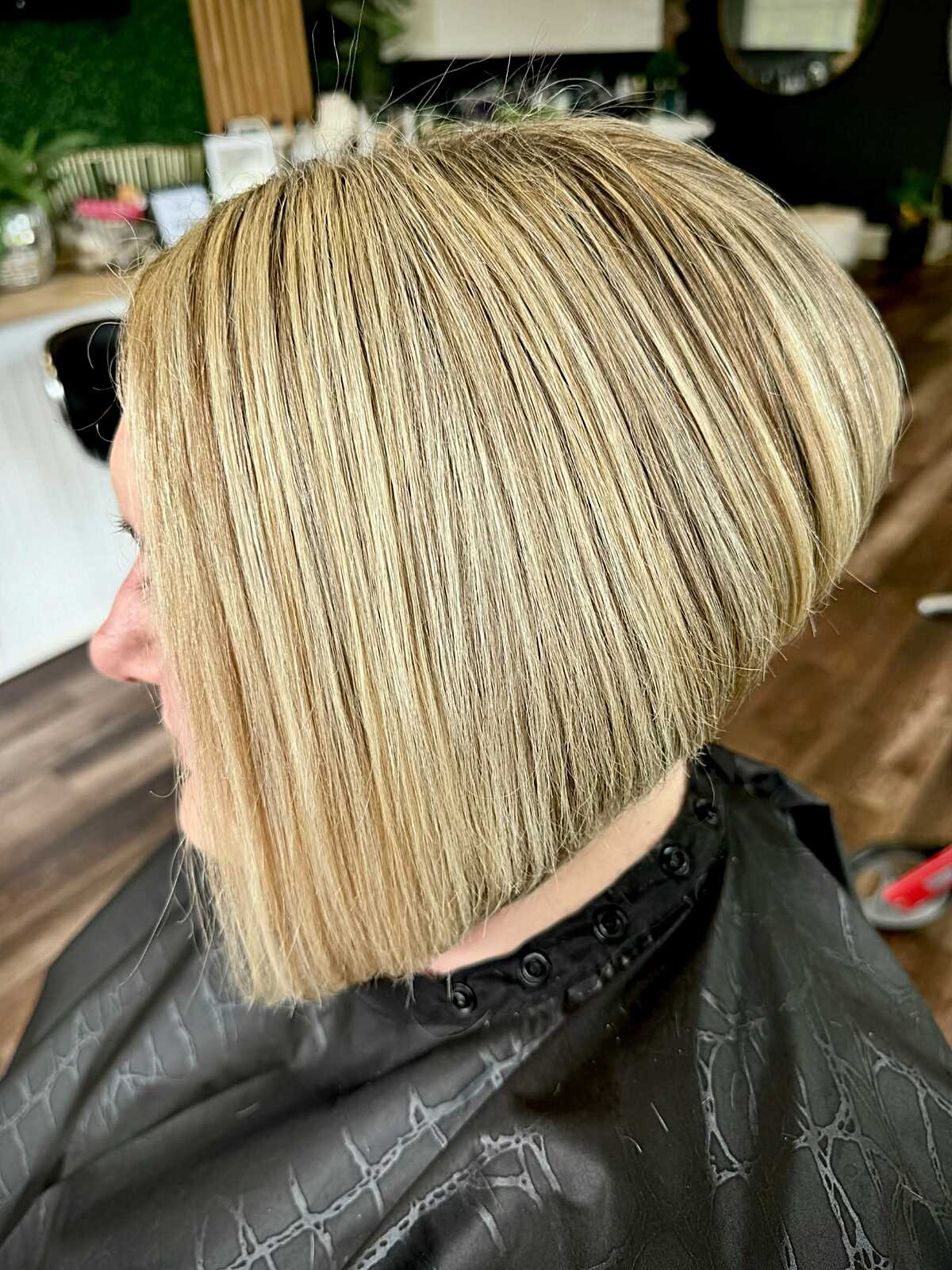
Blonde lengths show gentle graduation through the back, with a smooth side profile and a fuller rounded crown. The front pieces stay slightly longer and skim forward, but the cut avoids a harsh point. Surface strands lie neatly, which makes the silhouette look calm and refined. Ask your stylist where you want the weight line to sit if you prefer this softer angle.
Dimensional Bouncy Bob
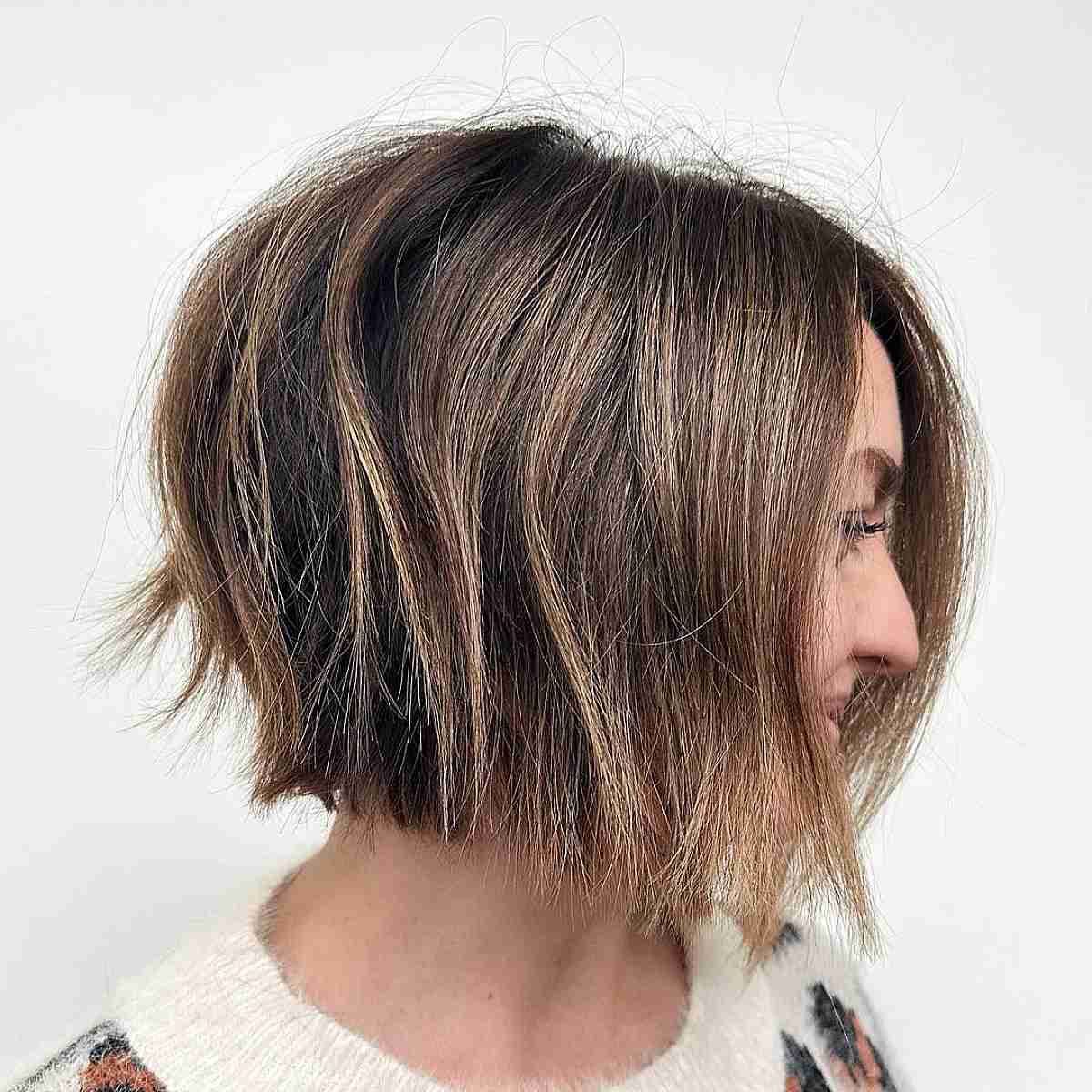
Brown and blonde tones create visible dimension through this textured angled bob, and the ends look springy rather than blunt. The crown has soft lift, while the front layers fall with a bit of bounce and separation. The outline remains short at the neck and longer toward the face. For a similar result, ask about loose layering that preserves movement without removing too much density.
Silver Beveled Bob
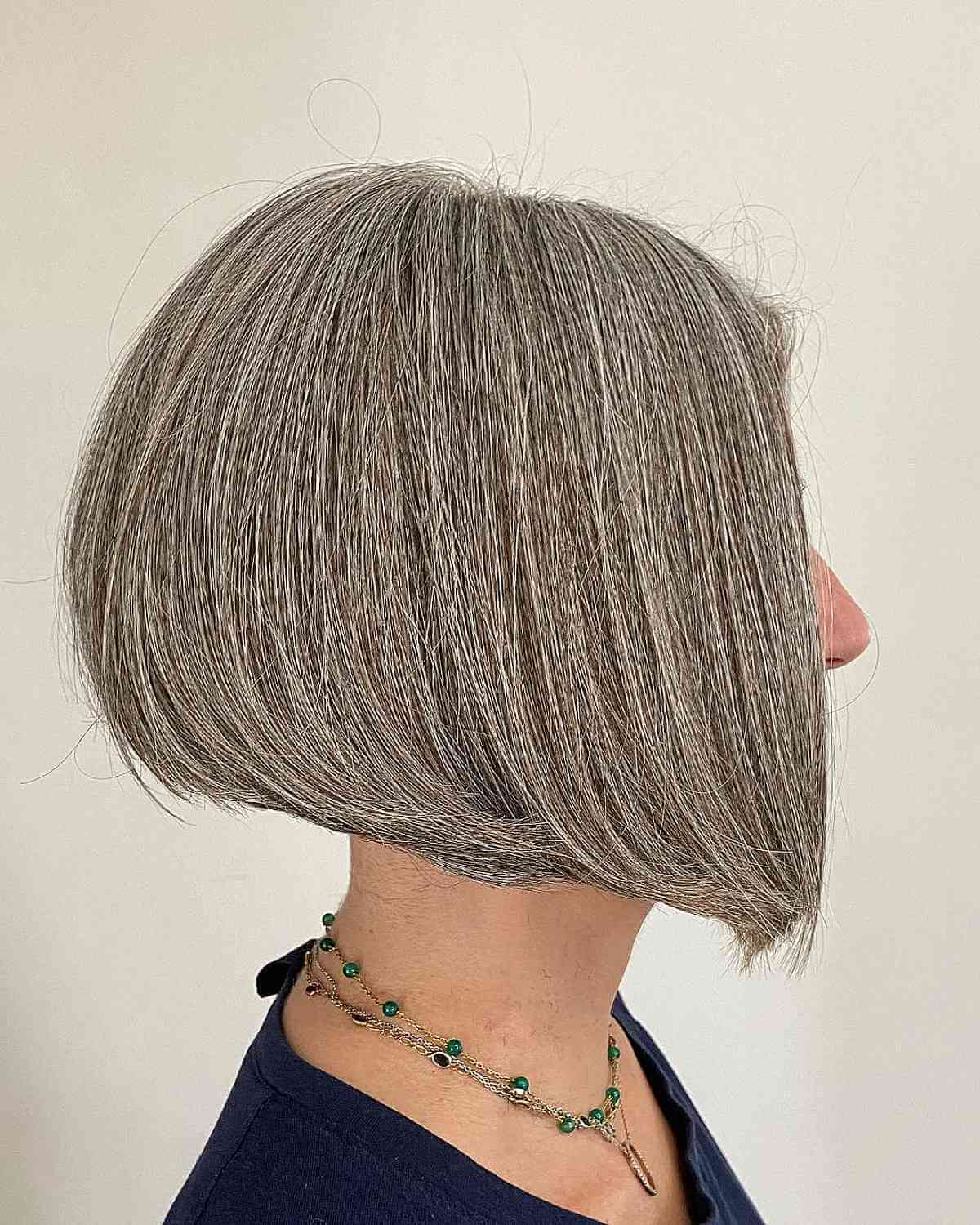
Silver-toned color gives this bob a cool, reflective surface, and the ends are beveled inward for a neat, rounded finish. The shape sits compactly at the back and opens slightly toward the front, where the length angles down near the chin. The smooth styling makes the perimeter easy to read. A salon conversation about beveling and edge control would be useful for this look.
Micro Fringe Angle
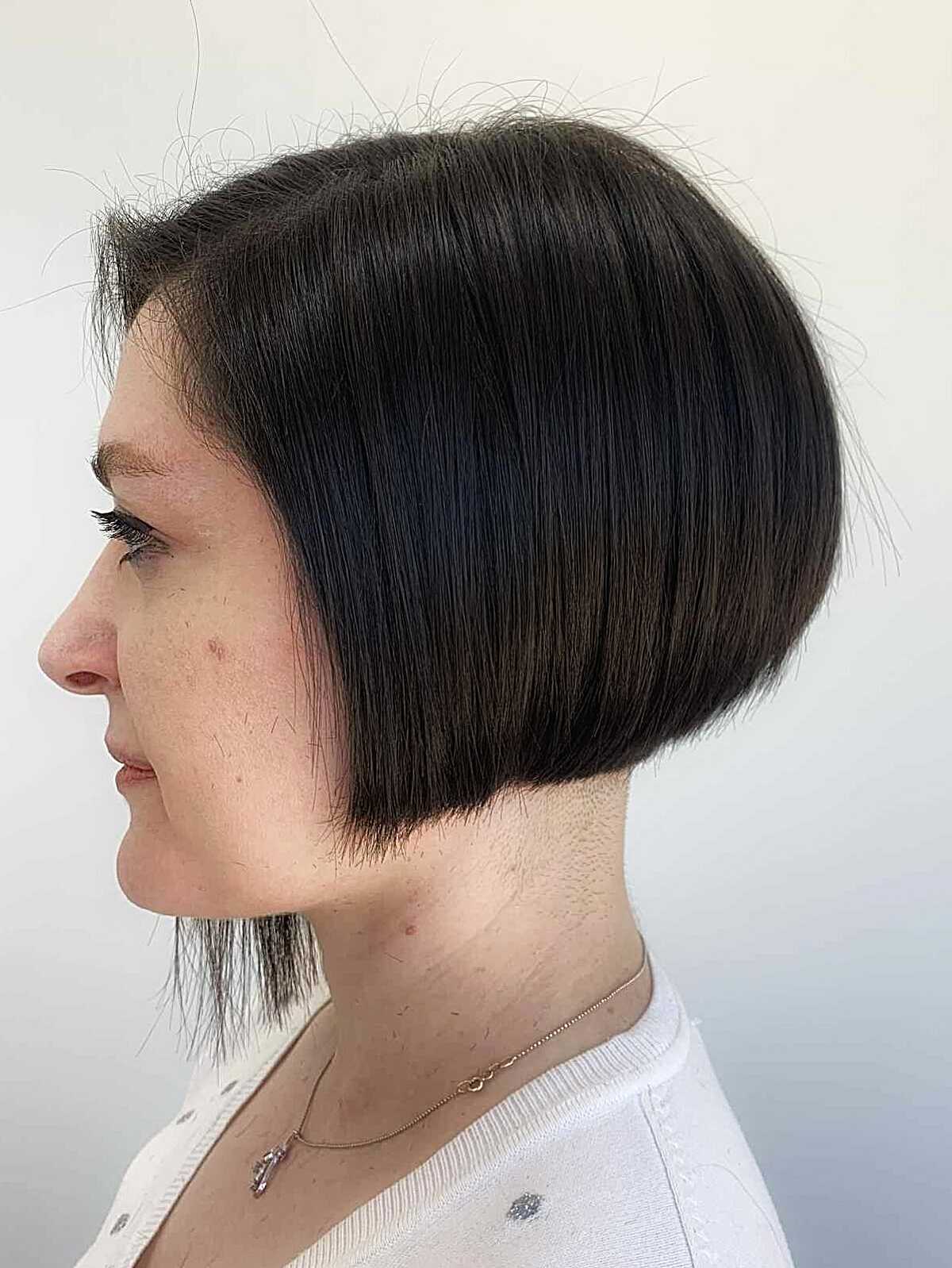
Dark brunette hair pairs with a very short micro fringe and a tidy angled outline. The front edge stops high on the forehead, while the sides taper down around the jaw. The back stays rounded and close to the neck, giving the style a compact finish. If you’re considering fringe this short, discuss how it should sit when dried naturally versus styled forward.
Stacked Blonde Back View
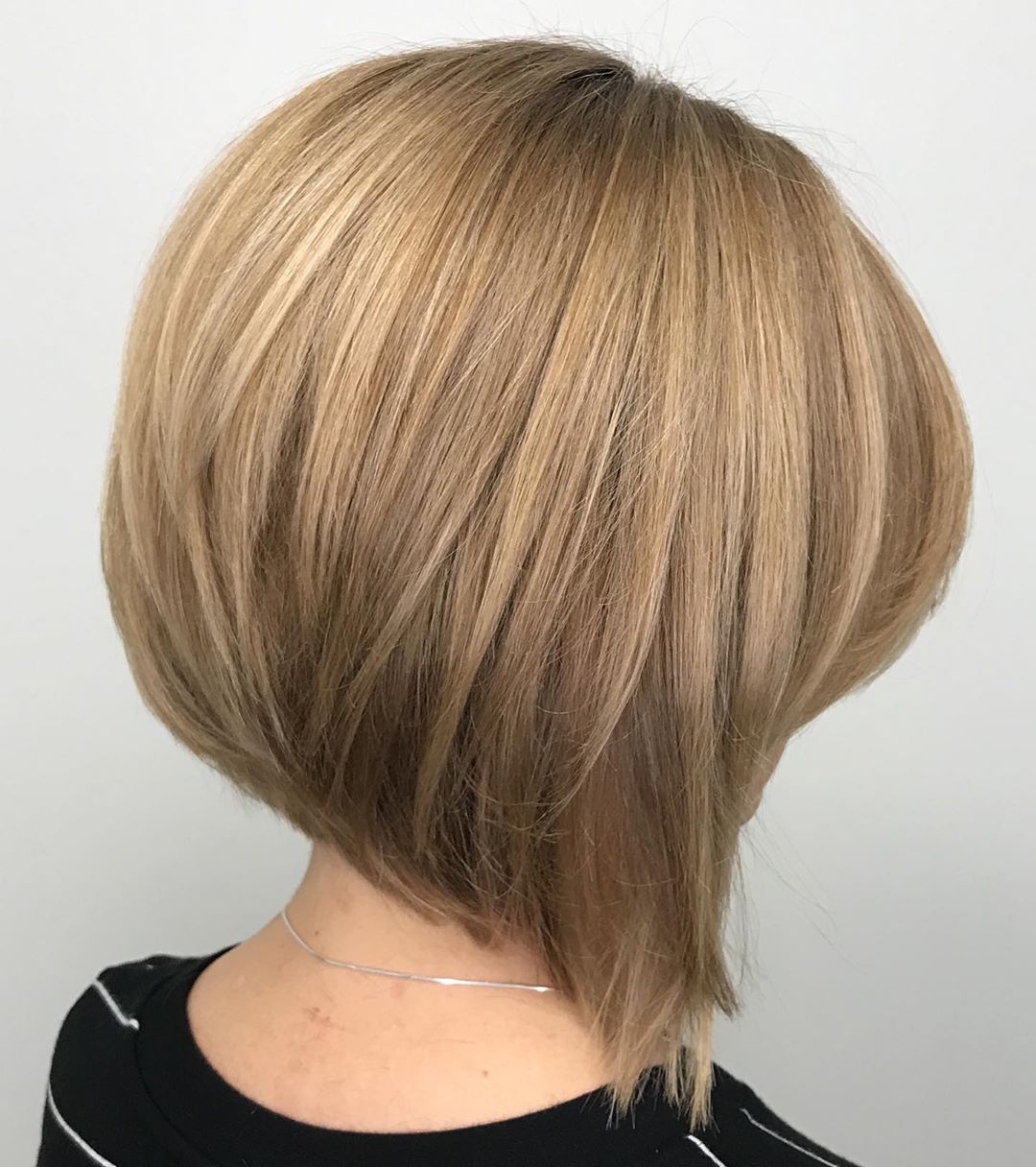
Viewed from behind, the blonde cut shows a rounded stacked crown that builds volume above a tight nape. The layers overlap cleanly and the lower edge curves inward, which creates a polished, sculpted back silhouette. No fringe is visible from this angle, so the shape is the focus. Ask your stylist how much stacking will remain visible as the cut grows out.
Wispy Chestnut Angle
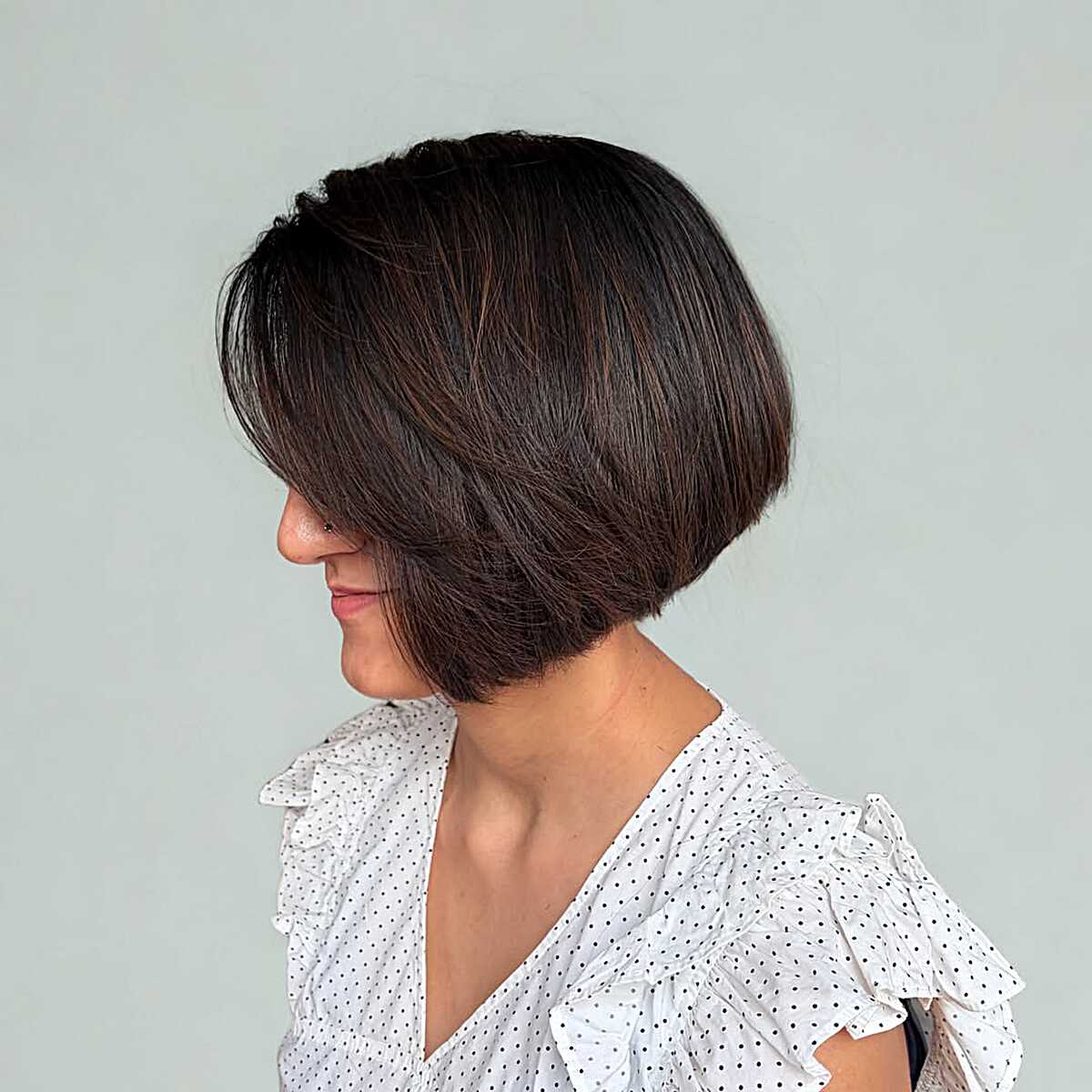
Chestnut brown color and soft, wispy ends give this angled bob a lighter finish than a blunt cut. The front length drops just below the jaw, while the back stays fuller and rounder. Layering is subtle, but the outline still moves gently around the face. If you want the same softness, ask for ends that are slightly feathered rather than cut into a hard line.
Side-Parted Red Angle
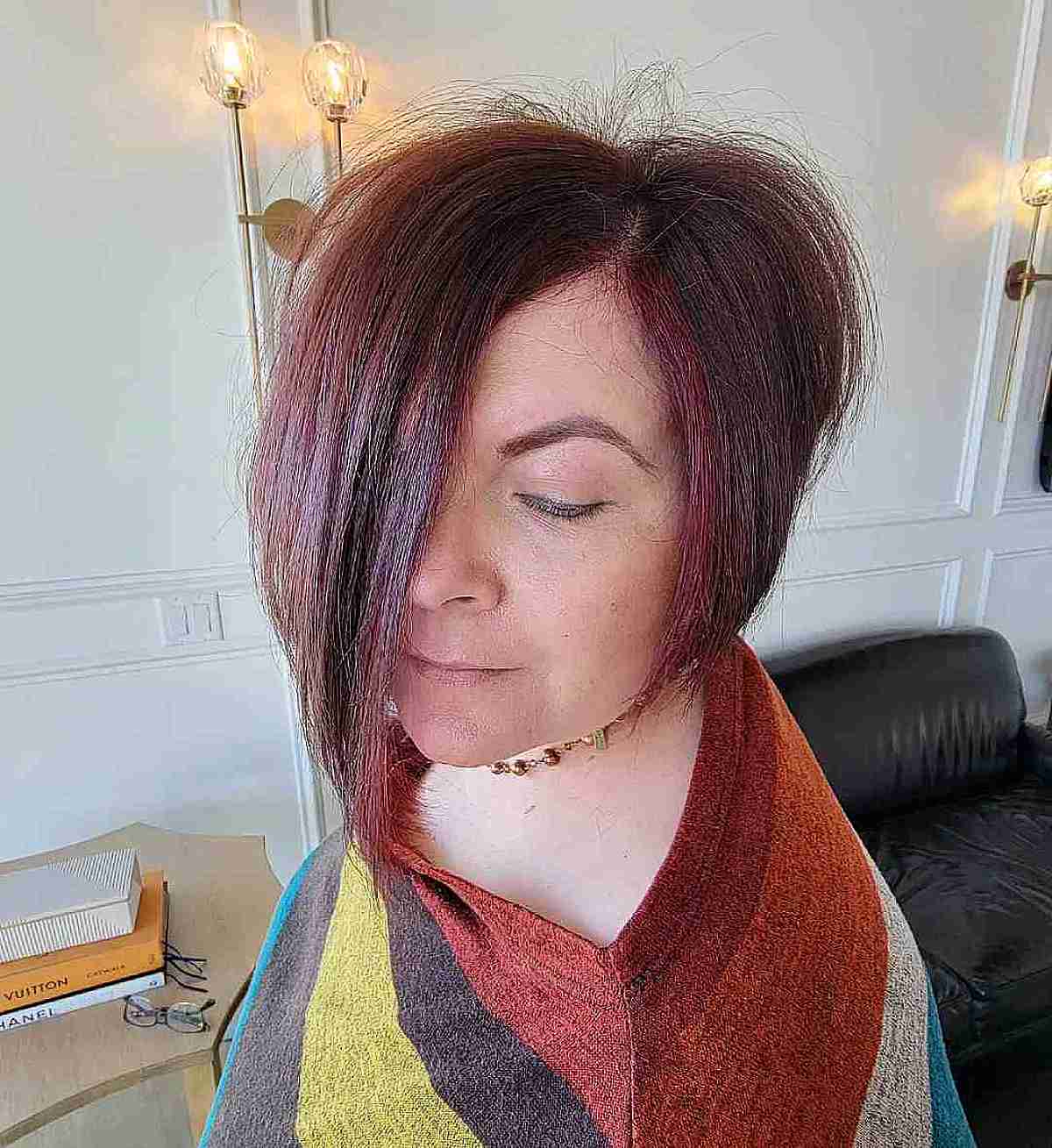
Dark red color and a strong side part create an asymmetrical reading in this angled bob. One front side drops longer and straighter, while the opposite side sits closer to the cheek and neck. The cut has a smooth surface with a bit of lift at the crown. A stylist can fine-tune the side part placement if you want the front length to fall more dramatically.
Copper Waved Bob
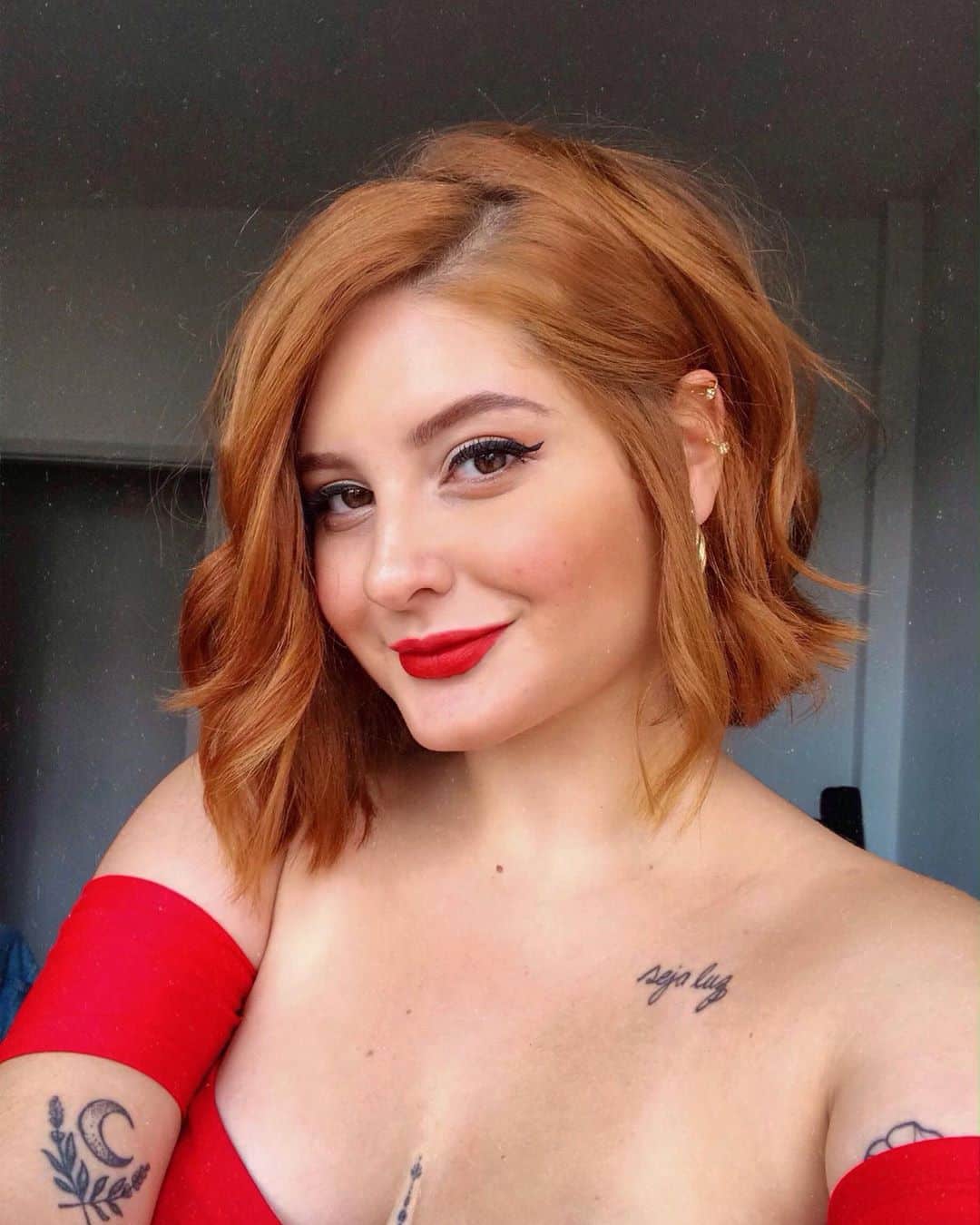
Copper tones brighten the loose waves in this angled bob, and the shape keeps a gentle forward slope from back to front. The side part adds extra motion through the top, while the ends look lightly bent instead of perfectly straight. The result feels soft and airy. If you like this finish, ask about wave placement so the front pieces don’t lose their angle.
Slight Wave Blonde Bob
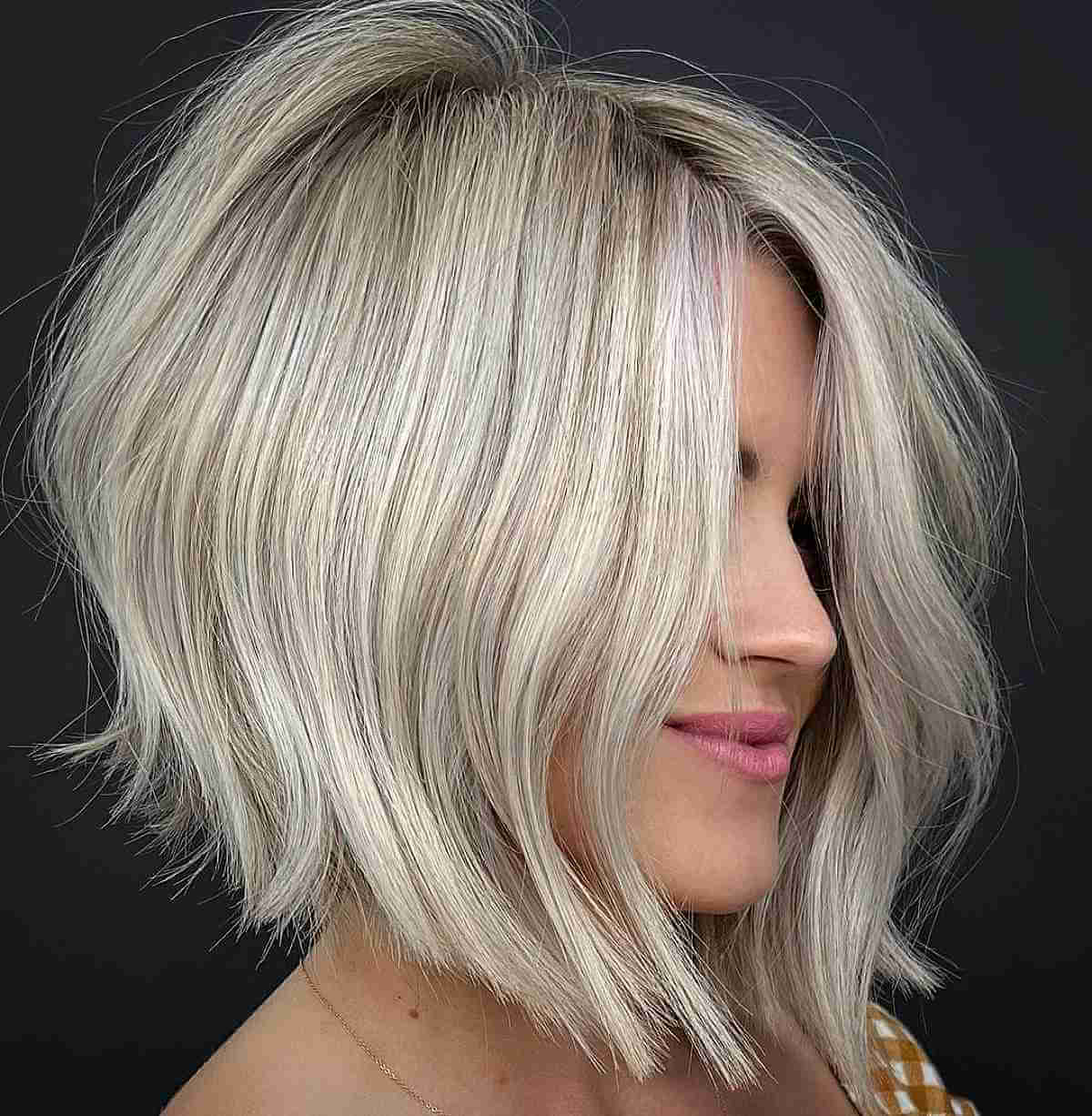
Blonde hair with subtle waves gives this angled bob a relaxed, slightly undone finish. The front pieces sweep forward and angle down near the chin, while the back stays compact with a rounded shape. Surface texture is light enough to keep the outline visible. A stylist can help decide how much wave to leave in the front so the cut still reads clearly.
Platinum Lift Bob
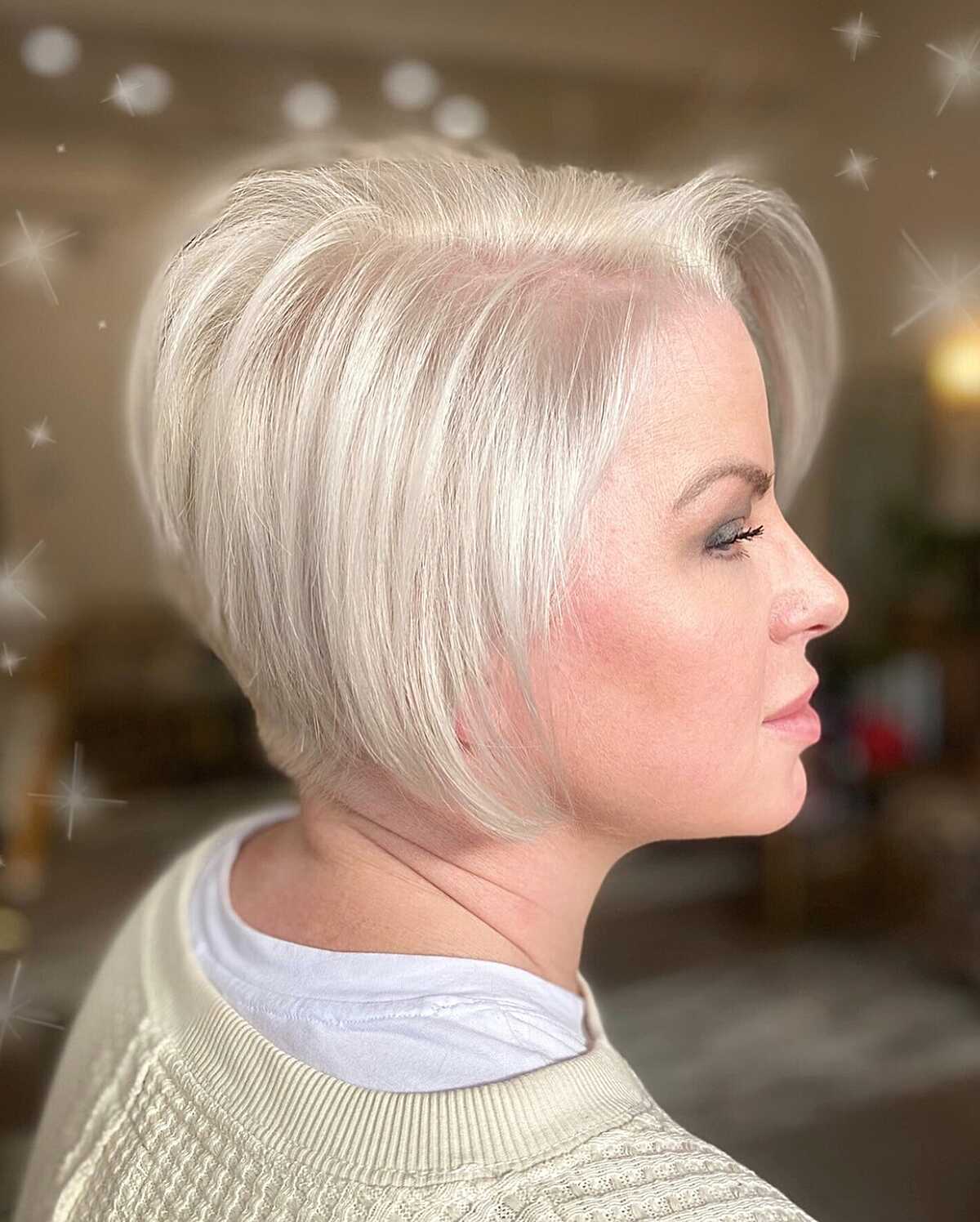
Platinum blonde color and a lifted crown make this angled bob feel airy and sculpted. The front length curves forward in smooth panels, while the nape remains shorter and neatly tucked. A soft side part opens the face, and the finish looks glossy under the light. If lift at the crown is important, bring that up when discussing the roundness and balance of the back.
Curly Tapered Angle
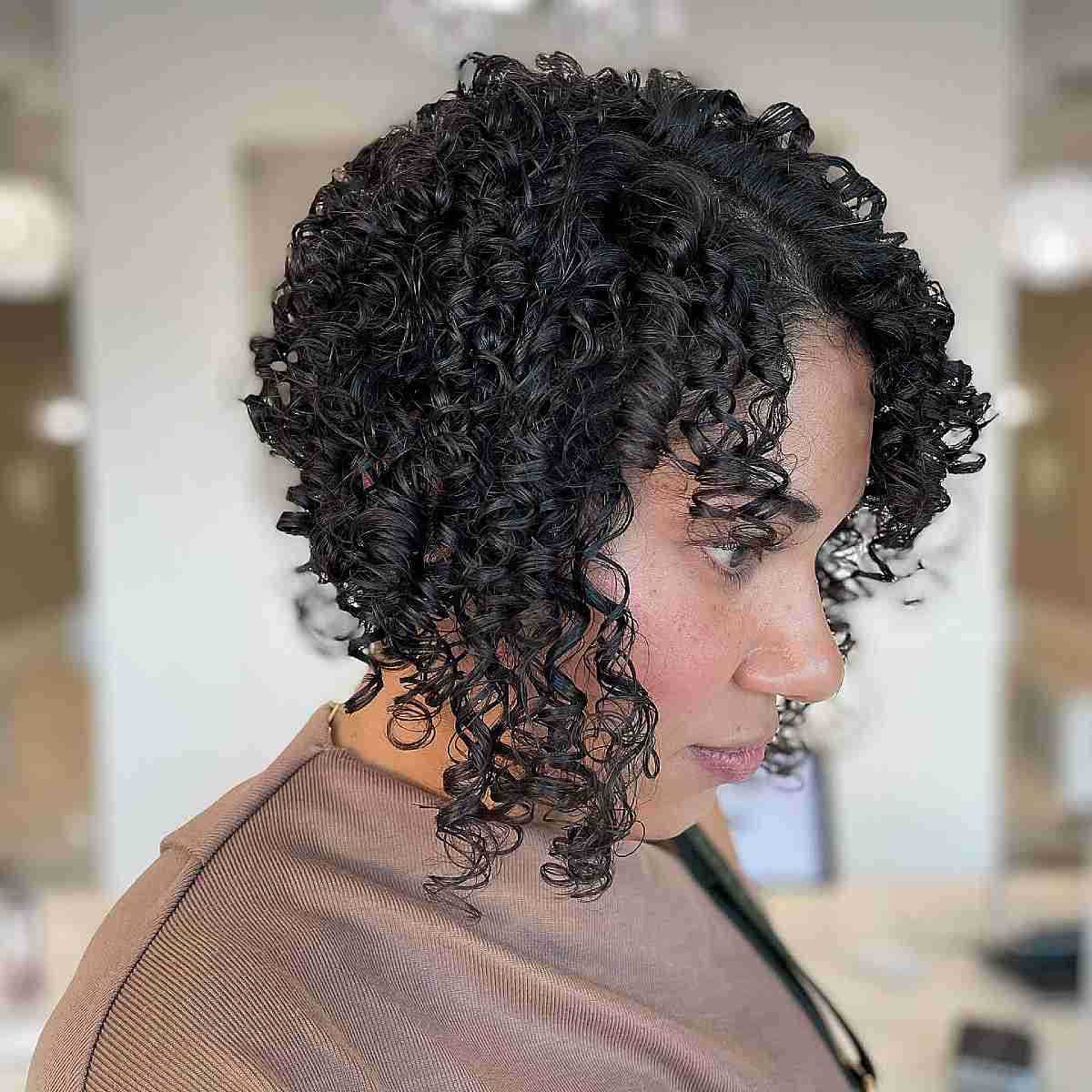
Defined curls fill the top and sides of this angled bob, while the back is tapered shorter for a compact shape at the nape. A few curl strands fall forward, softening the front line and keeping the silhouette balanced. The texture is the main feature here, with the angle visible through the length difference. Ask a stylist how the taper should sit once curls shrink and dry.
Glossy Jet Angle
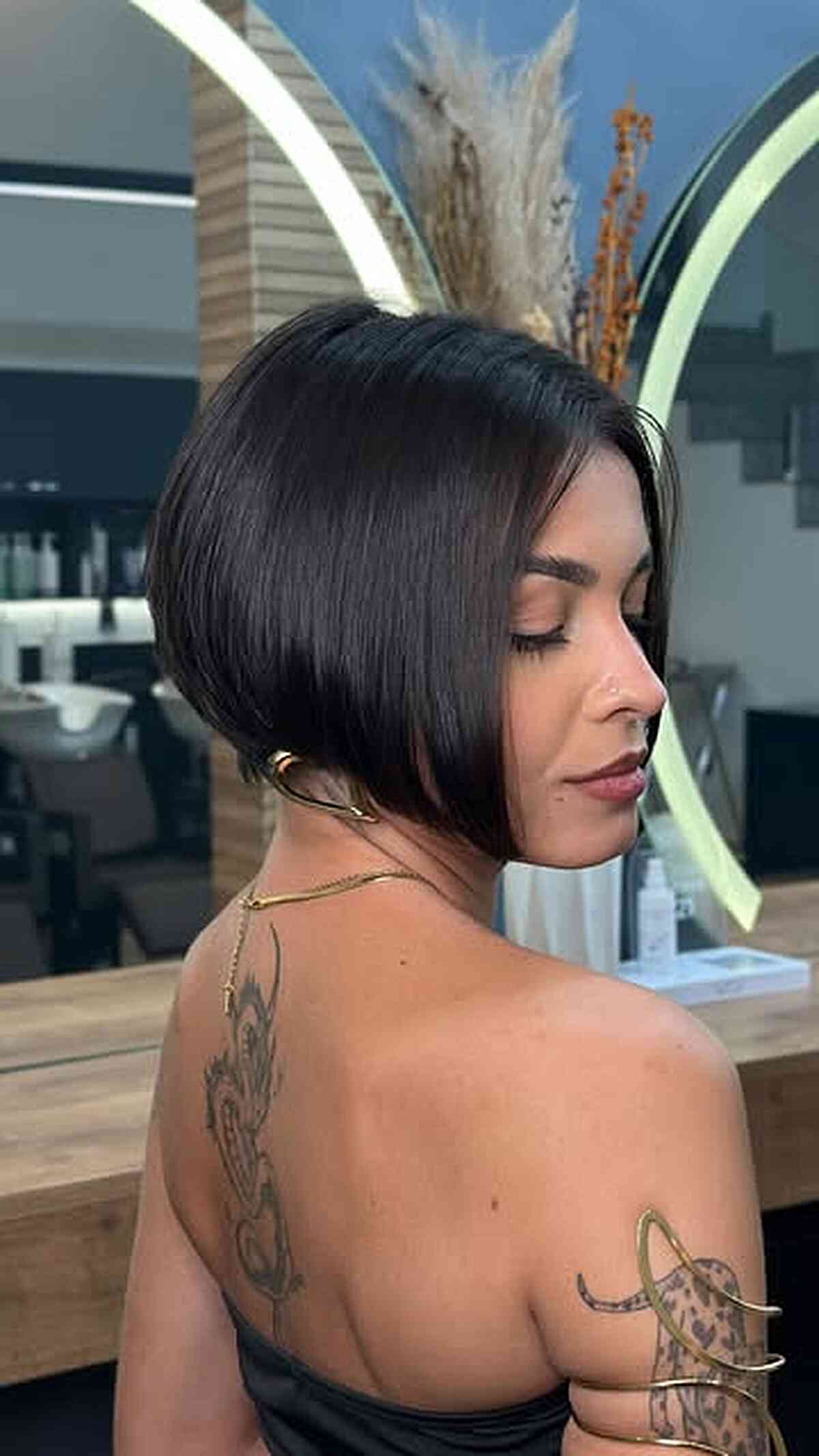
Dark hair and a side part emphasize the smooth, glossy surface of this angled bob. The back sits compact and rounded, while the front narrows into a longer face-framing point. The finish looks sleek, with very little visible disruption in the outline. If you prefer this polished look, ask your stylist to keep the perimeter clean and the parting crisp.
Compact Ice Bob
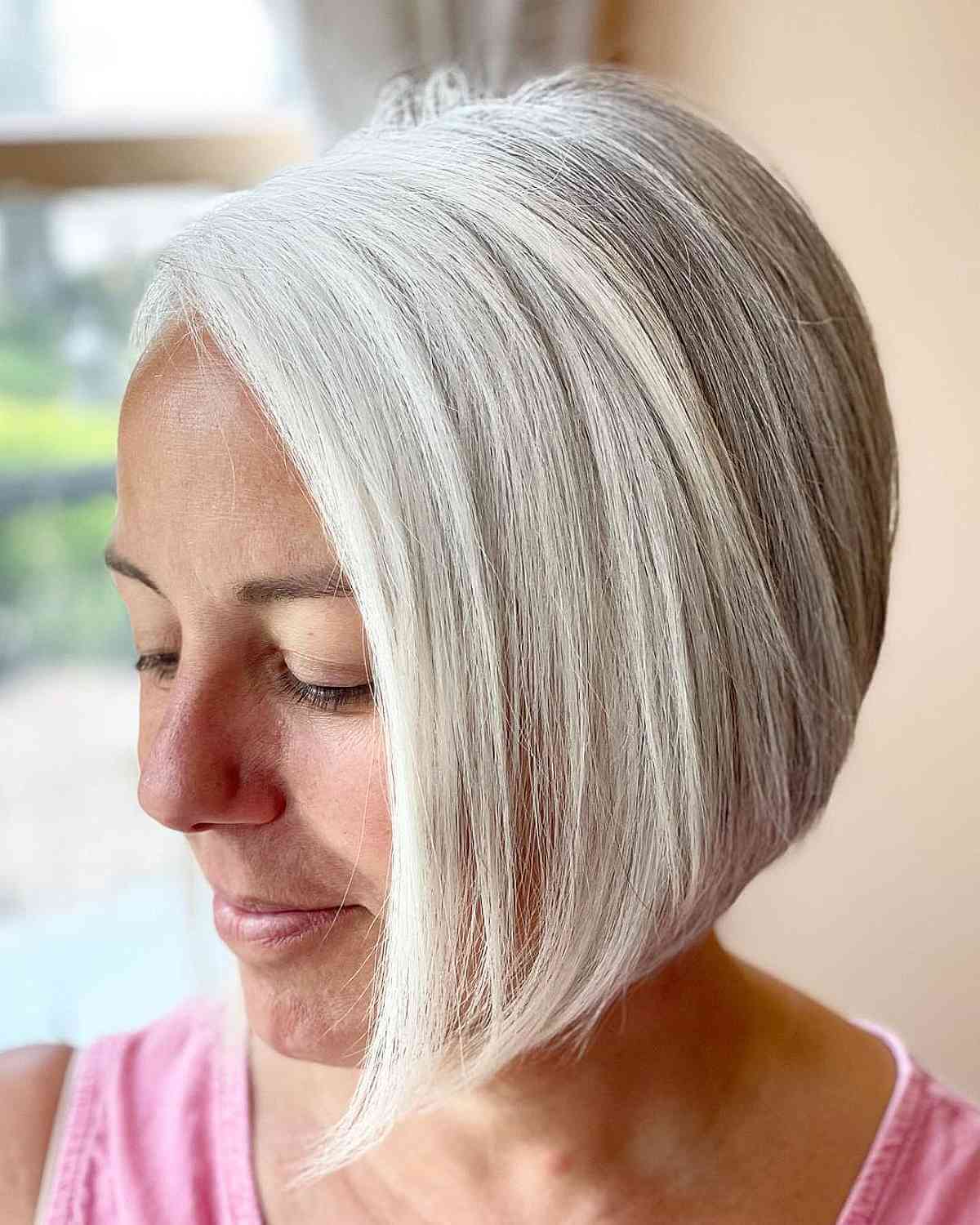
Very light blonde tones and a compact nape give this bob a crisp, minimal look. The shape curves gently around the head before dropping into a longer front piece that rests near the jaw. The styling is smooth and controlled, with little surface frizz or separation. Ask about keeping the back tight and the front softly elongated if you want this neat profile.
Layered Blonde Sweep
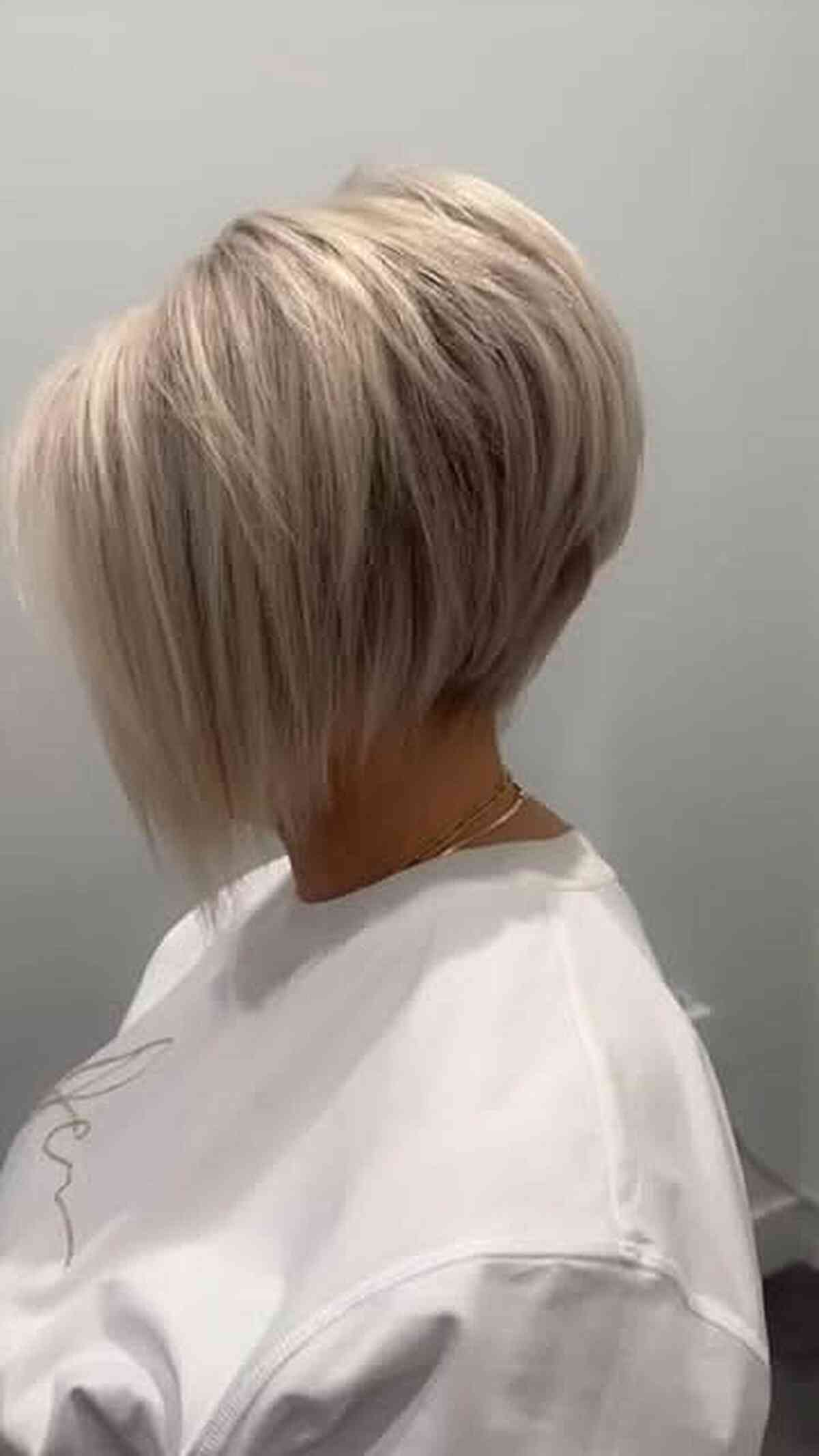
Blonde layers create a lighter, more movable version of the angled bob, with the front length hanging longer than the rounded back. The ends look softly textured, and the silhouette opens slightly at the face instead of staying rigid. The upper layers add air without removing the overall shape. If you want this balance, talk about keeping the perimeter visible while adding soft internal layers.
Straight Fringe Bob
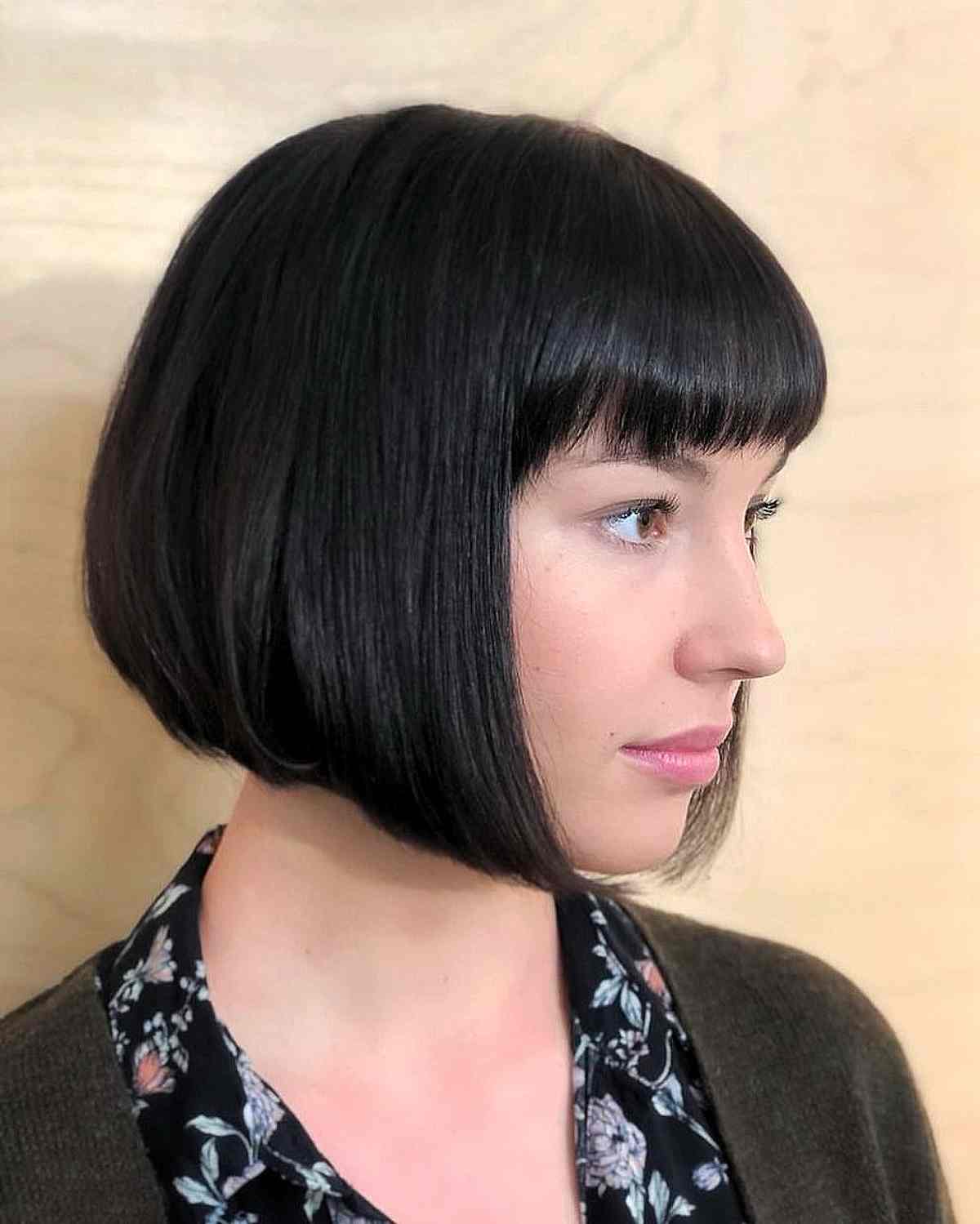
Black hair and straight bangs create a graphic, rounded angled bob with a smooth surface. The fringe sits low across the forehead, while the sides curve neatly toward the jaw and the back stays tucked in. The cut reads polished and structured from every visible angle. If you want a similar finish, discuss how dense the fringe should be so it stays even when worn forward.
Side-Swept Blonde Layers
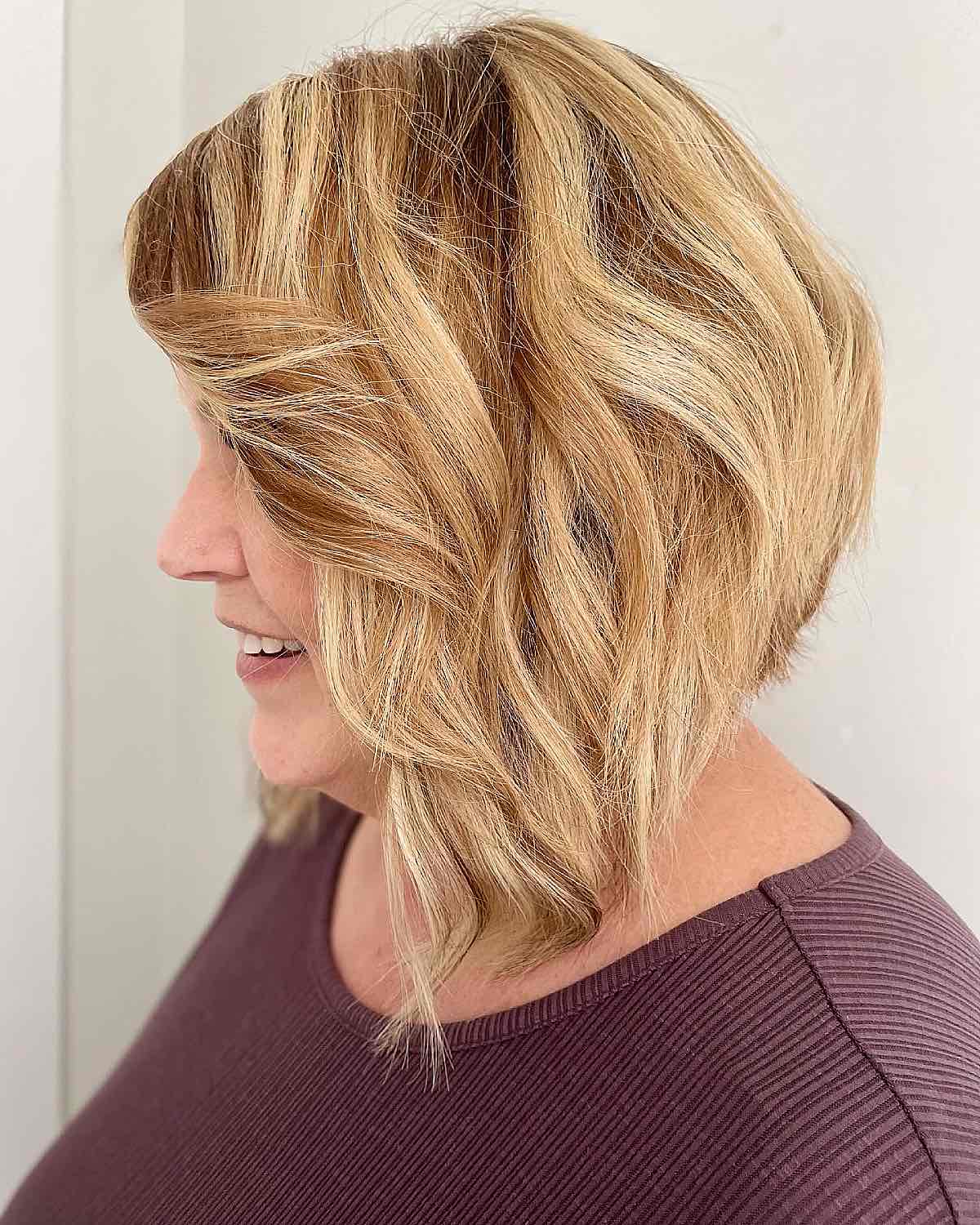
Blonde color, side-swept fringe, and airy layers give this angled bob a soft, mobile finish. The front section falls longer and more open around the cheek, while the back stays shorter and rounded. Movement is visible through the ends, which keep the style from looking heavy. A stylist can help place the fringe so it blends with the longest front piece instead of hiding the angle.