Caesar cuts can look very different once you change the fringe, the fade, or the texture on top. This collection focuses on visible haircut details only: how the top is cropped, where the sides taper, how blunt the front line appears, and whether the finish reads neat or textured. Some versions lean classic and compact, while others bring in heavier contrast through a fade or more length through the crown. Use the descriptions as a reference point for discussing the fringe line, side blending, and overall outline with a stylist.
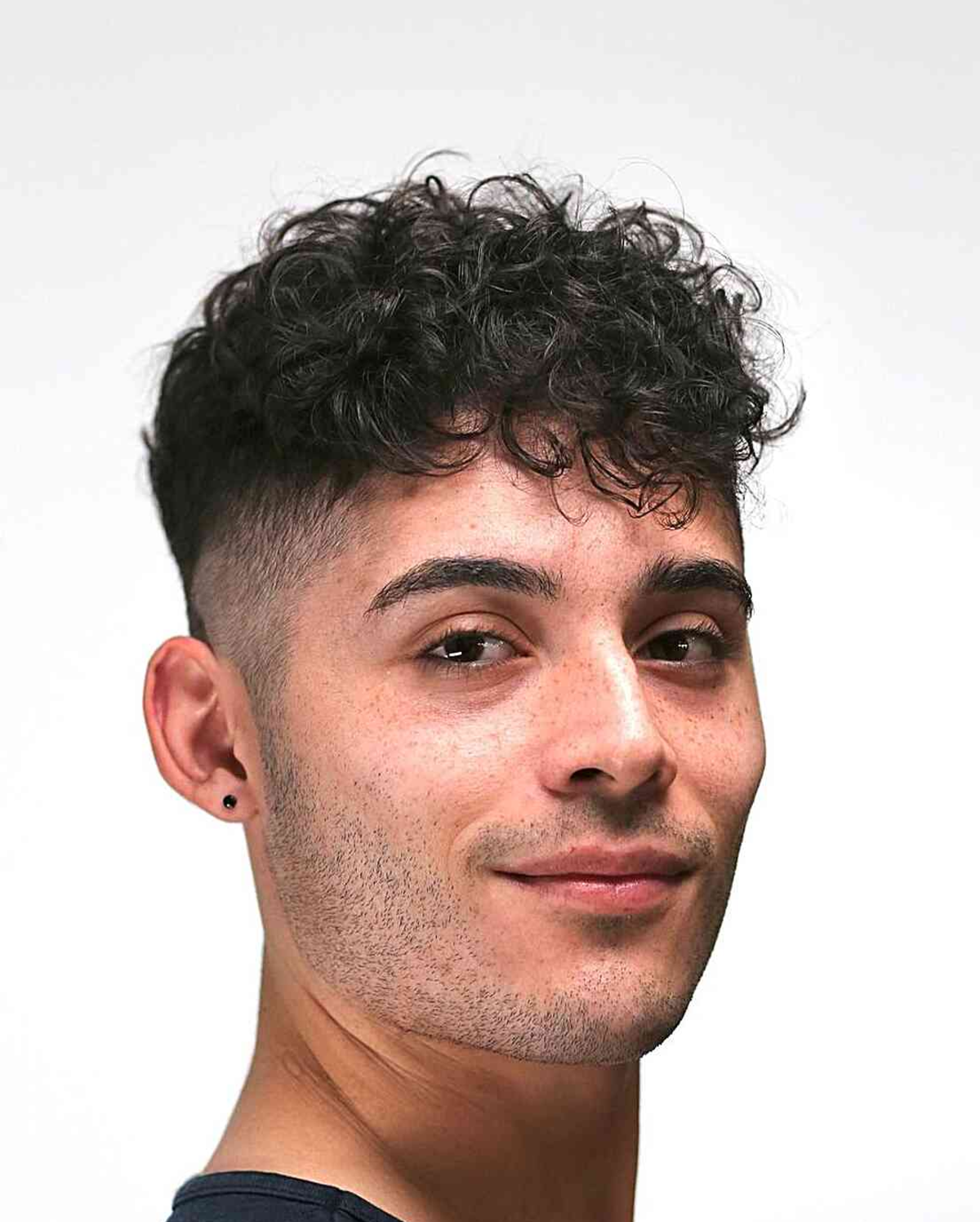
Textured Fringe With Tapered Sides

Thick, short hair is cut into a forward-leaning fringe with visible texture through the top and a tidy taper around the sides. The outline stays compact, while the front edge reads slightly softened instead of razor blunt. Ask your stylist how much weight to leave in the fringe if you want the top to lie forward without looking flat.
Cropped Fringe High Fade
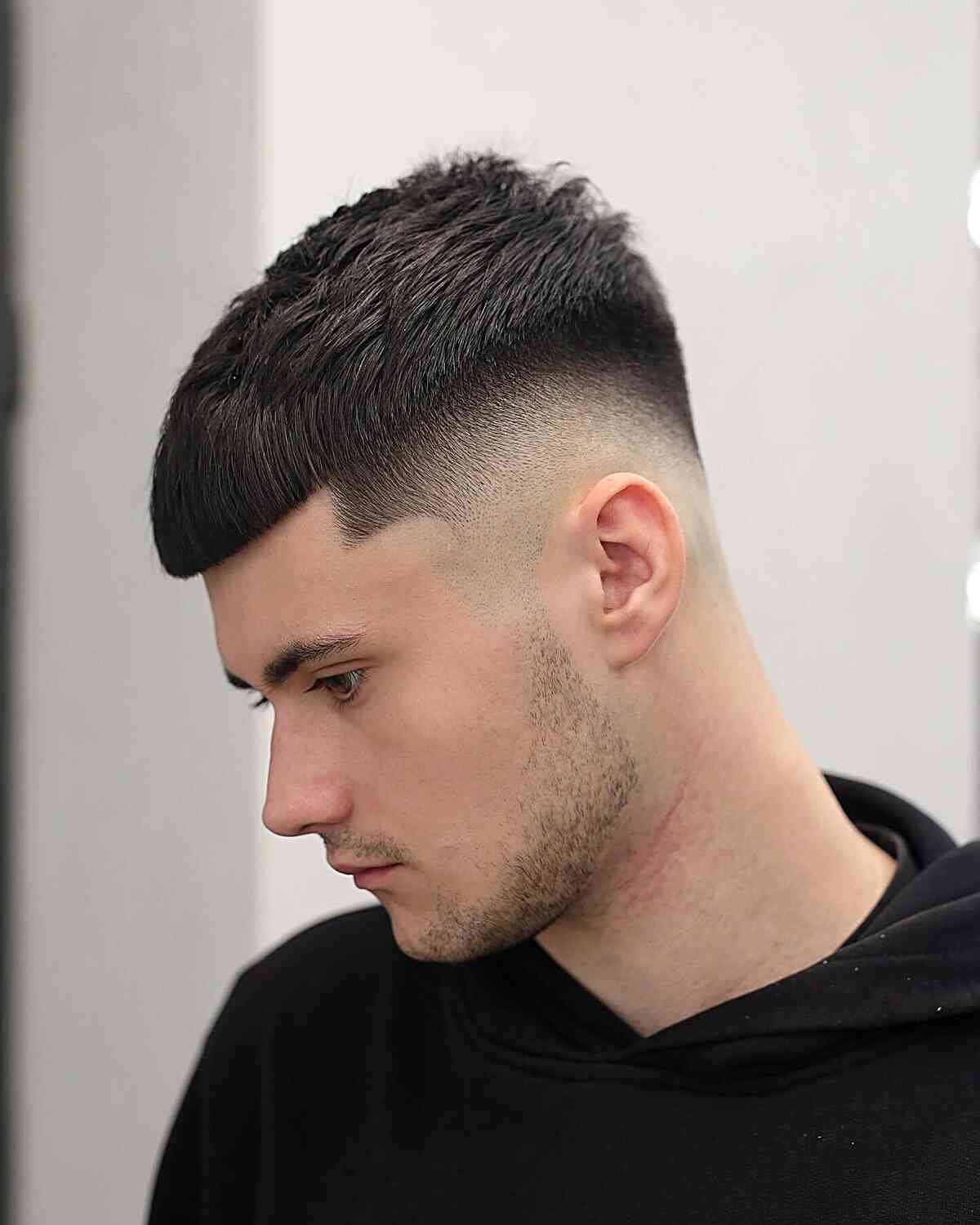
A straight, short fringe sits above a high fade that removes most bulk on the sides and back. The top looks short and controlled, with subtle texture keeping the shape from appearing too rigid. The transition is crisp and high-contrast, so it helps to discuss how tight you want the fade to sit near the parietal ridge.
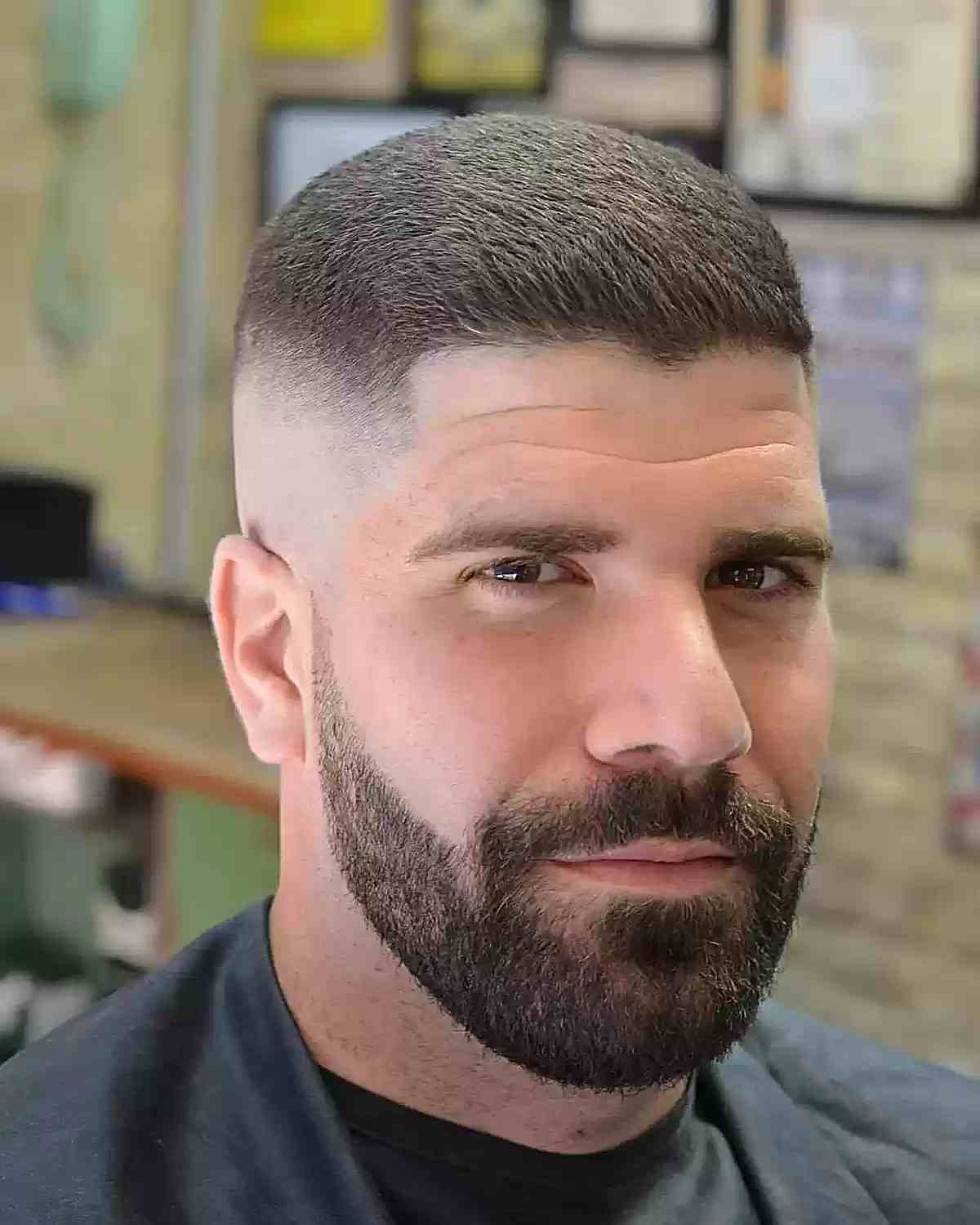
Blunt Fringe Skin Fade
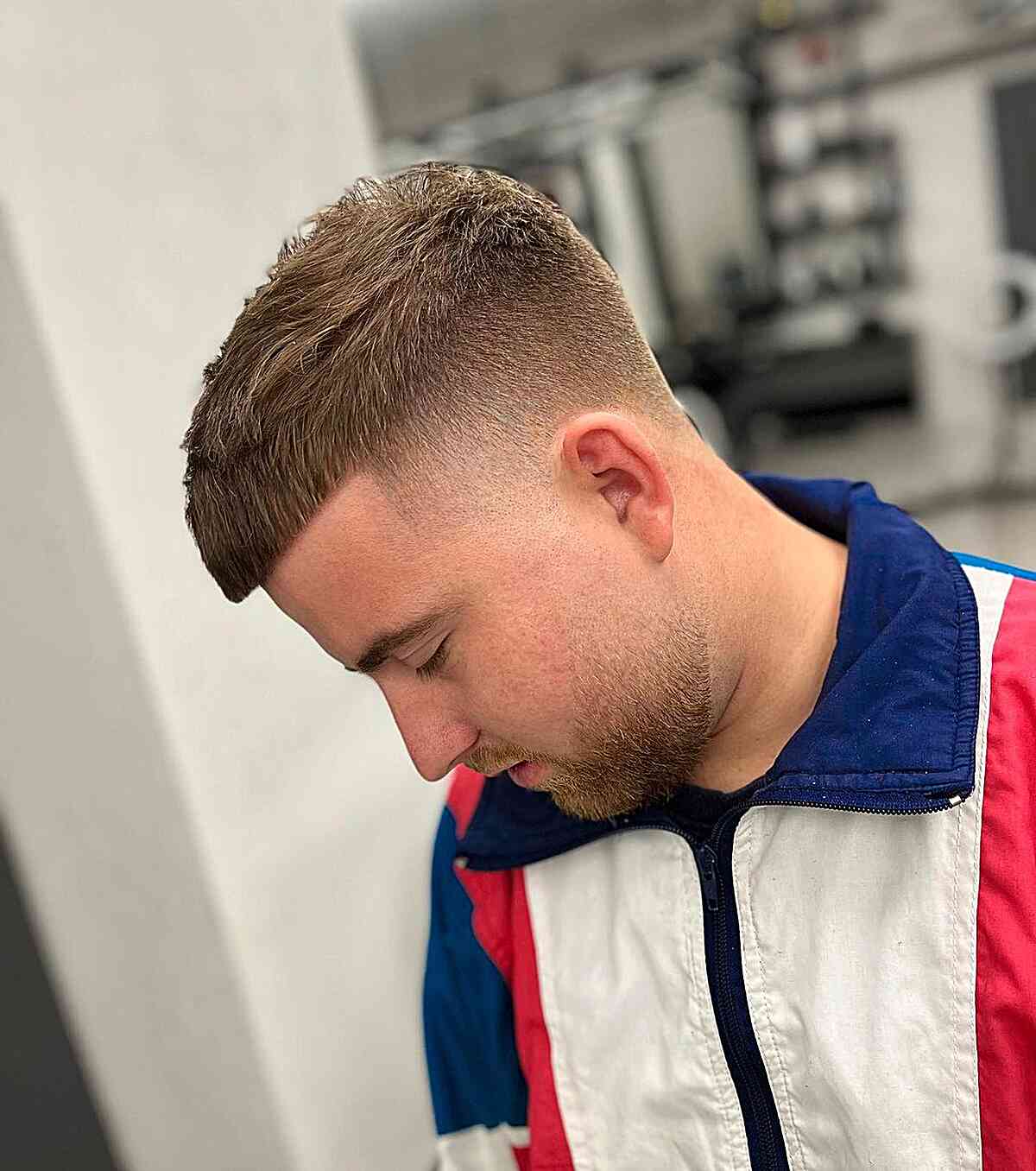
This version pairs a dense, straight-across fringe with a close fade that tightens the sides and leaves the top short. The front line is noticeably sharp, while the crown carries a little texture for contrast. A clean edge-up around the forehead can change the look a lot, so it is worth clarifying how square you want the fringe.
Clean Fringe Fade Cut
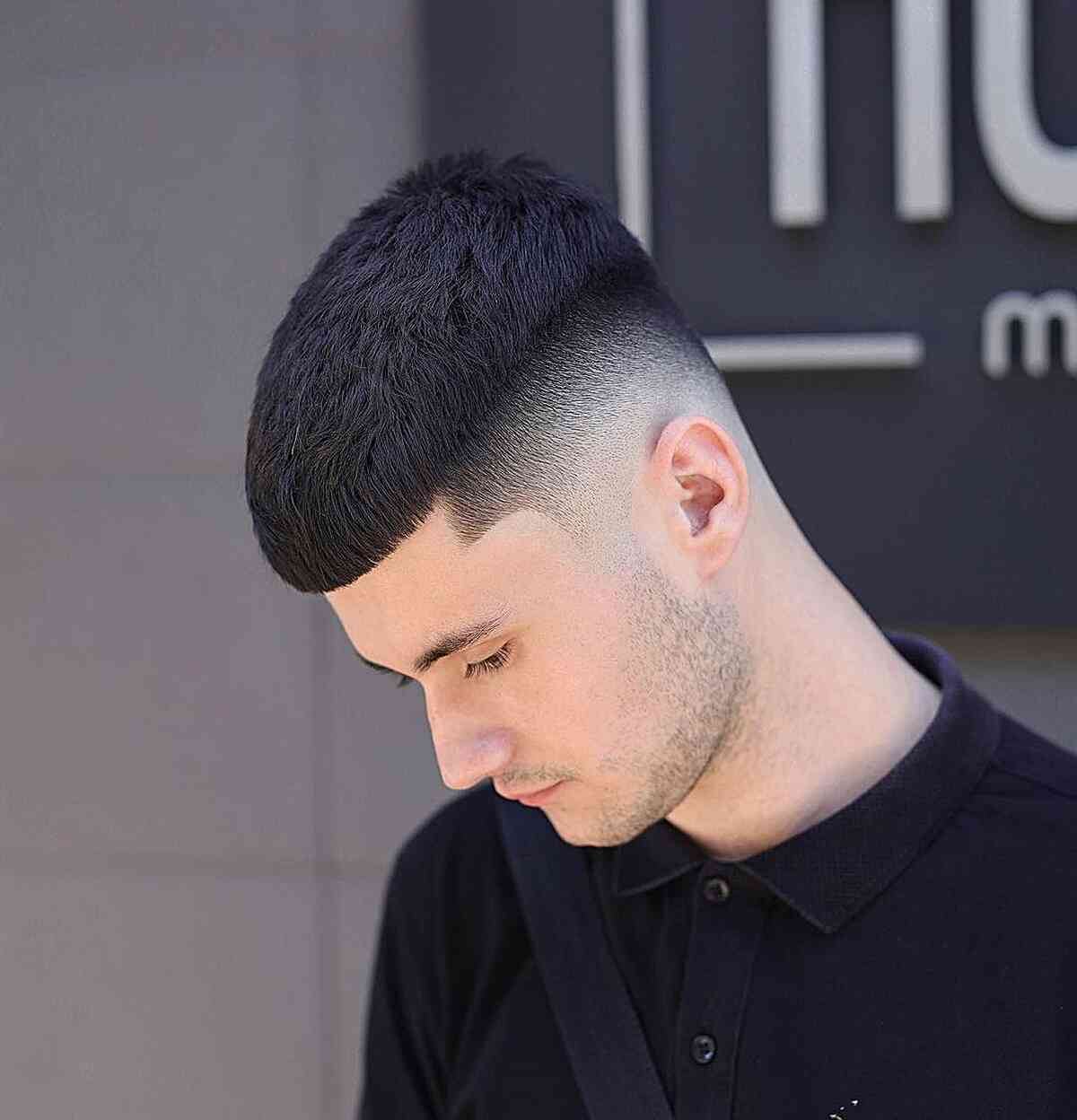
Short, dark hair is shaped into a rounded fringe with a smooth fade that opens the sides and keeps the silhouette neat. The top has a slightly brushed texture, but the overall finish remains tidy and minimal. If you like this balanced shape, ask your barber to keep the fringe line even while softening the transition at the temples.
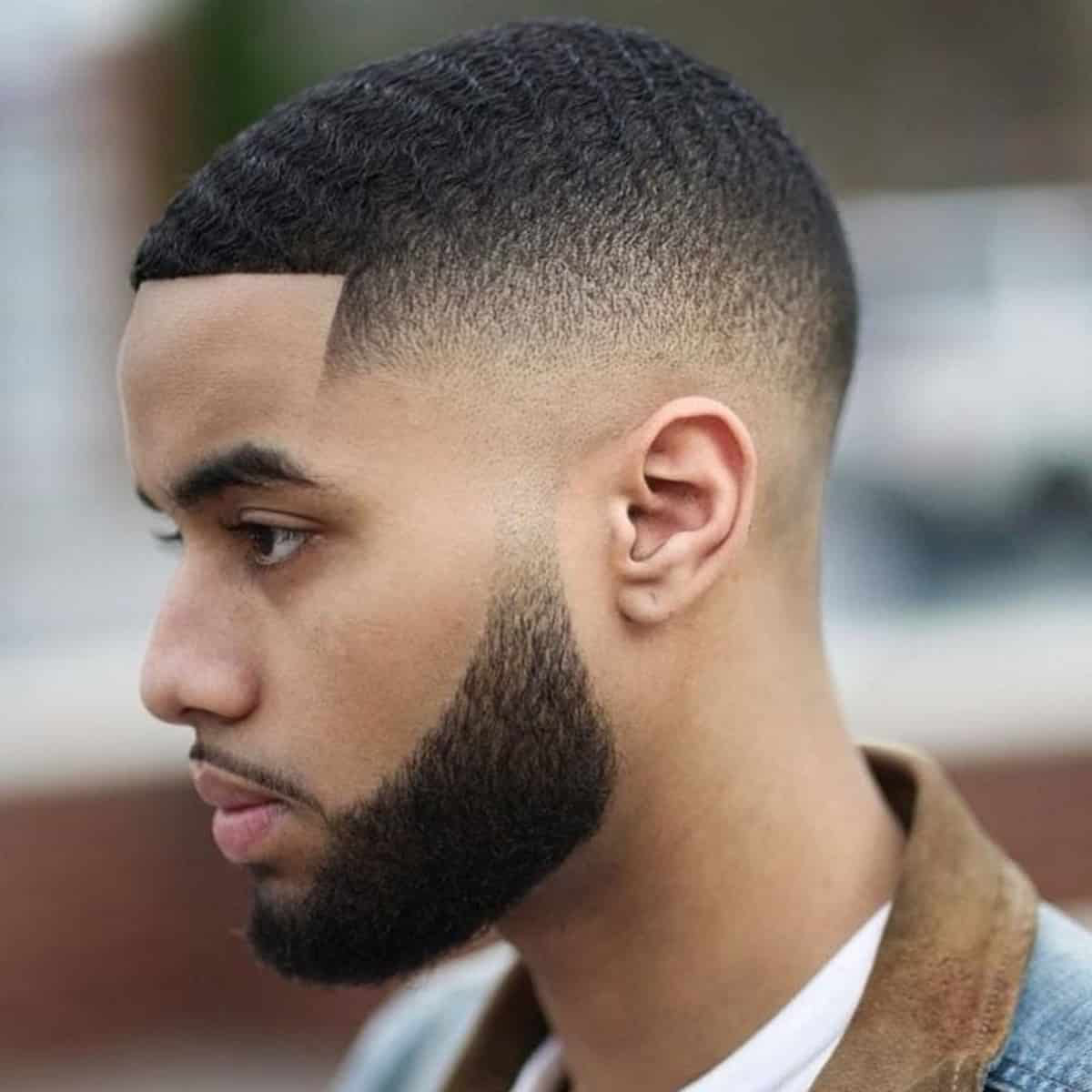
Sharp Line Caesar Fade
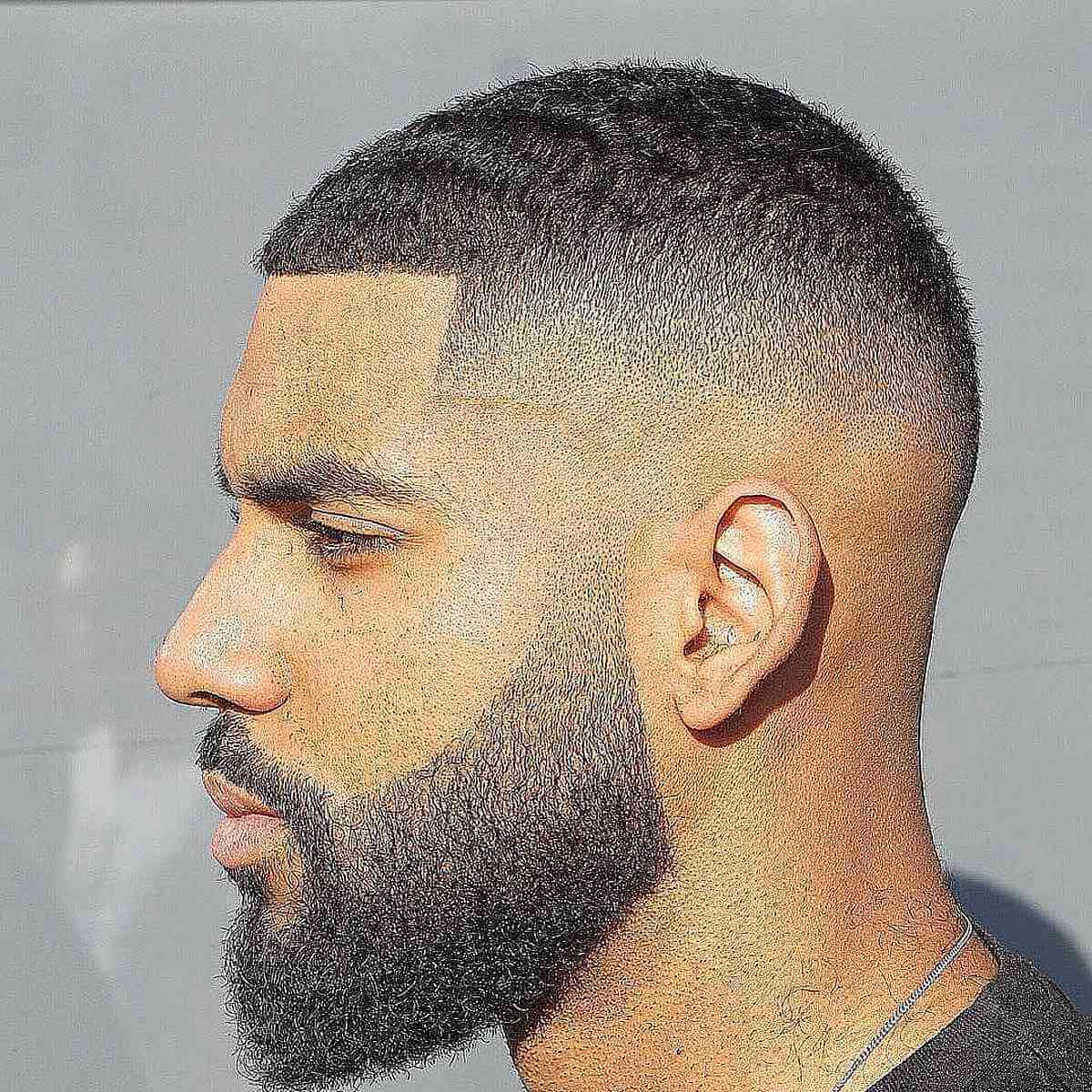
Very short hair on top is paired with a smooth, gradual fade and a sharply defined forehead line. The style appears compact, with a flat front and close sides that emphasize the shape more than movement. The beard adds extra frame below, so if you want a similar contrast, bring up how square or rounded you want the front corners to look.
Compact Fringe Skin Fade
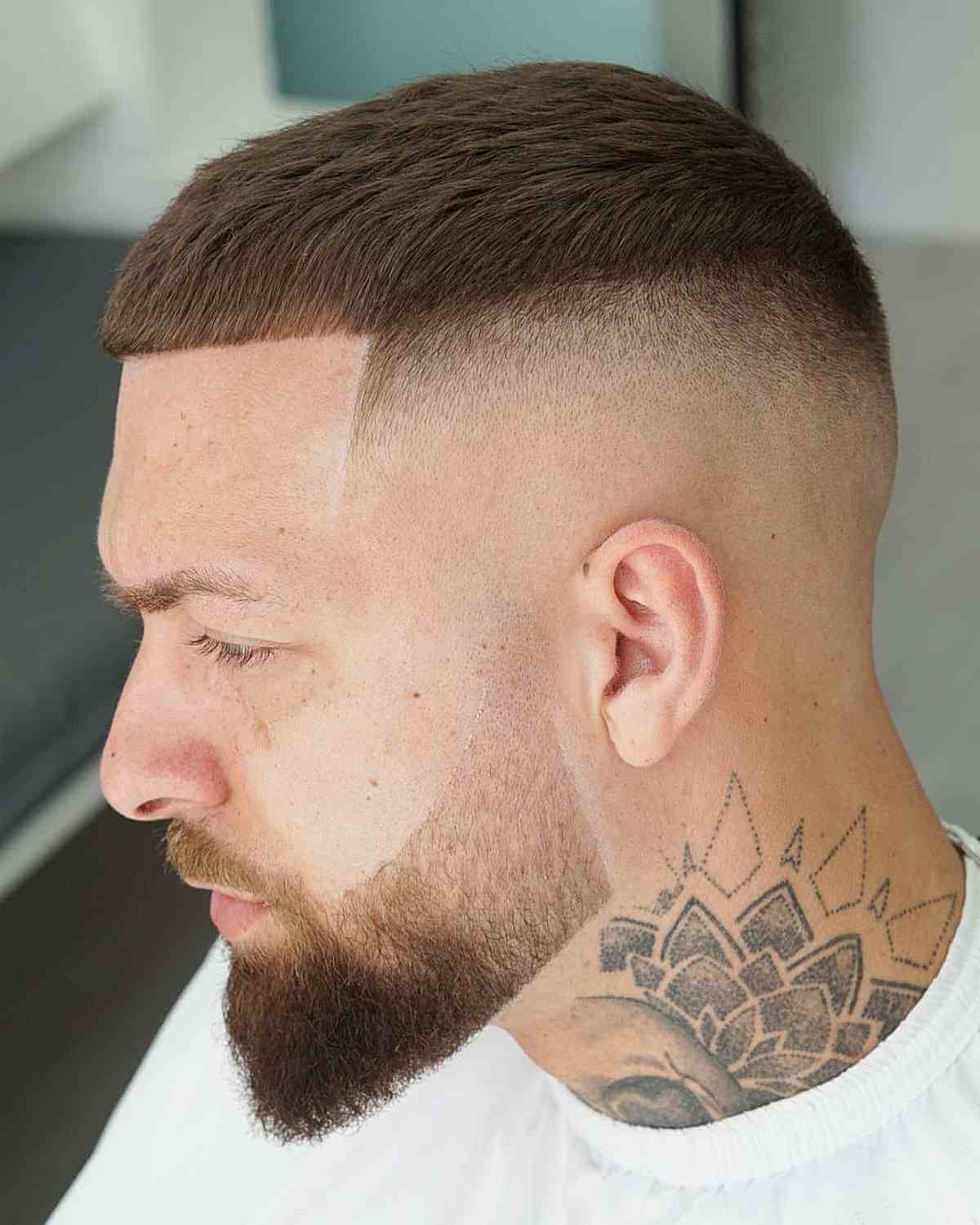
A neat, straight fringe sits above a high skin fade that clears the sides down to the scalp. The top keeps a uniform, cropped length with a smooth matte finish, giving the cut a clean and structured feel. Because the fade rises high, it helps to specify how much scalp exposure you want around the temples and nape.
Textured Top Fade Caesar
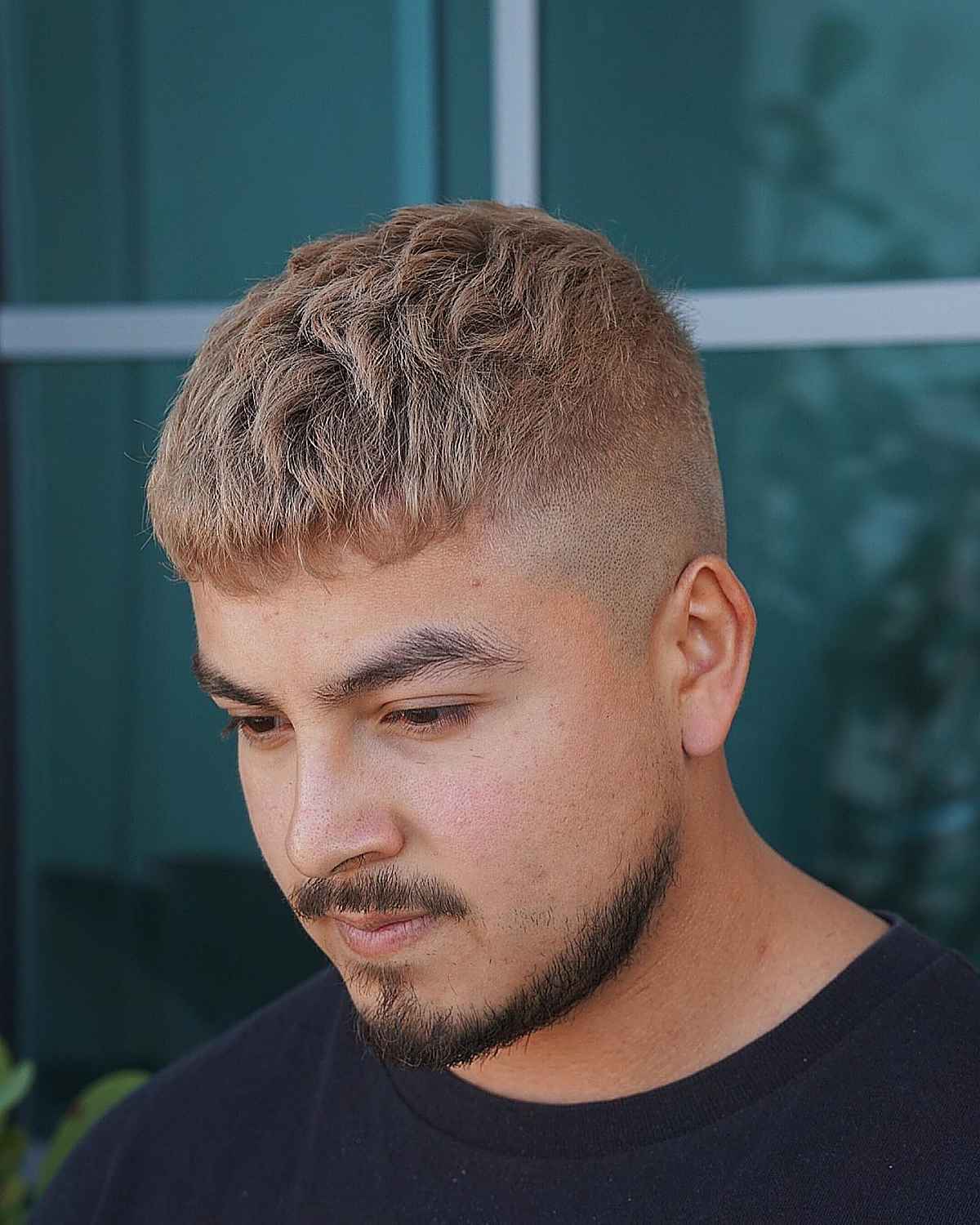
This cut shows a short, textured top with a blunt fringe and closely faded sides. The crown has a slightly tousled finish, so the overall shape feels less rigid than a classic flat Caesar. The front still stays compact, making it a good reference for talking about how much separation you want between the fringe and the fade.
Soft Fringe Low Fade
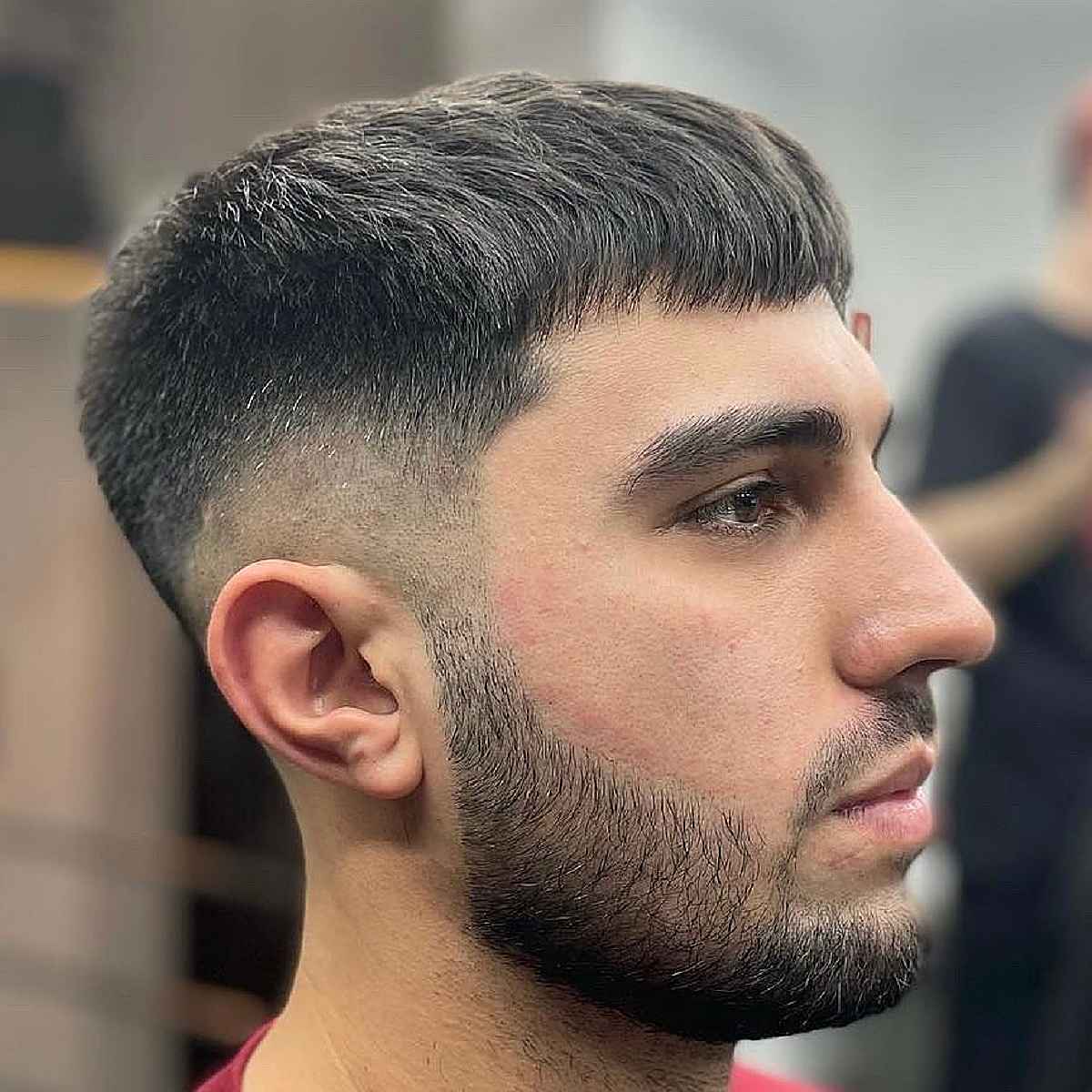
A low fade keeps the sides gradual while the top remains short, straight, and lightly textured. The fringe sits forward in a narrow band, and the haircut reads tidy without looking severe. Since the transition begins lower on the head, ask your stylist where you want the fade to start so the top does not feel overexposed.
Closely Cropped White Caesar
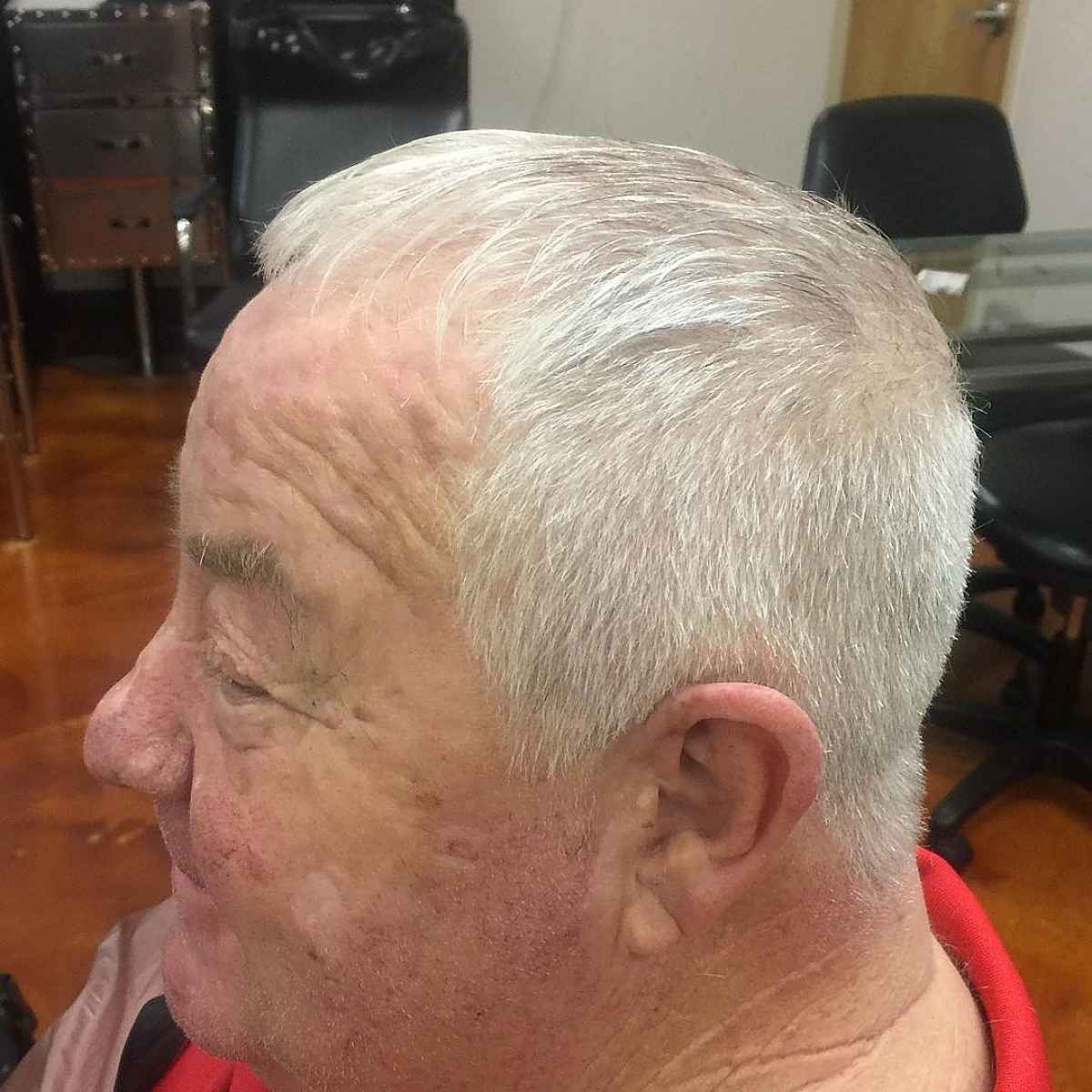
Very short, evenly cropped hair is brushed forward into a subtle fringe with little visible layering. The light color and short length make the shape read softly across the top while the sides stay minimal and close. Because the cut is so short, a stylist can help refine the front line so it sits cleanly without appearing uneven.
Forward Fringe Taper Fade
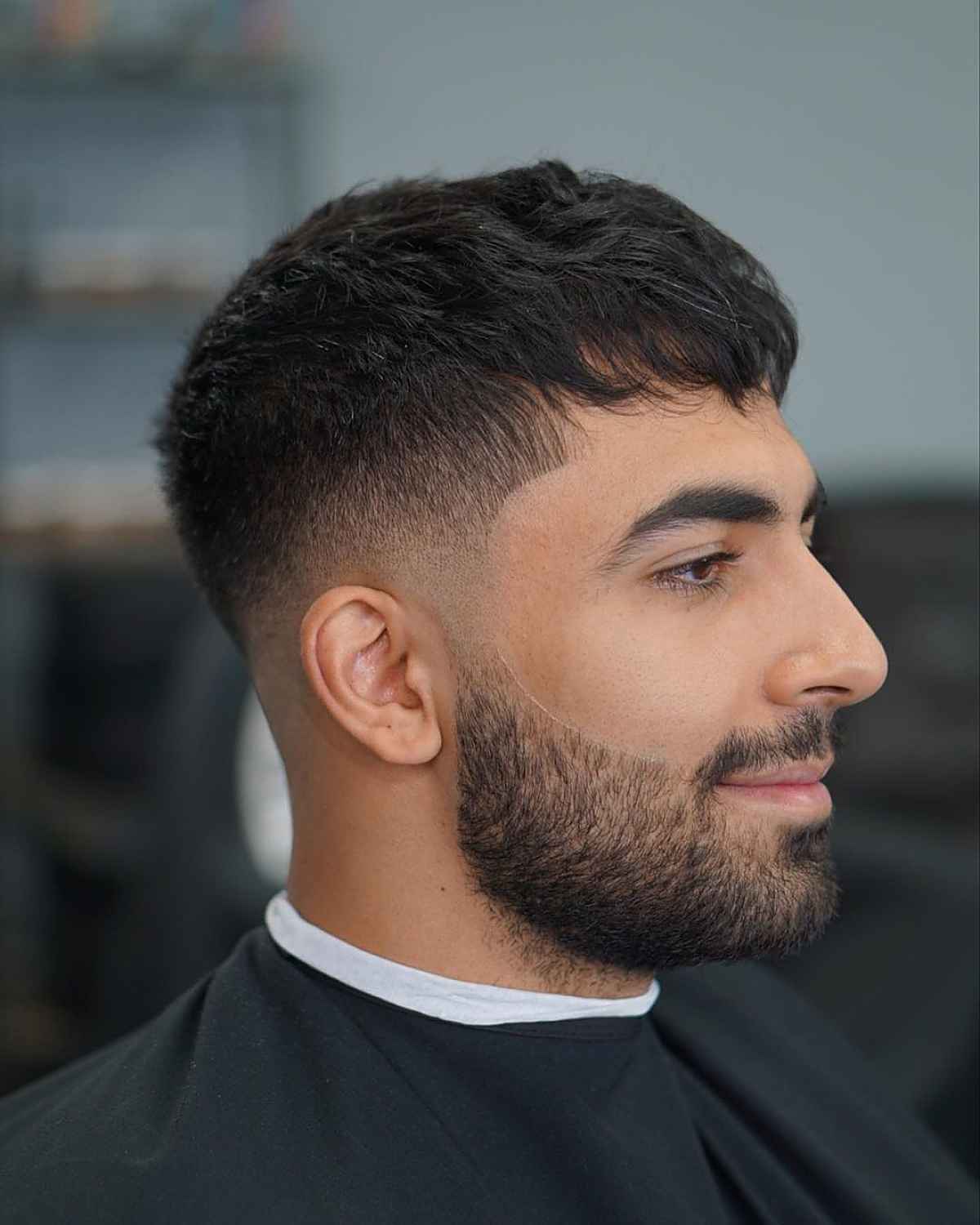
Dense dark hair is left slightly longer on top and pushed forward into a textured fringe, while the sides taper smoothly down near the skin. The shape is narrow at the temples and fuller through the crown, creating a clean profile. If you like the balance here, discuss whether the fringe should stay heavy or be thinned for more movement.
Silver Cropped Fringe Fade
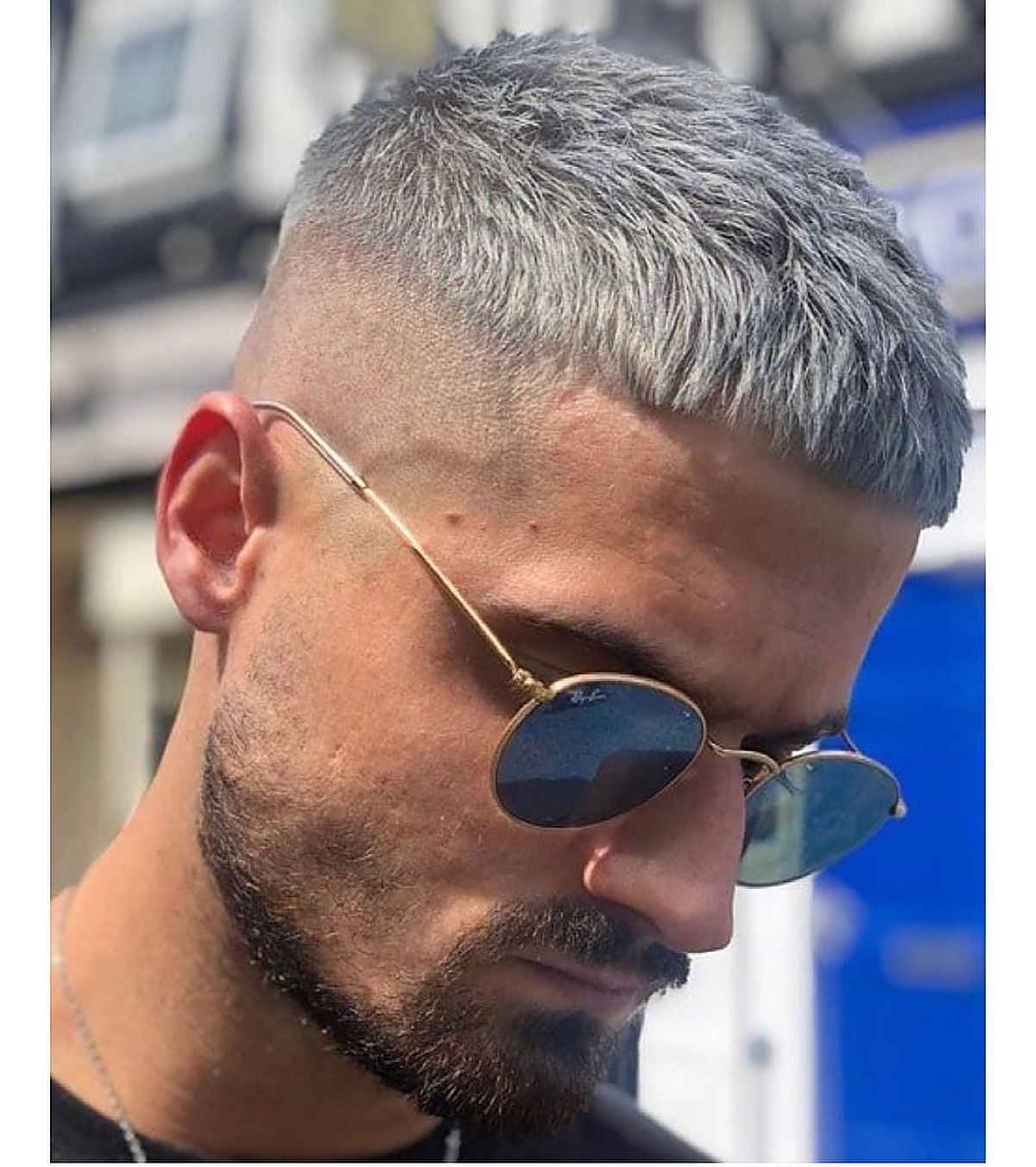
Silver-gray hair is cut short across the top with a short, blunt fringe and a tight fade on the sides. The front edge is even and compact, while the top shows faint texture that keeps the shape from feeling too blocky. A clean neckline and close sides help this cut stay sharp, so ask how high you want the fade to begin.
Short Boxed Fringe Cut
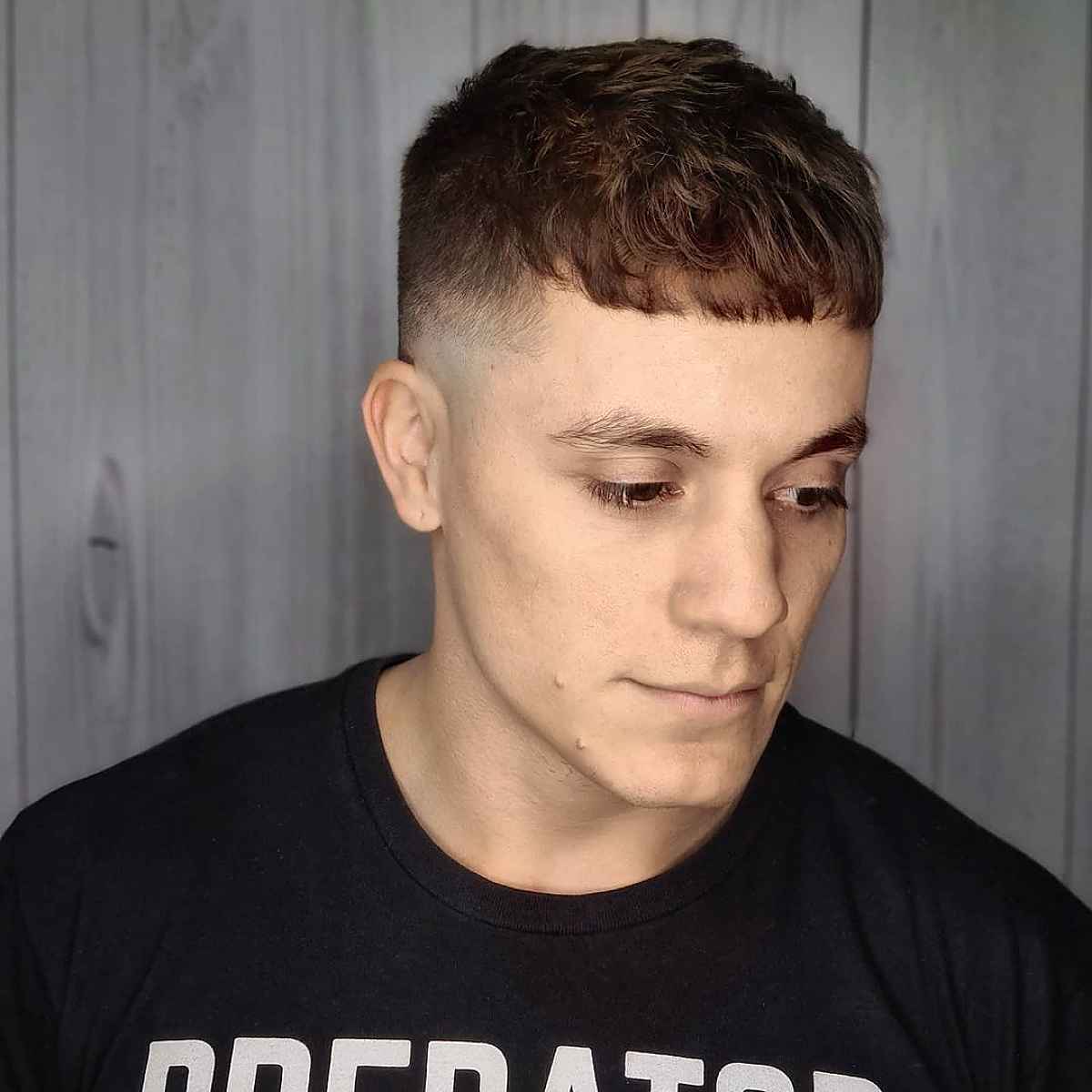
A short, boxed fringe sits over very close sides, with the top kept compact and lightly textured. The front line is straight but not overly severe, and the overall profile stays square and tidy. Since the cut depends on that front edge, it is worth asking your stylist whether you want the fringe line softened or kept crisp.
Platinum Fringe With Fade

Light platinum hair is cut into a short, forward fringe with faded sides and a slightly longer top. The texture appears choppy, giving the front a broken-up finish instead of a solid block. Because the color and fringe both stand out, a stylist can help keep the fade clean while deciding how much separation to leave at the hairline.