Dread styles can read polished, bold, or low-key depending on how the roots are sectioned, how the lengths are finished, and whether the sides are faded or left fuller. In this edit, each look is described only by what shows in the image: parting pattern, length, shape, color, and surface texture. That makes it easier to compare details before bringing a reference photo to a stylist or barber and asking which elements fit your current hair and upkeep preferences.
Side-Scaled Dread Rows
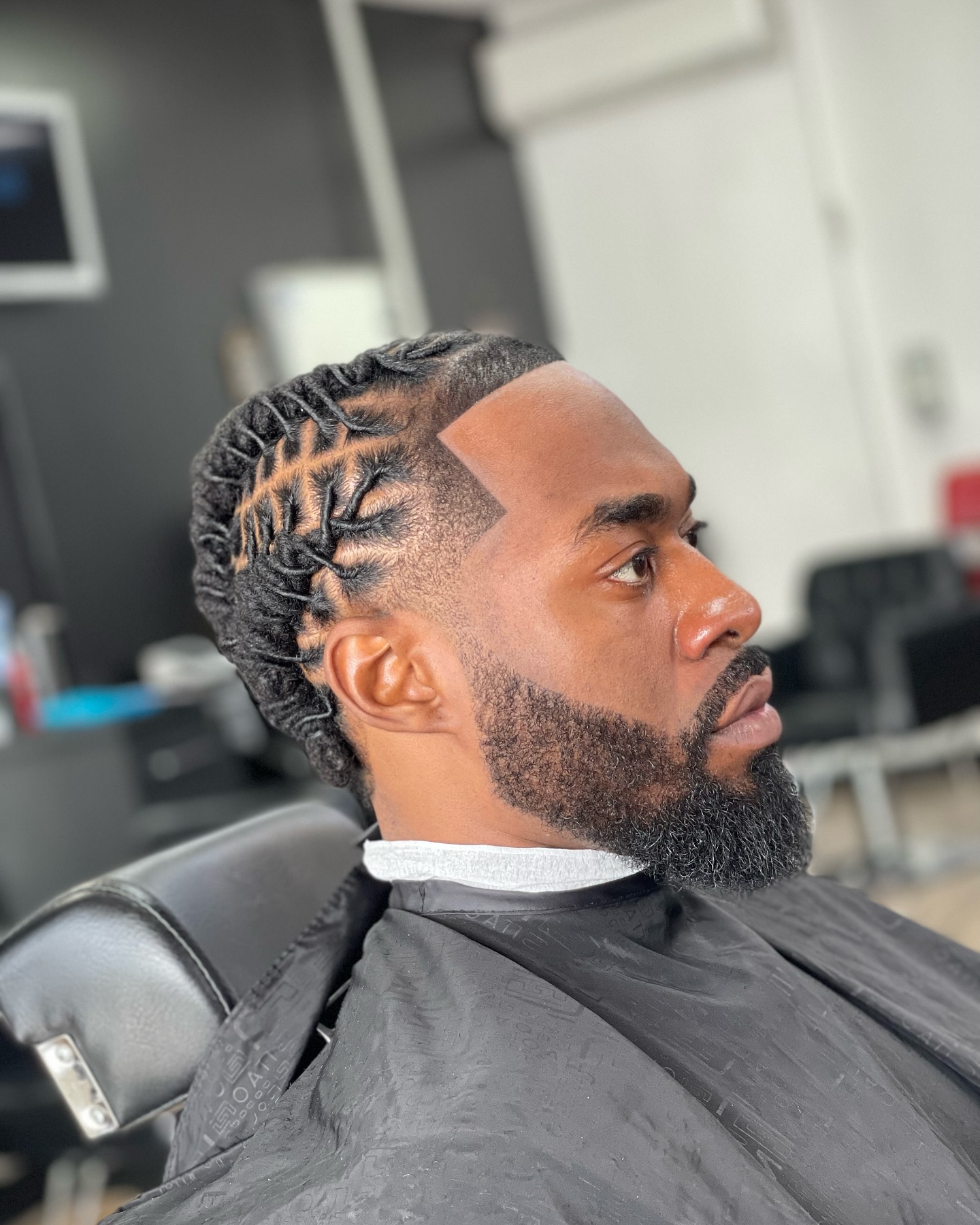
Tight, curved rows run along the head and gather into thicker lengths at the back, creating a streamlined profile with a crisp side fade. The top stays close to the scalp while the twisted sections add clear line work and a compact silhouette. Ask your barber how the fade line and braid direction can be balanced if you want the pattern to stay sharp as it grows out.
Loose Length With Taper
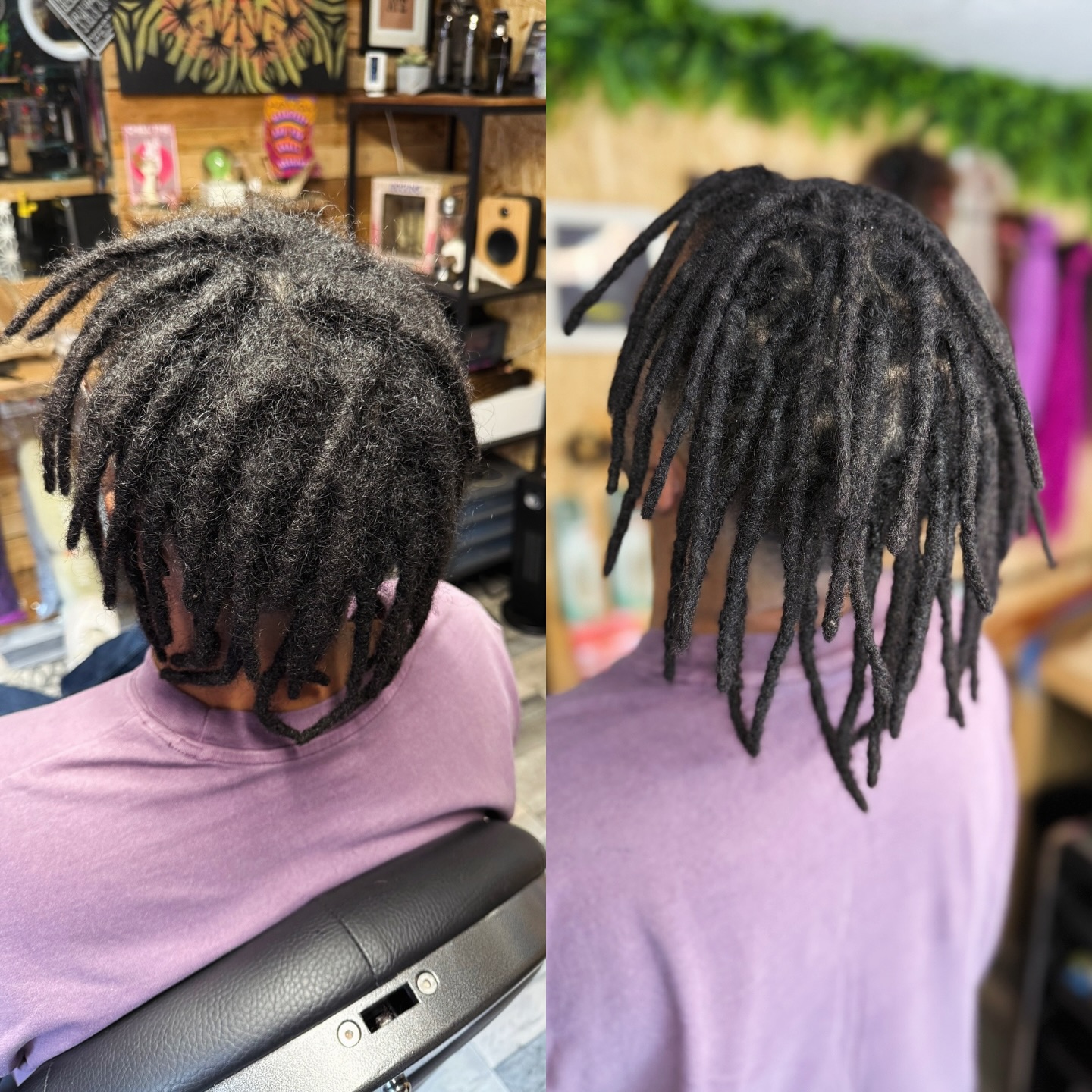
This look shows shoulder-grazing dread lengths with a softer, free-hanging finish and visible fullness through the body. The ends appear slightly textured rather than sealed into a uniform shape, which gives the style movement and a lived-in finish. A stylist can help you decide how much tapering at the edges would keep the silhouette neat without reducing the overall length.
Compact Crown Coils
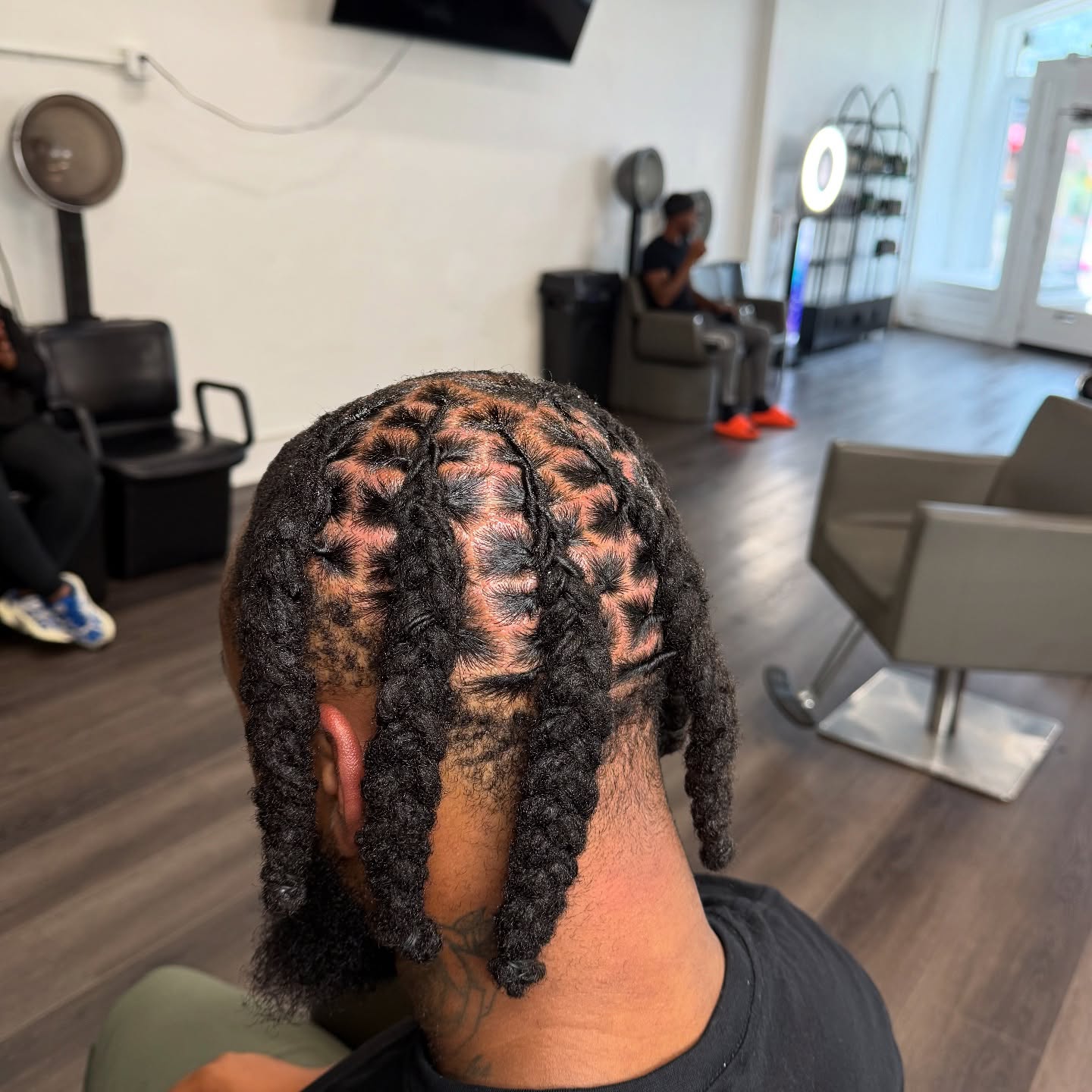
Shorter twisted sections sit close to the scalp and form a rounded crown with neat spacing between each part. The finish looks controlled and dense, while the perimeter stays tidy enough to show the shape clearly from the back. If you like this pattern, ask about keeping the front hairline soft so the sectioning remains visible without pulling the style too tight.
Copper-Toned Rope Dreads
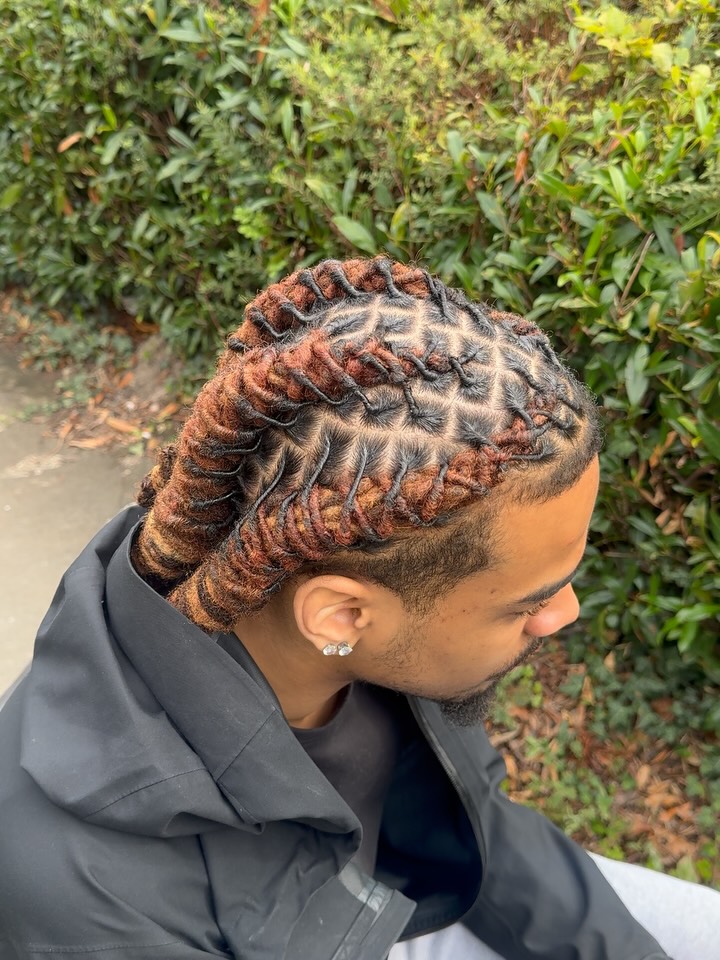
Deep brown roots shift into warm copper-orange lengths, and the twists follow a swept-back direction that emphasizes the head shape. The parting is clean and the style reads as structured, with the color adding contrast to the wrapped texture. Before coloring, a stylist can talk through how the lighter tone may affect future retwisting plans and product choices.
Geometric Feed-In Dreads
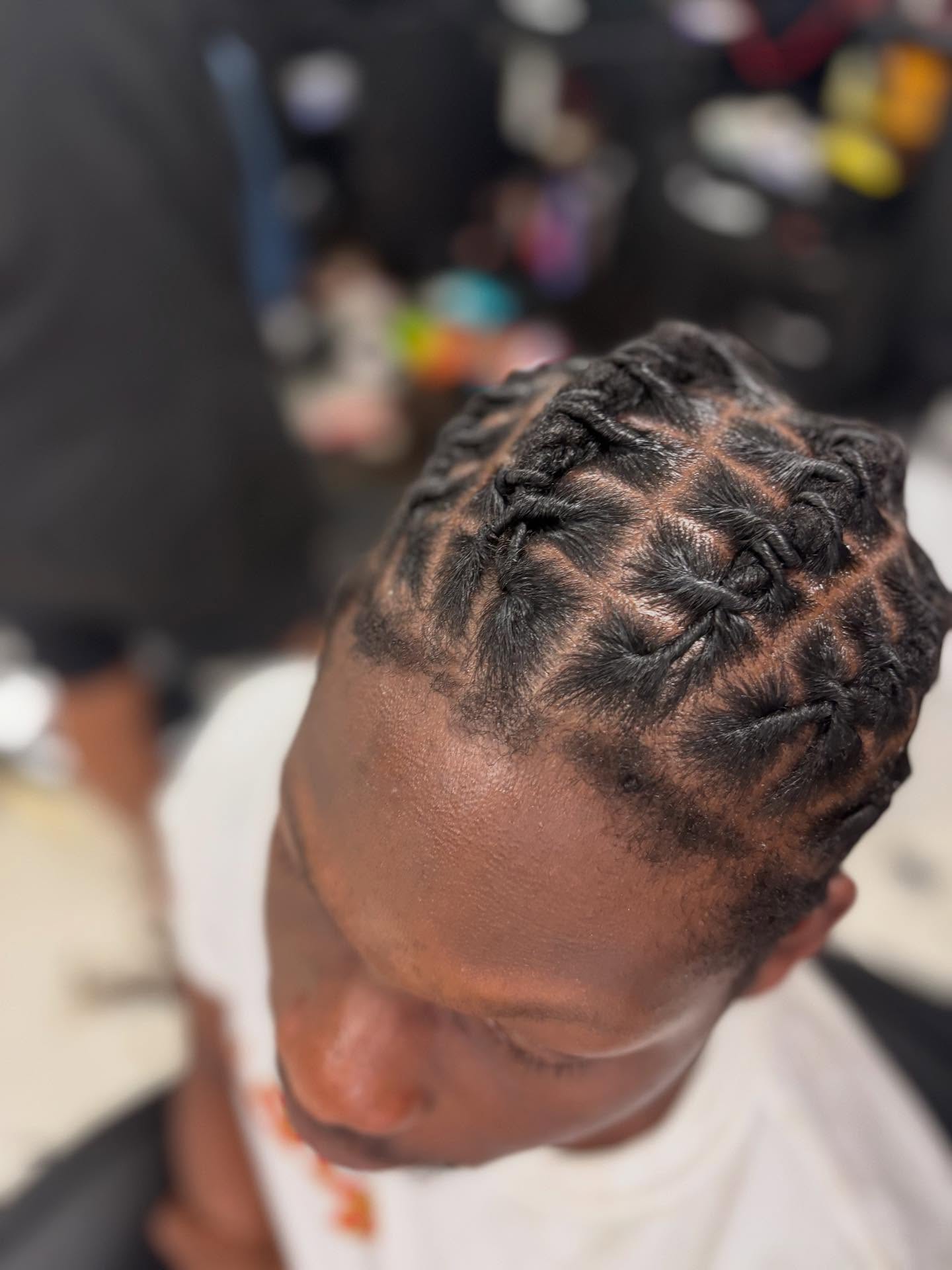
Small, precise sections build a patterned look that travels across the scalp in a geometric layout before dropping into short dread lengths. The parting lines are the main feature here, creating a graphic finish that feels intentional from every angle. If you want a similar result, bring a photo and ask how much scalp visibility you’re comfortable keeping between the rows.
Defined Parted Coils
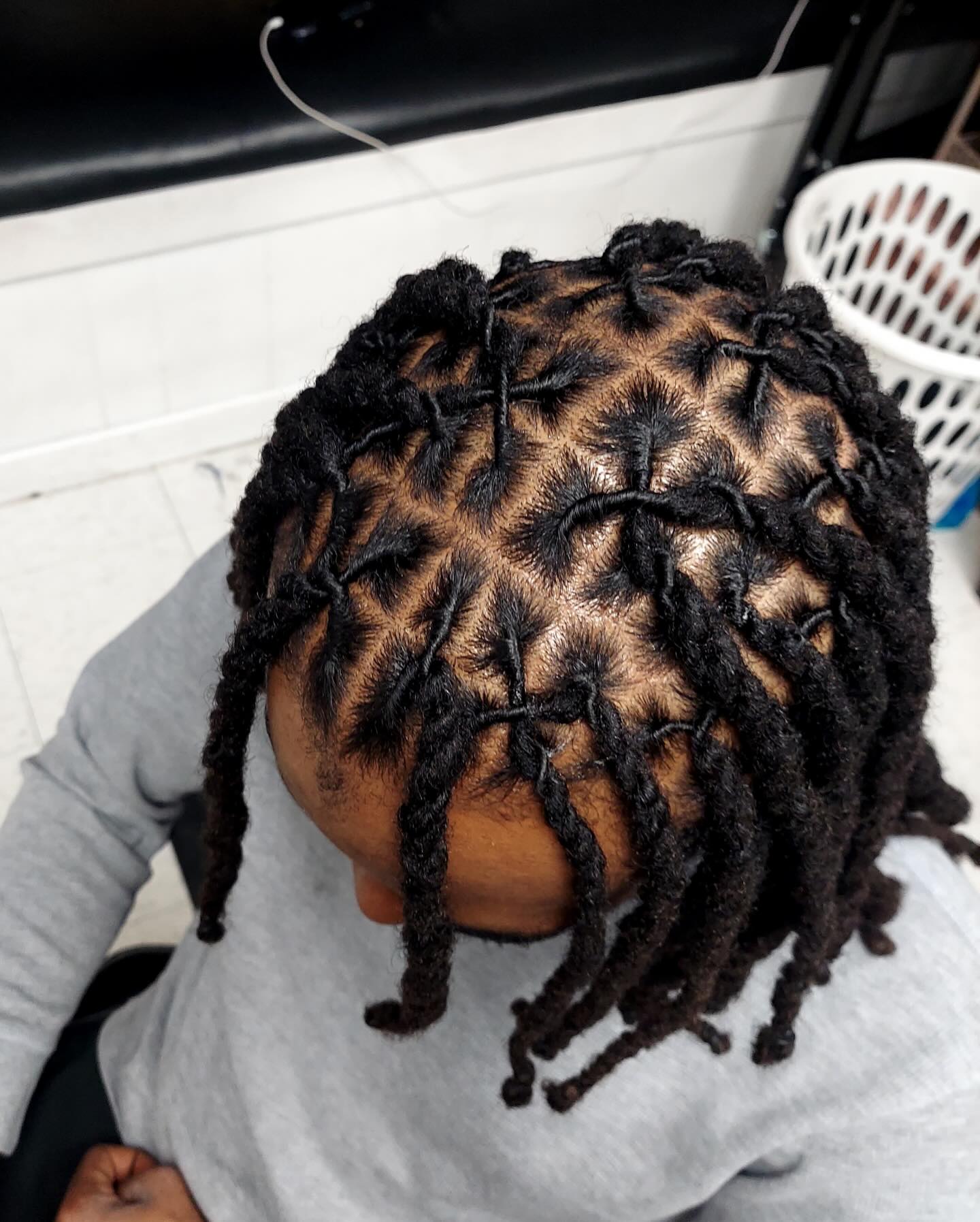
This style keeps the sections evenly mapped across the scalp, with short twisted lengths starting right at the roots and hanging just enough to show separation. The overall shape is compact and rounded, and the clean parting gives the style a precise finish. A stylist can help you choose a section size that matches how bold or subtle you want the pattern to appear.
Braided Pattern Fade
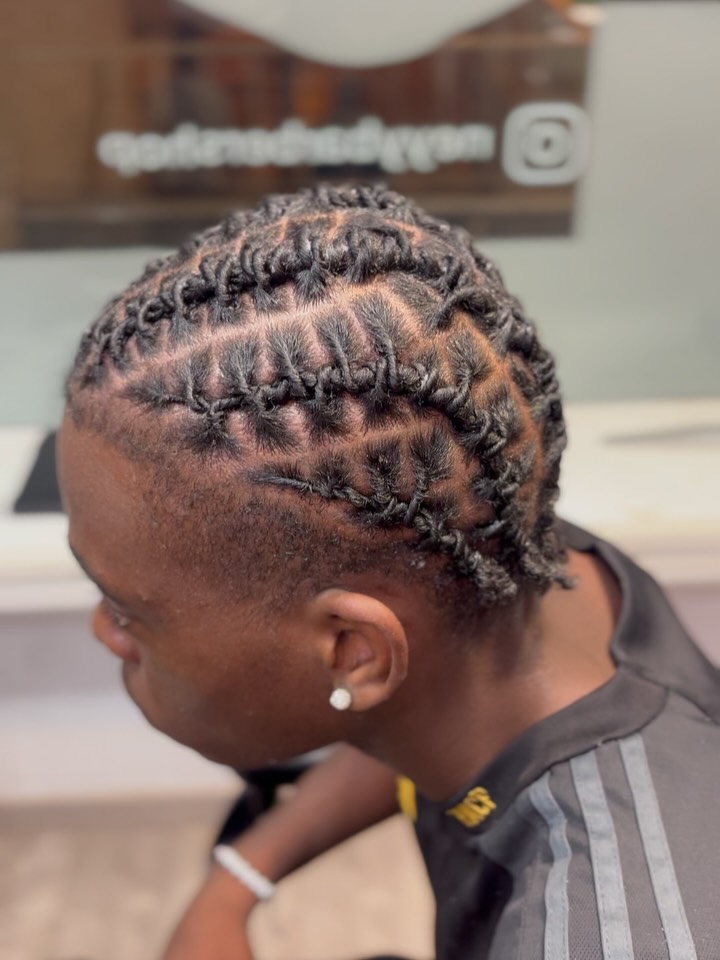
Braids track backward in layered rows, and the sides are cut very close so the top pattern stands out. The look is structured and sporty, with the braids following a directional flow that frames the head cleanly. If you’re considering this cut, ask whether you want the braids to begin farther forward or leave more space near the hairline.
Top Heavy Dread Crop
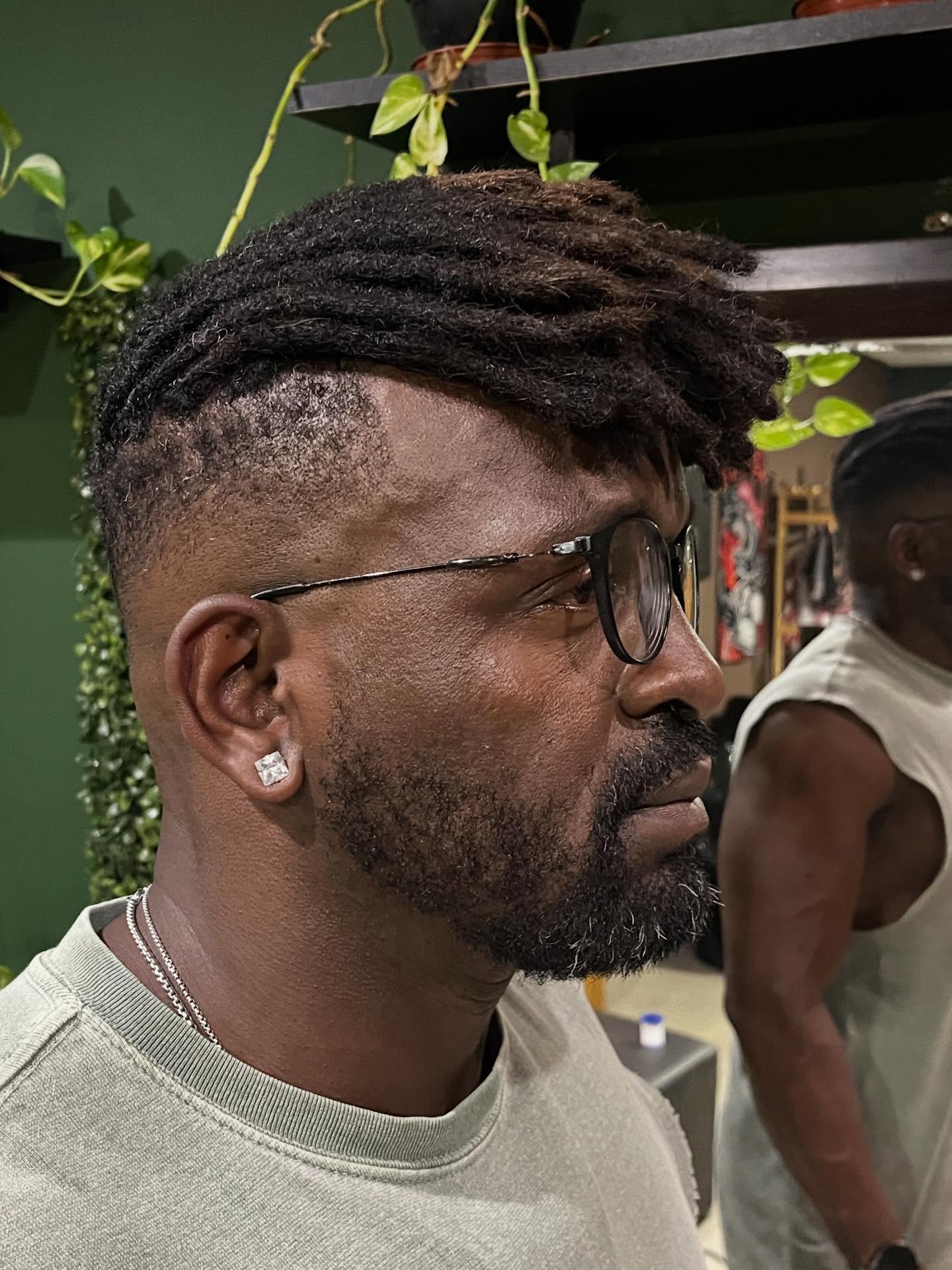
A fuller crown of thick dread lengths sits above closely faded sides, creating strong contrast between the top and the perimeter. The top reads textured and slightly airy, while the cut underneath stays tight and clean. For upkeep, a barber can explain how much of the side fade should remain visible if you prefer a sharper outline between visits.
Loose Twist Fringe
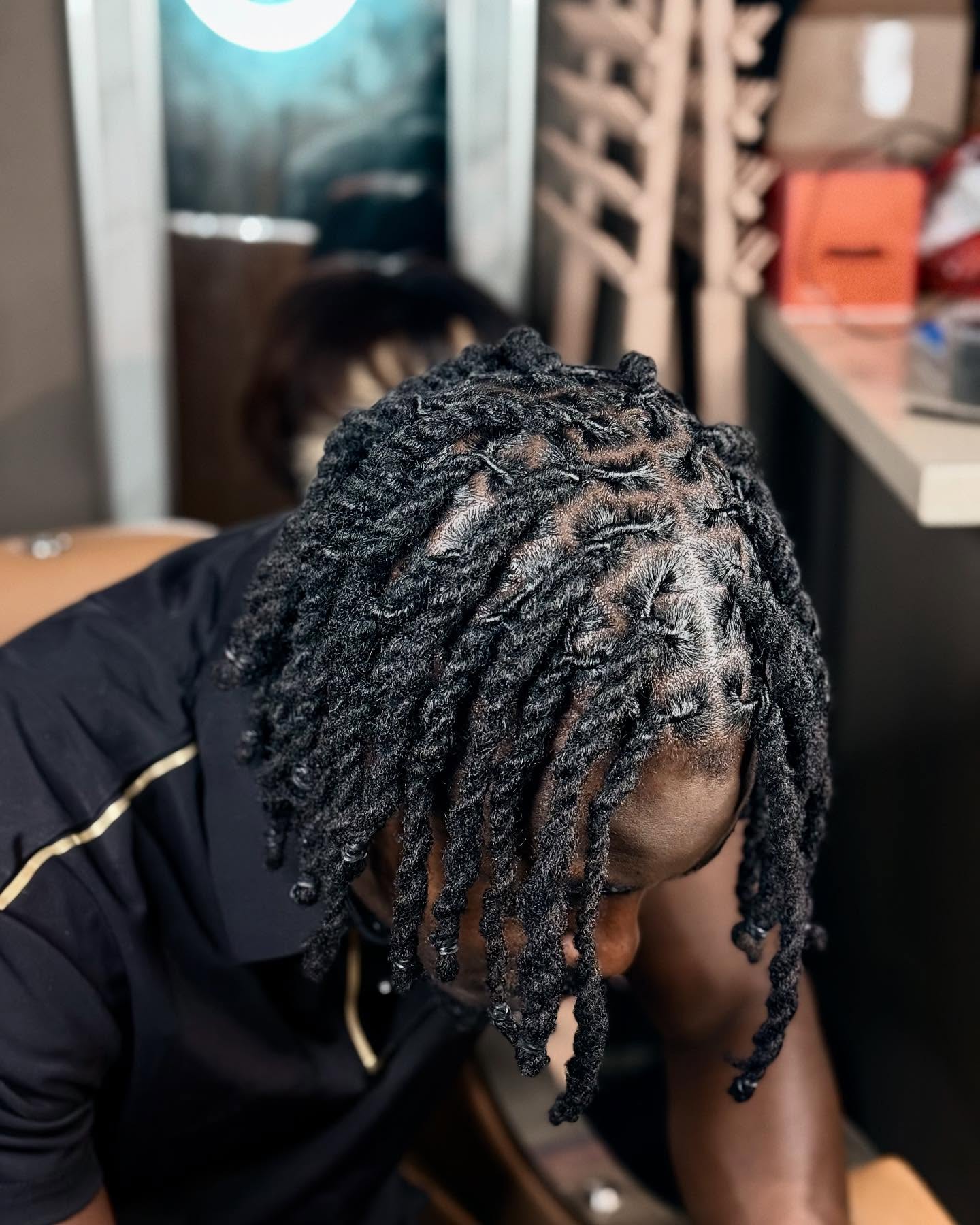
The dreads fall in uneven lengths across the top and toward the front, while the sides stay low and tight for contrast. The finish looks relaxed rather than polished, with individual pieces separating clearly and moving away from the face. If you want this shape, ask a stylist how far forward the front lengths should sit before they start to obscure the forehead.
Honey-Ended Rope Locs
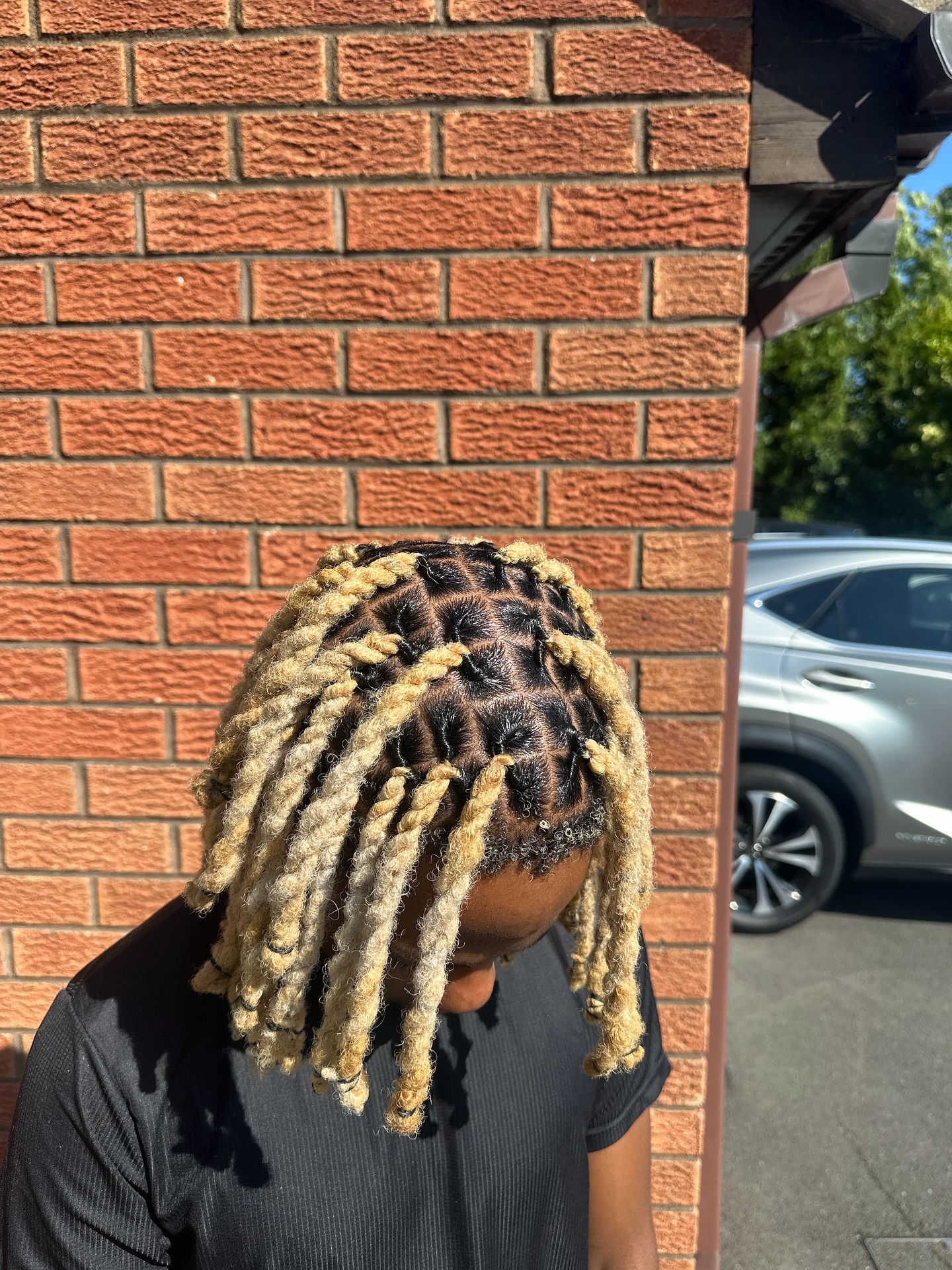
Dark roots transition into pale blond lengths, making the color change the main visual detail in this shoulder-length style. The locs hang freely with a soft, airy texture, and the lighter ends give the overall silhouette extra contrast against the scalp. A color service like this usually deserves a conversation about preserving tone and deciding how much warmth or brightness you want to keep.
Long Center-Part Locs
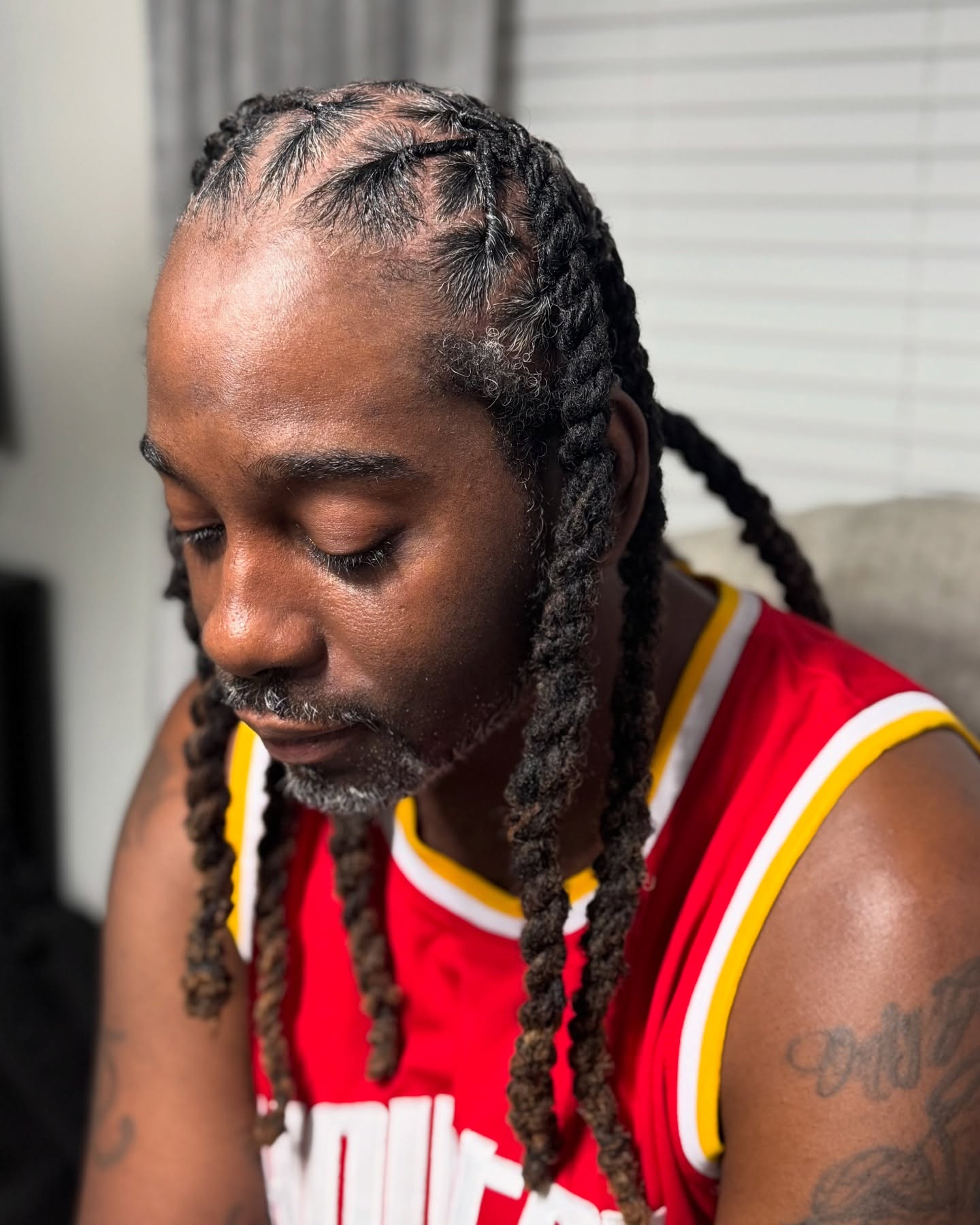
Long locs frame the face and fall past the shoulders, with a visible center part and neat rows running back from the hairline. The finish is low-gloss and natural, giving the style a straightforward shape that relies on length more than volume. If you want a similar look, discuss how much tension at the roots feels comfortable before the parting is set.
Braided Front Loc Layers
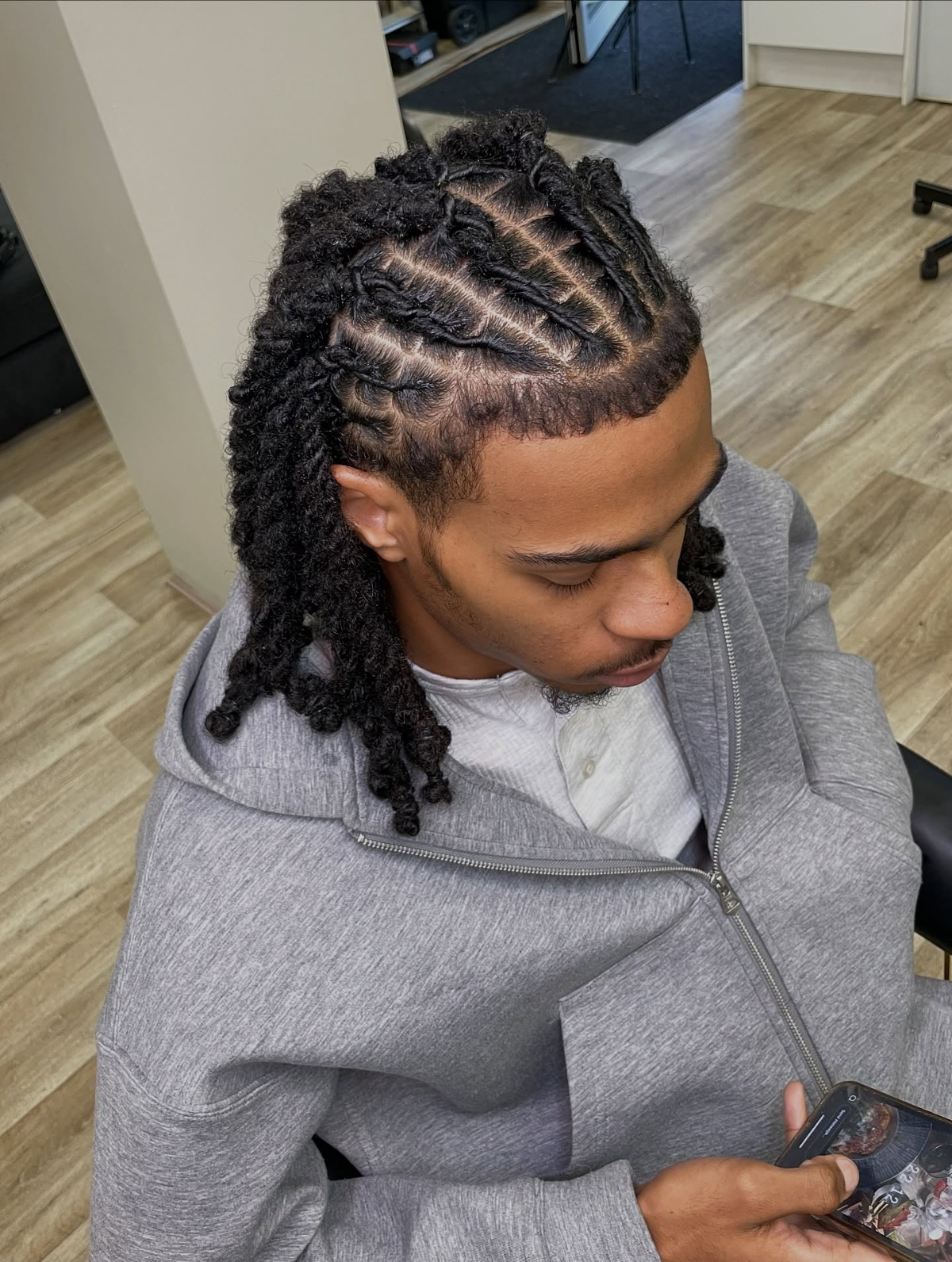
The front sections are braided close to the scalp before opening into hanging locs, which creates a layered effect from the crown to the shoulders. The top appears neatly patterned, while the lengths stay fuller and more textured around the sides. Ask your stylist whether the braid size should stay consistent across the head or vary to make the pattern read more distinctly.
High Bun Loc Crown
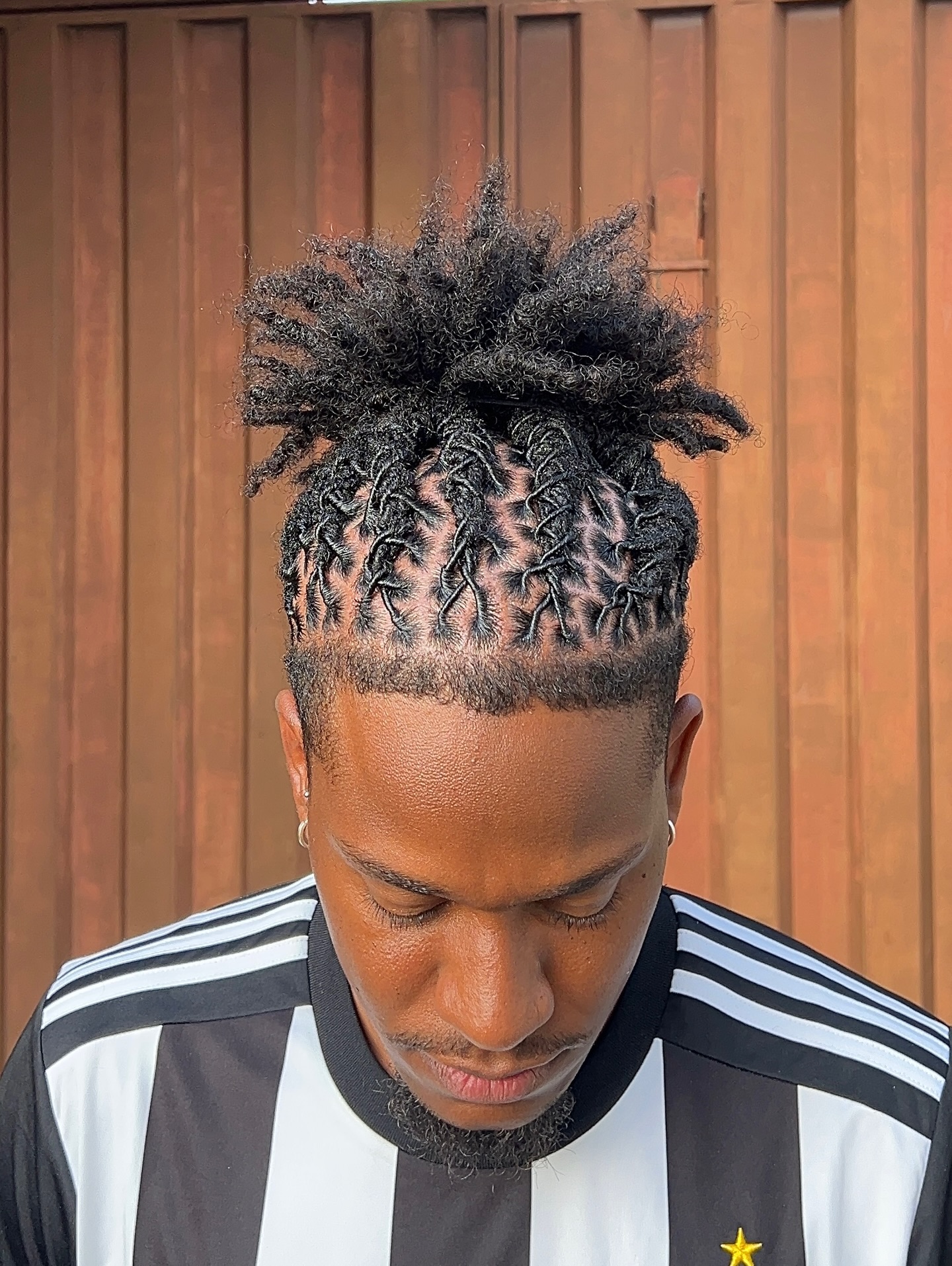
Long locs are gathered upward into a dramatic top mass, while the lower section shows precise braiding and a tight fade along the sides. The silhouette adds height and keeps the neck area clean, with the bun creating the strongest point of contrast. A stylist can help you decide how much bulk to leave at the crown so the top stays balanced against the faded base.
Dark Locs With Blond Streaks

Slim locs fall around the face in a loose arrangement, and a few pale strands break up the dark base with subtle contrast. The length sits around the jaw and shoulders, with a softly separated texture that keeps the style from looking heavy. If you’re adding lighter pieces, ask how they’ll sit against your natural color and whether the placement should be sparse or more evenly distributed.
Patterned Scalp Locs
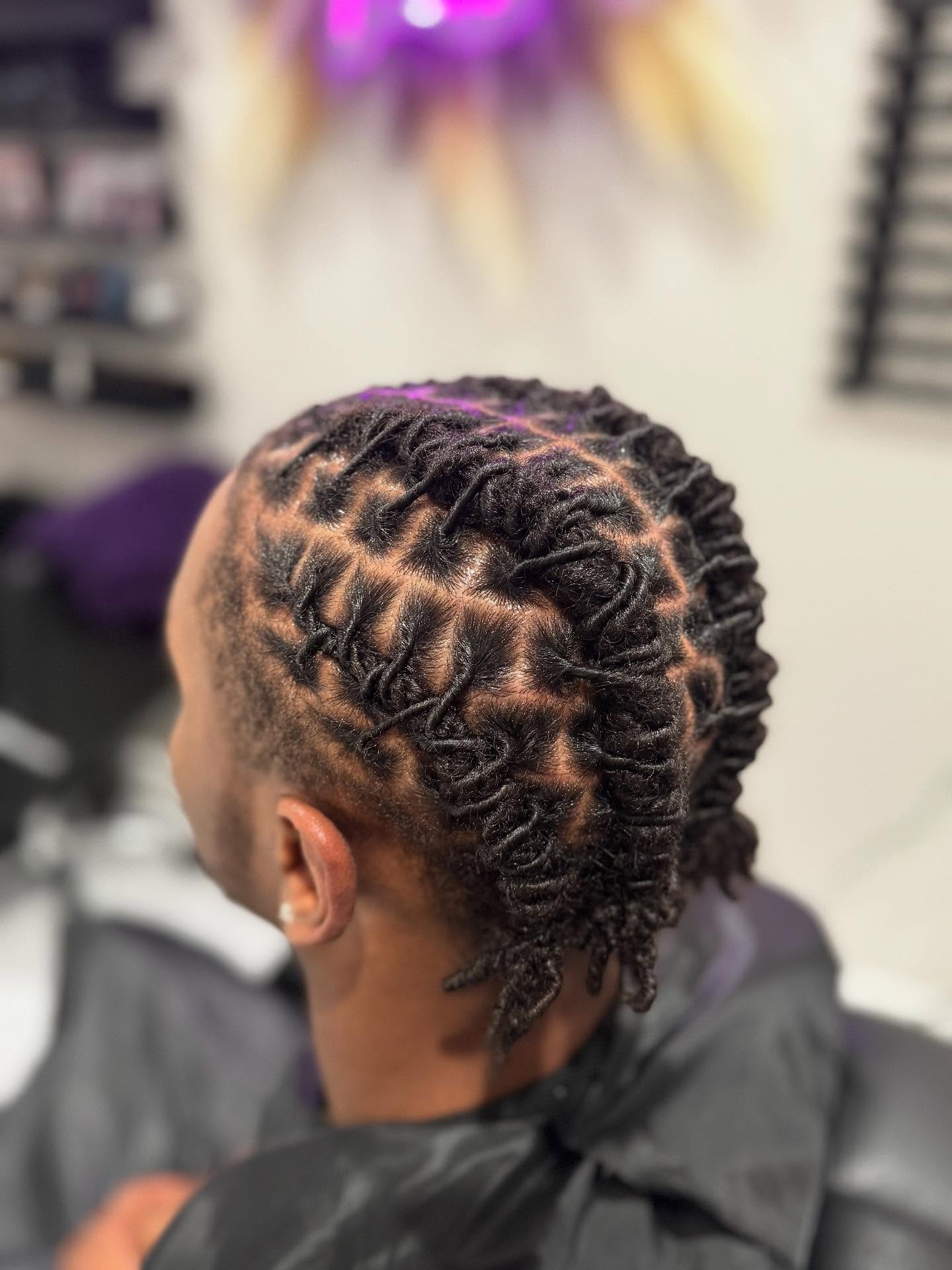
Curved parting creates a repeating pattern across the scalp, and the locs are built to follow that design with a tidy, close finish. The back and sides stay compact, while the sectioning provides the main visual texture. Because the pattern is doing most of the work, ask your stylist how wide the rows should be if you want the design to remain readable as it grows out.