Layered hair gets especially interesting when the color does part of the talking. In these seven looks, the shapes range from soft, face-framing lengths to shaggy, cropped, and heavily textured silhouettes, while the color work shifts from subtle contrast to high-impact split dye and vivid paneling. Each style shows how layers change the way light lands, how fringe frames the face, and how movement can make bold color feel more dimensional. The result is a set of ideas that works as visual reference, not a fixed formula.
Long Burgundy Feathered Layers
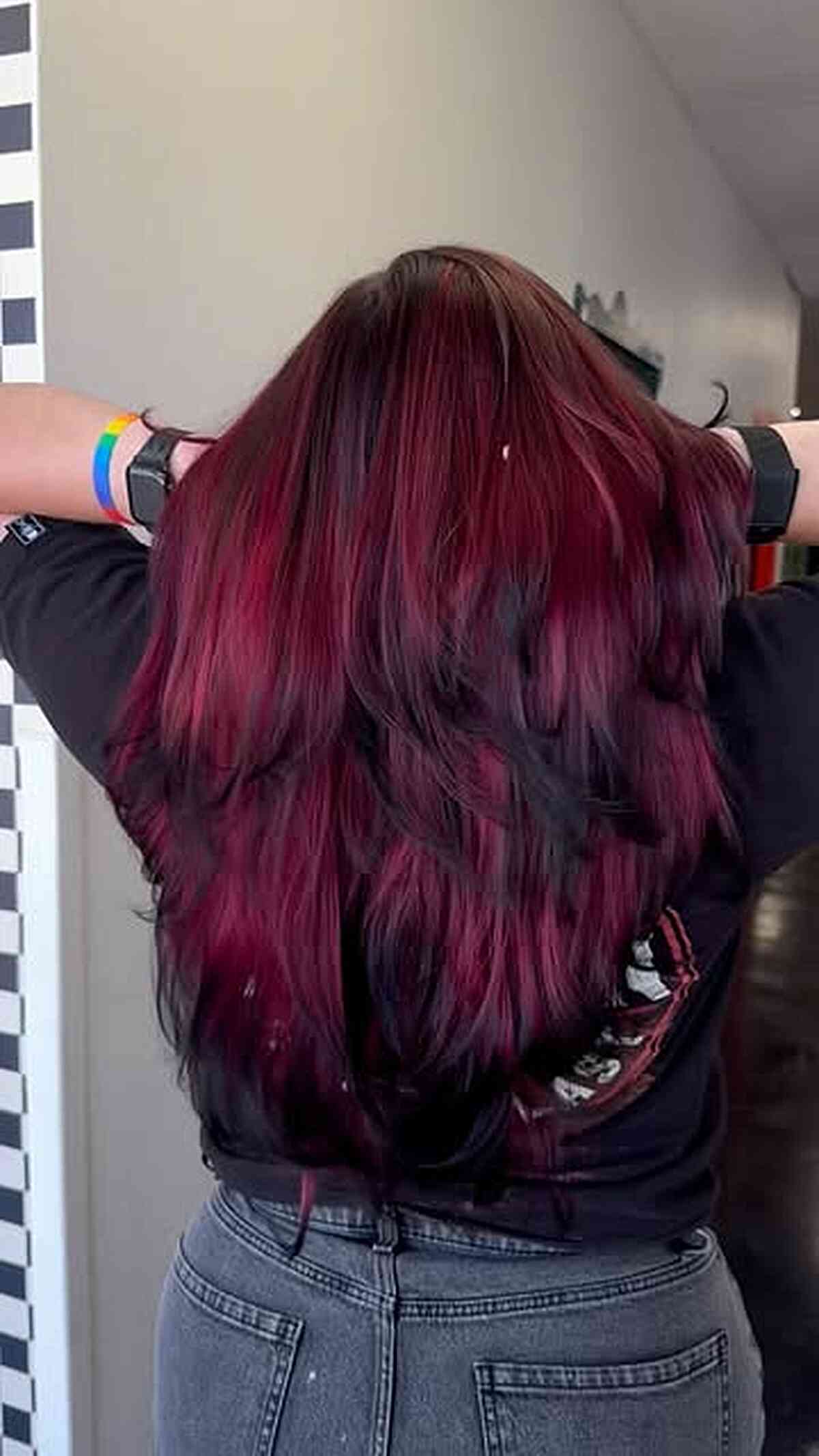
Long layers drop well past the shoulders with a smooth, glossy finish and visible color variation from burgundy to berry red. The cut keeps density through the lower half, so the silhouette looks full even with the feathered ends. Subtle internal layering gives the hair movement when worn loose, especially through the back. A color-safe conditioner is useful for keeping vivid tones from looking flat between salon visits.
Smoky Rose Face-Framing Layers
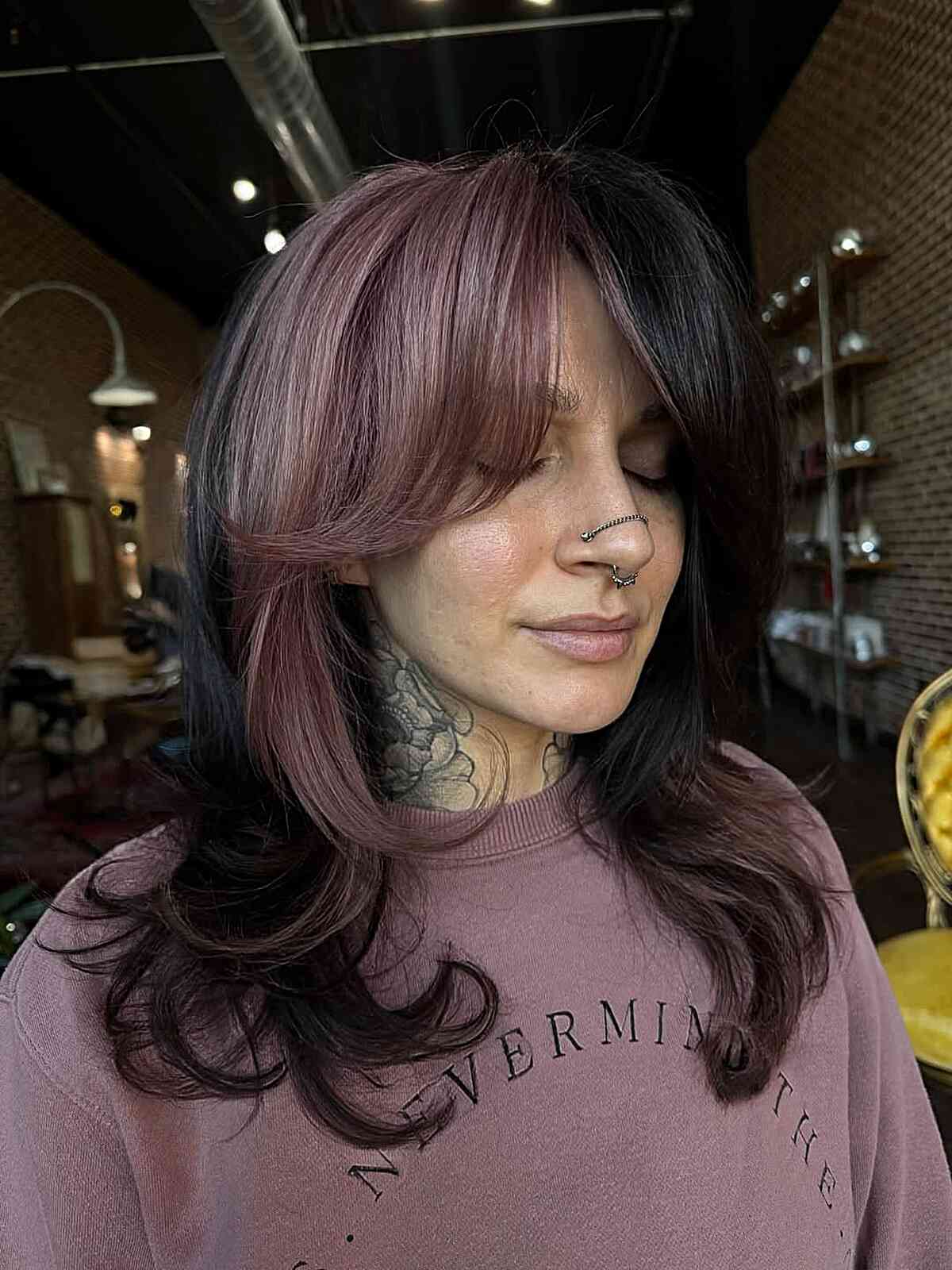
Face-framing layers sweep inward around the cheeks and jaw, then curve outward at the ends for a soft, blown-out effect. The color moves from dark charcoal and black sections into muted rose-lavender through the front and top layers, creating contrast without sharp blocking. The lengths extend below the shoulders, with curved layers framing the face. A smoothing brush and light serum can help preserve the curved front pieces.
Copper Feathered Mullet Shag
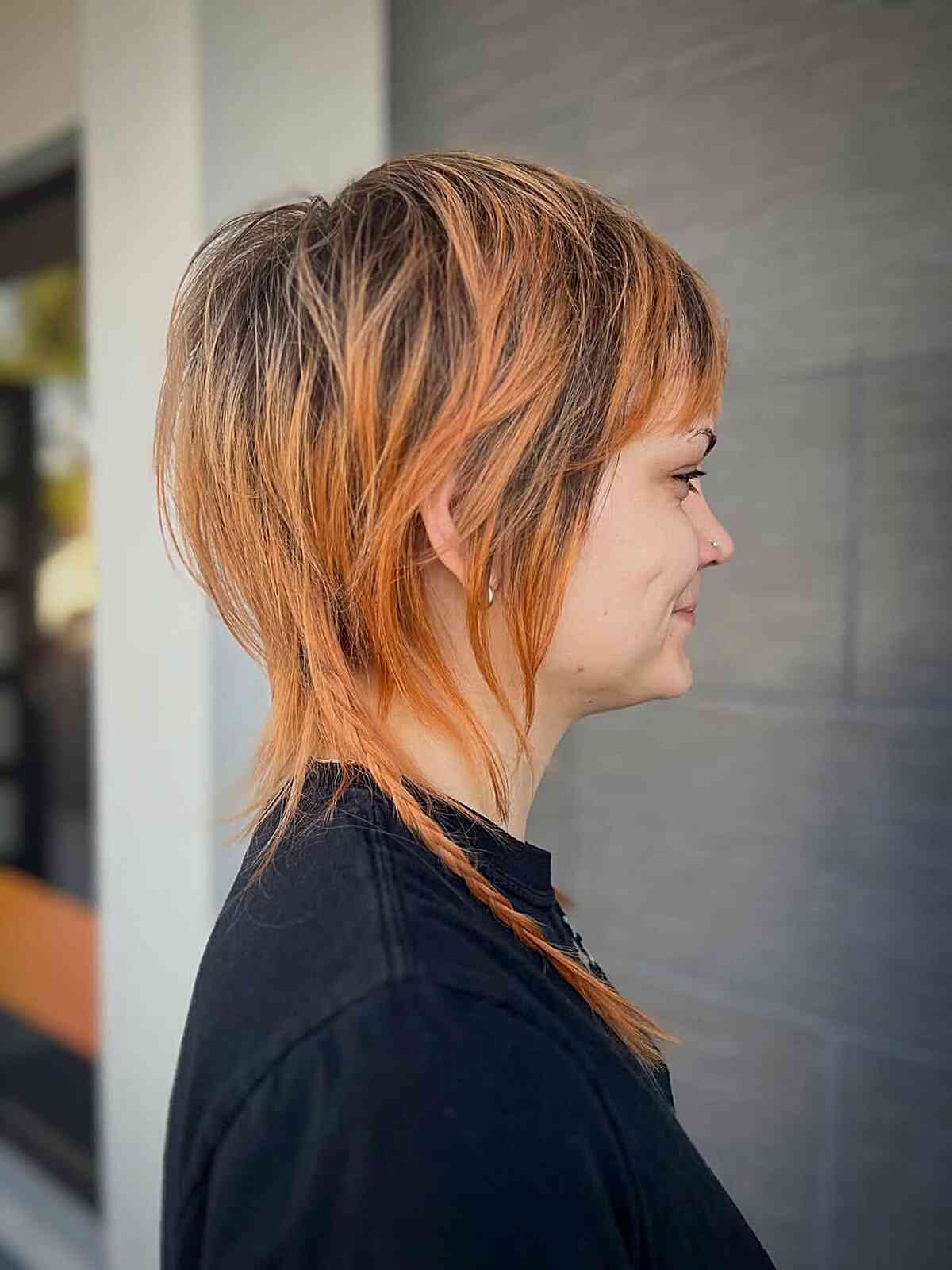
This cropped layered cut sits around the nape and ears with longer, wispy pieces extending at the back for a mullet-like profile. Copper and apricot tones are woven through a darker base, and the layers are sliced to show plenty of separation. The profile looks light and airy rather than heavy, especially where the back tapers into thin ends. Regular trim appointments help keep the shape from collapsing at the neckline.
Two-Tone Wispy Fringe Layers
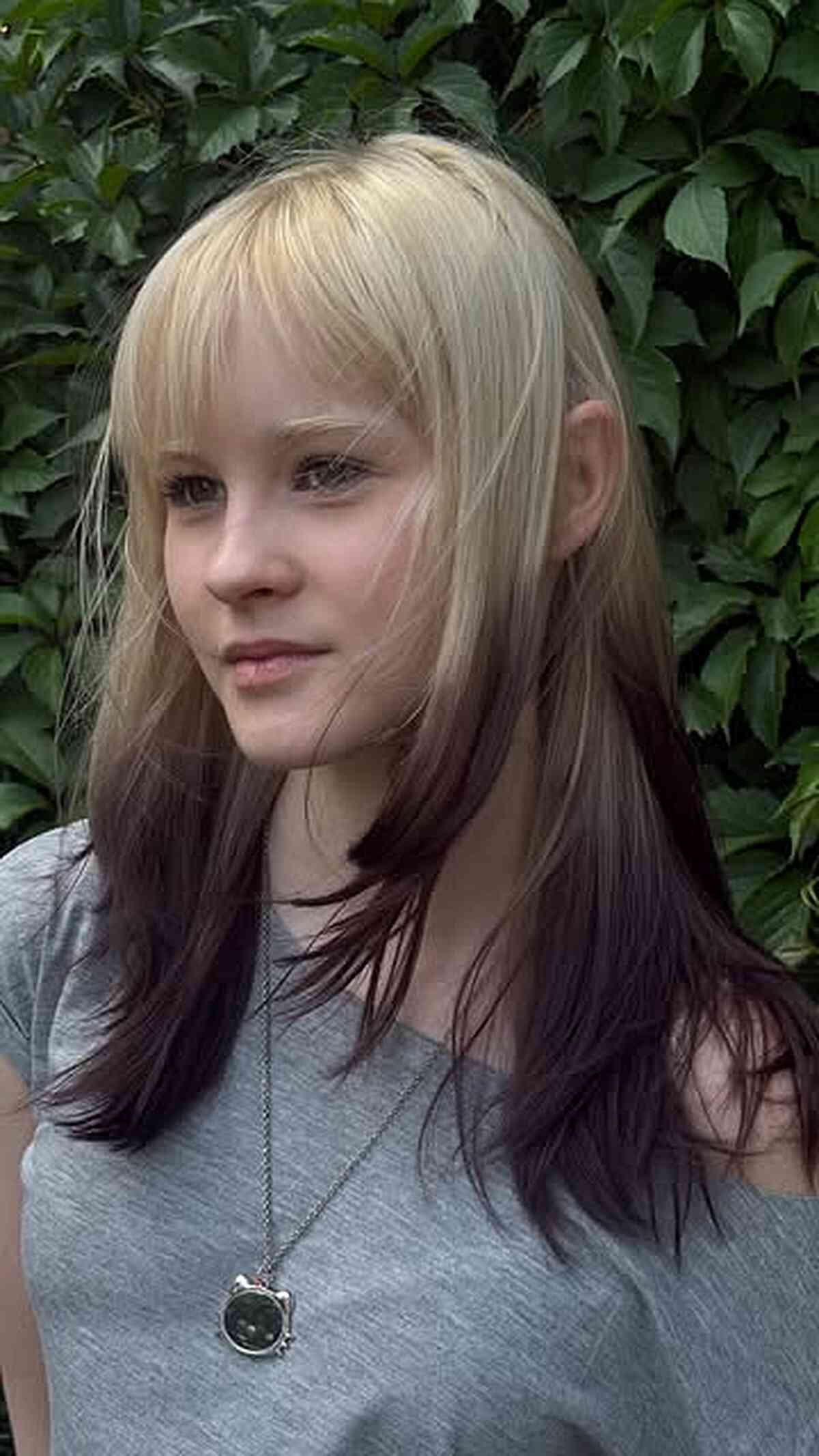
Soft, wispy fringe sits over layers extending below the shoulders that fall with a light, slightly feathered finish. The top reads pale blonde, while the lower lengths shift into deep plum ends, creating a clear two-tone effect without hard lines. Movement stays relaxed through the midlengths, and the overall shape narrows gently toward the shoulders. A round brush at the fringe can help keep the front pieces separated.
Midnight Red Layered Shag
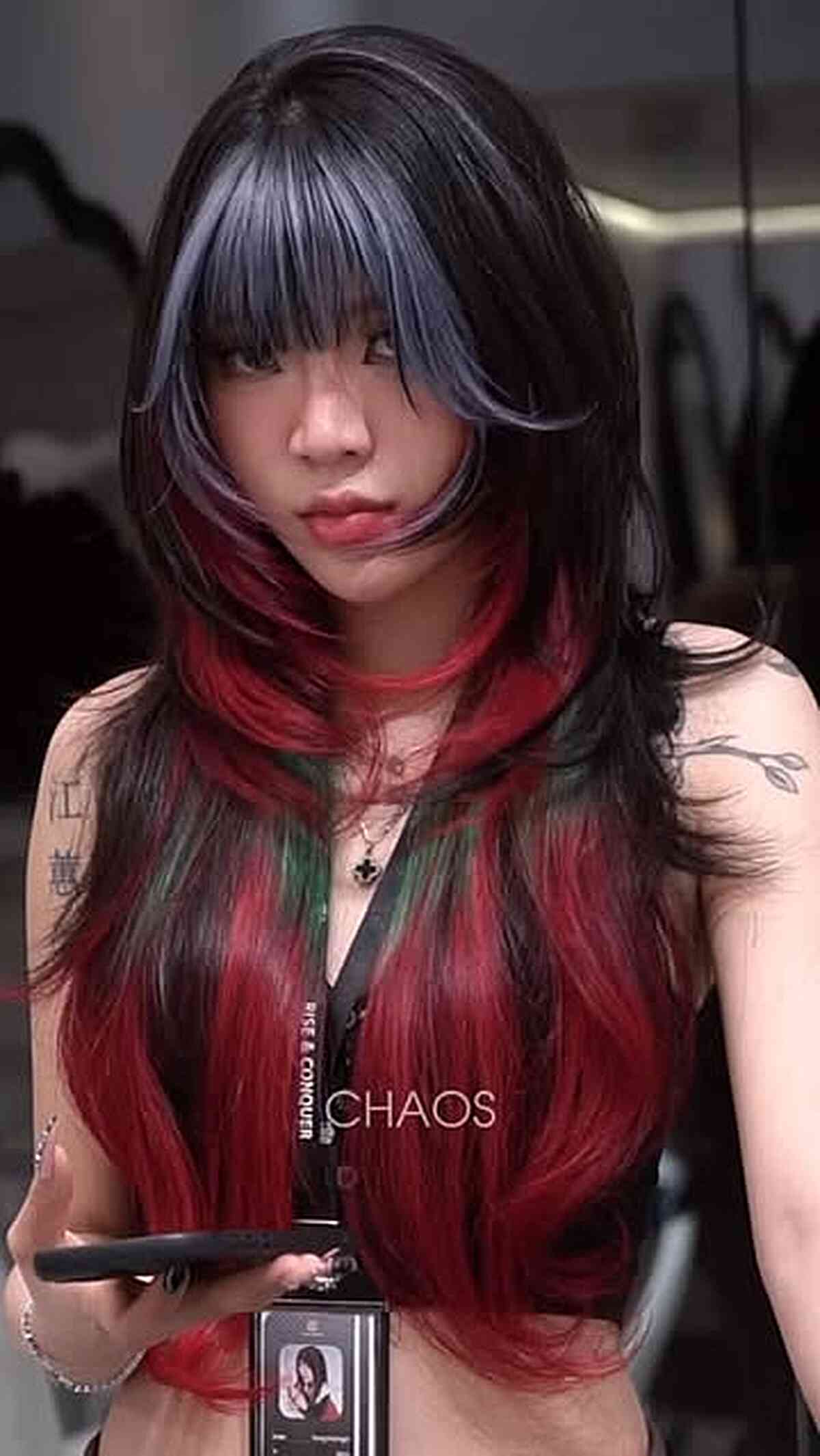
Long layers fall from a blunt fringe into a heavily feathered shape that stays full through the lengths. The top section is dark and cool-toned, while the lower half turns into vivid red and red-violet panels with a bright, high-contrast finish. Movement is strongest through the ends, which fan outward in soft curves. A wide-tooth comb and light leave-in can keep the layers from tangling.
Split-Tone Long Layered Waves
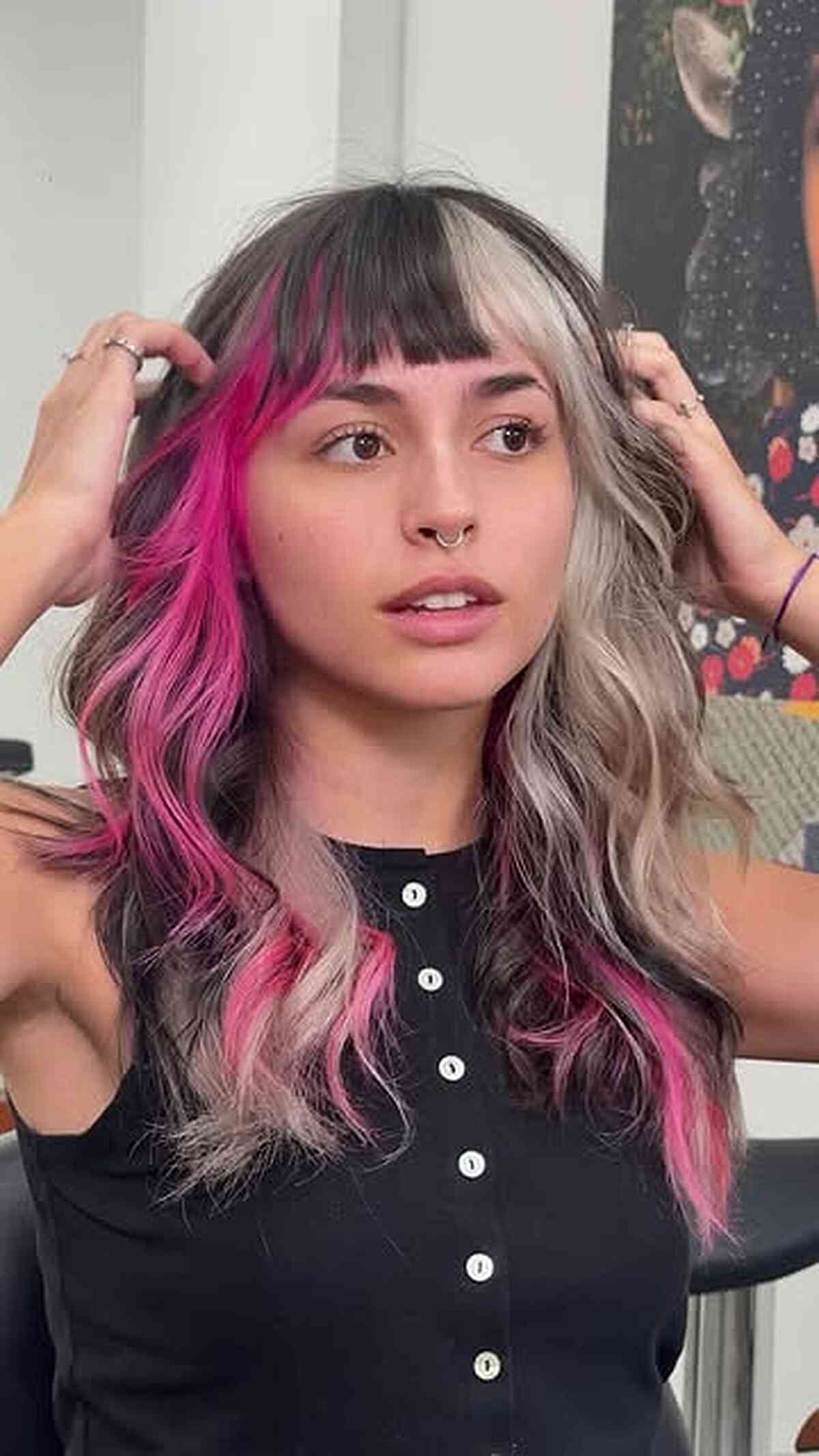
A blunt fringe anchors this long, layered style, while the color is divided into bold light and pink-toned sections with darker roots underneath. Loose waves keep the contrasting panels from looking too rigid, and the ends fall in soft, separated pieces. The shape still reads structured because the fringe stays compact and straight. Heat protection matters here if the waves are refreshed often with a curling iron.
Long Curly Micro-Fringe Shag
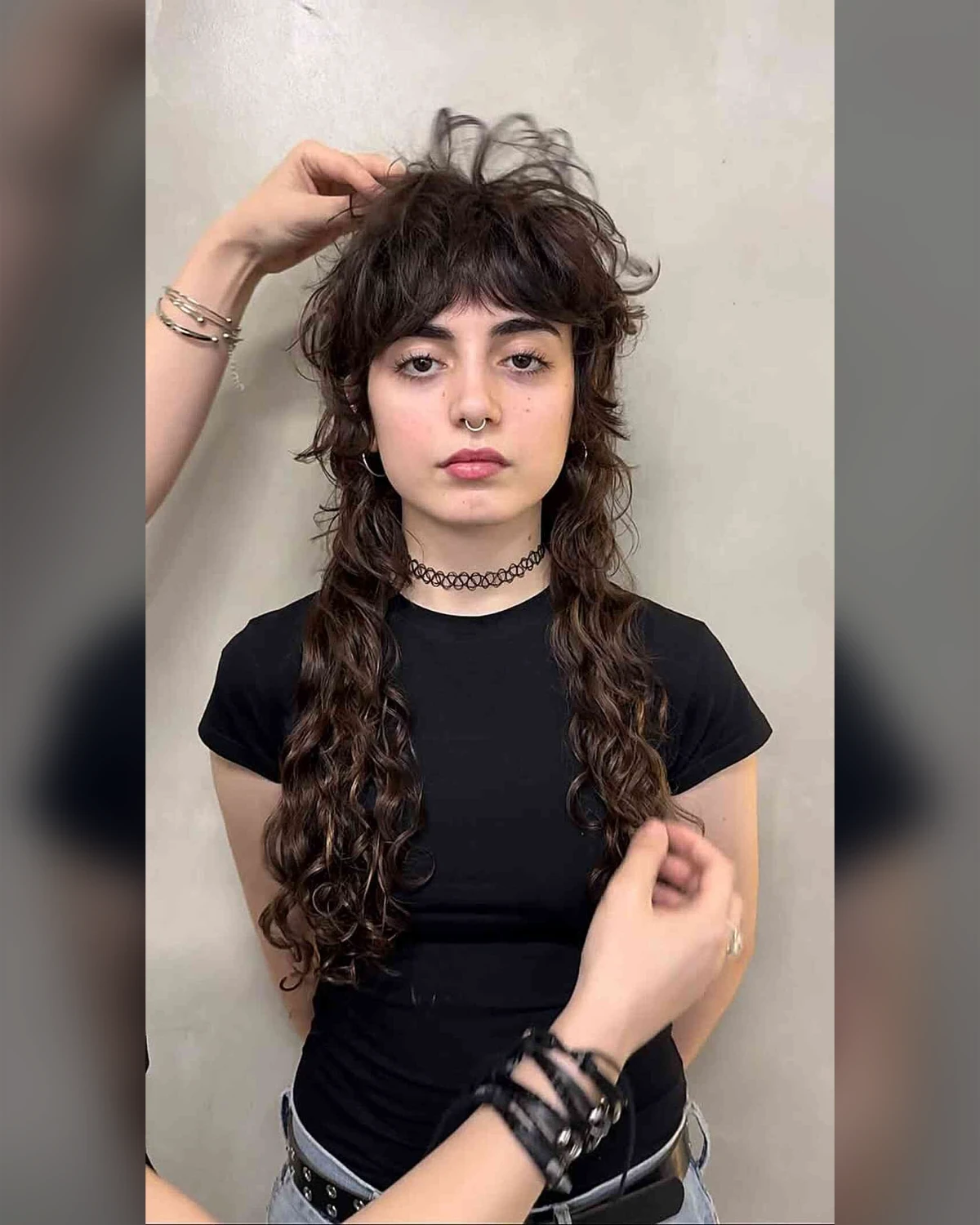
Short crown layers build an airy, shaggy outline above long curls that fall over the shoulders. The fringe sits short and piecey, while the sides taper into longer curled strands that create a mullet-inspired shape. Waves and curls add lift through the crown and softness along the edges. Light texturizing cream can help separate the ends without weighing down the fringe.