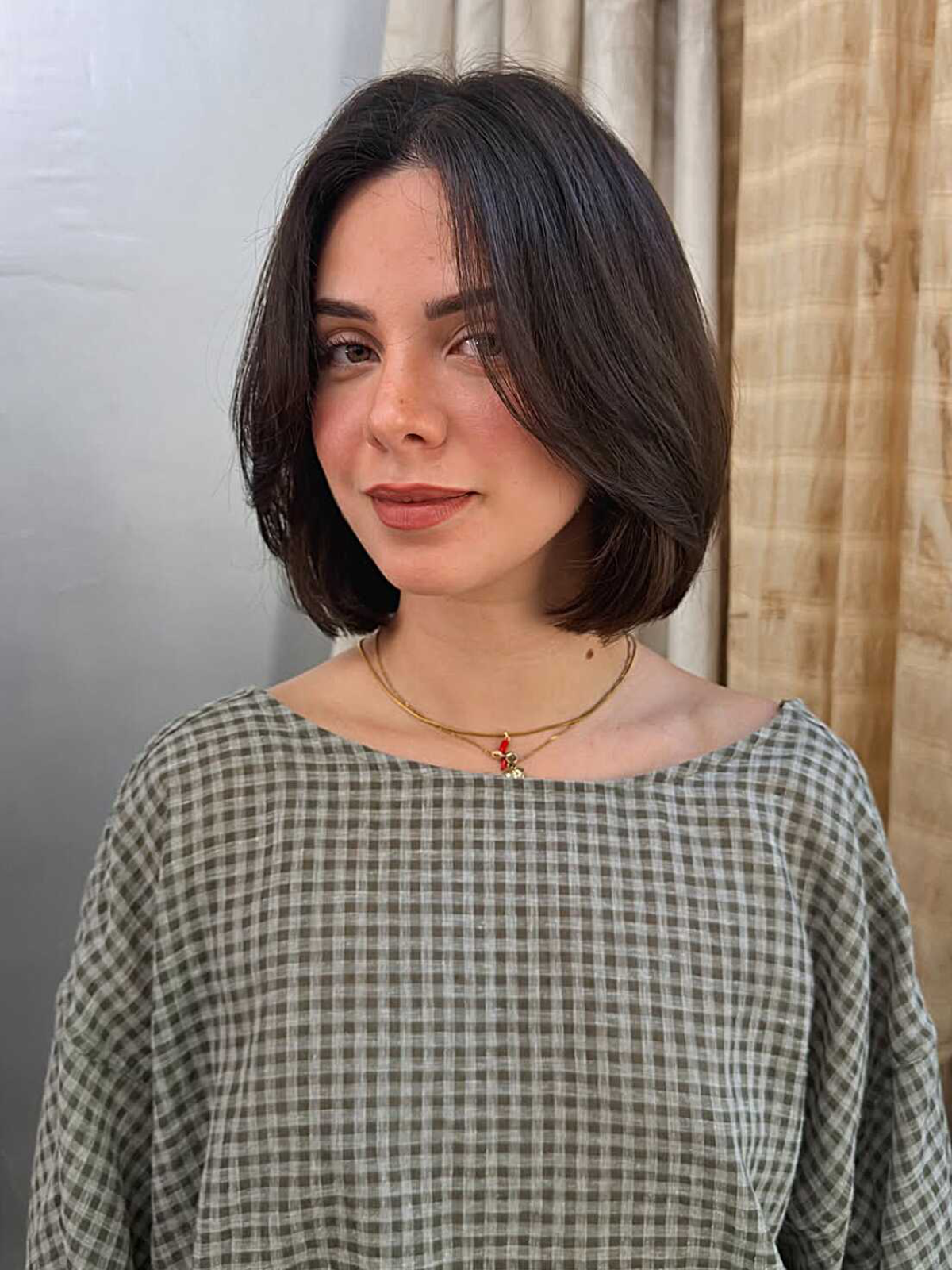
Feathered cutting can change the feel of short hair without pushing it into one fixed silhouette. In these examples, the layering shows up through lifted crowns, wispy ends, side-swept fringe, and rounded outlines that sit close to the head or skim the neck. Some looks read sleek and polished, while others keep more visible texture and movement. The photos also show how color placement can emphasize the cut, especially where lighter pieces catch the layered edges and longer top sections.
Airy Blonde Feathered Pixie
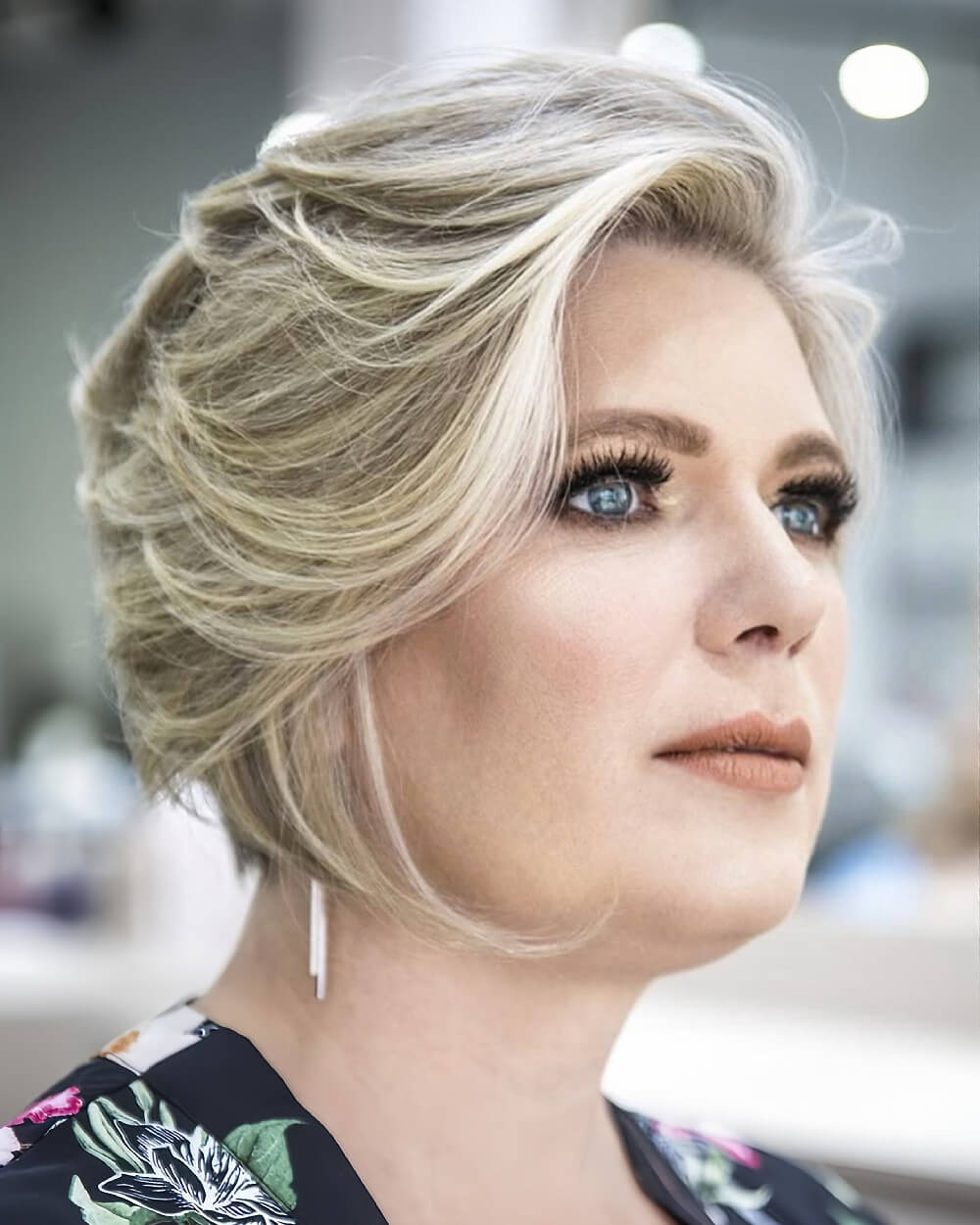
This short cut shows a compact shape with a lifted crown, soft side-swept fringe, and feathered layers that taper neatly around the ears and nape. The pale blonde color adds contrast to the airy surface and makes the swept-over front stand out. Ask your stylist where the longest top pieces should land, since that length changes how much movement the fringe has.
Copper Shaggy Rounded Bob
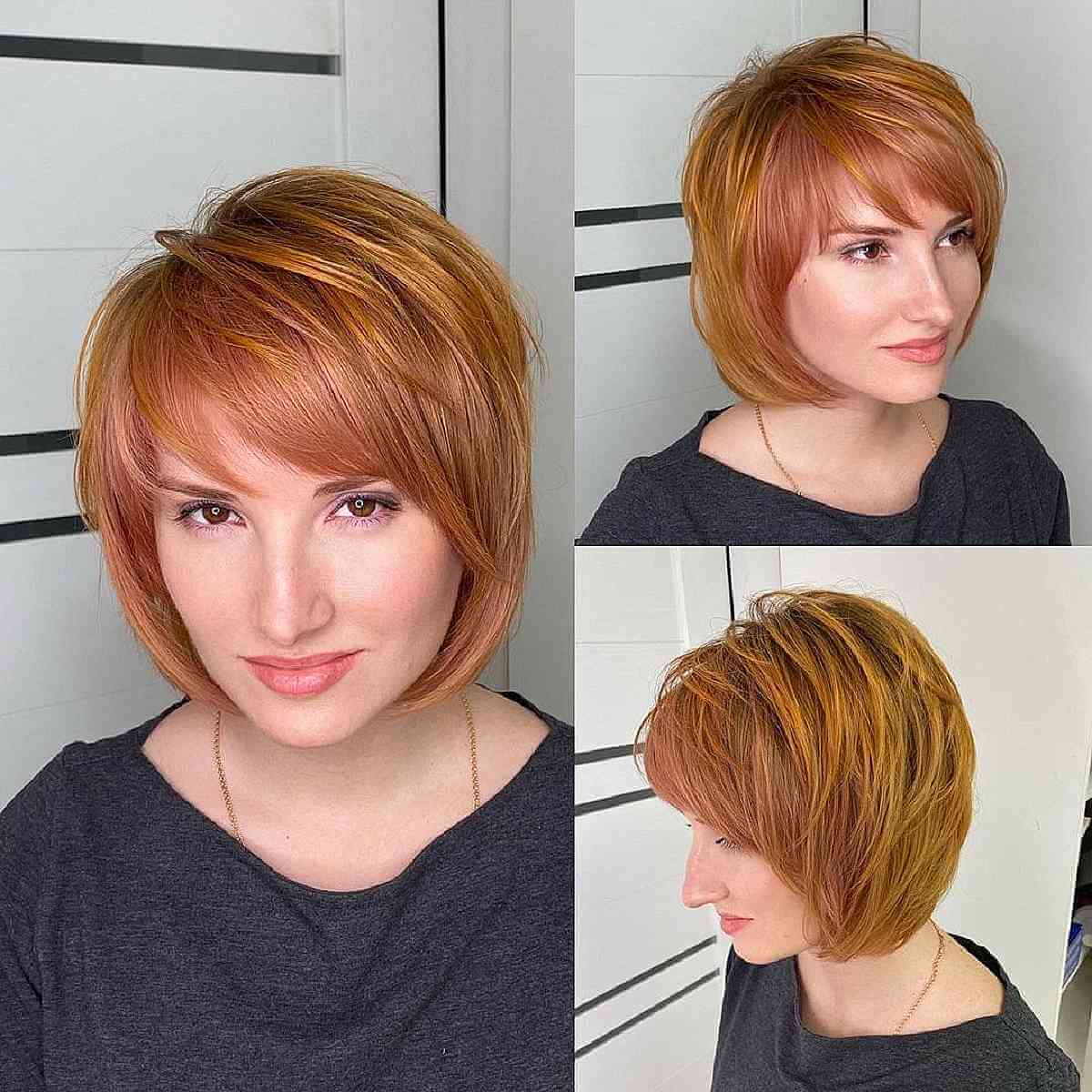
A rounded bob shape frames the jaw with a soft, stacked outline, while the top layers are cut to fall forward in a shaggy piecey way. The copper tone highlights the varied lengths and makes the fringe sit lightly across the forehead. If you want this effect, ask for a layered perimeter that keeps the ends from feeling blunt.
Soft Layered Silver Bob
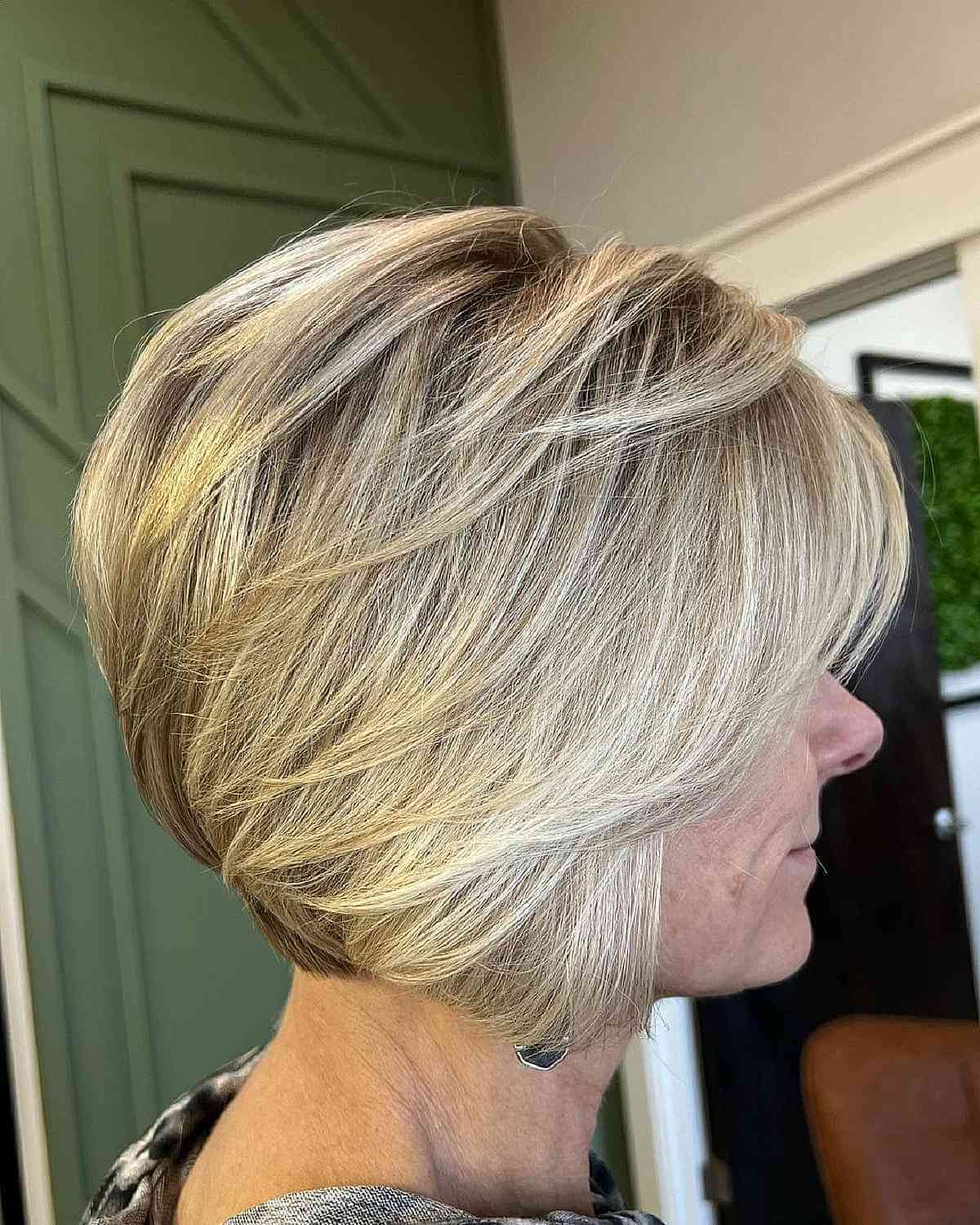
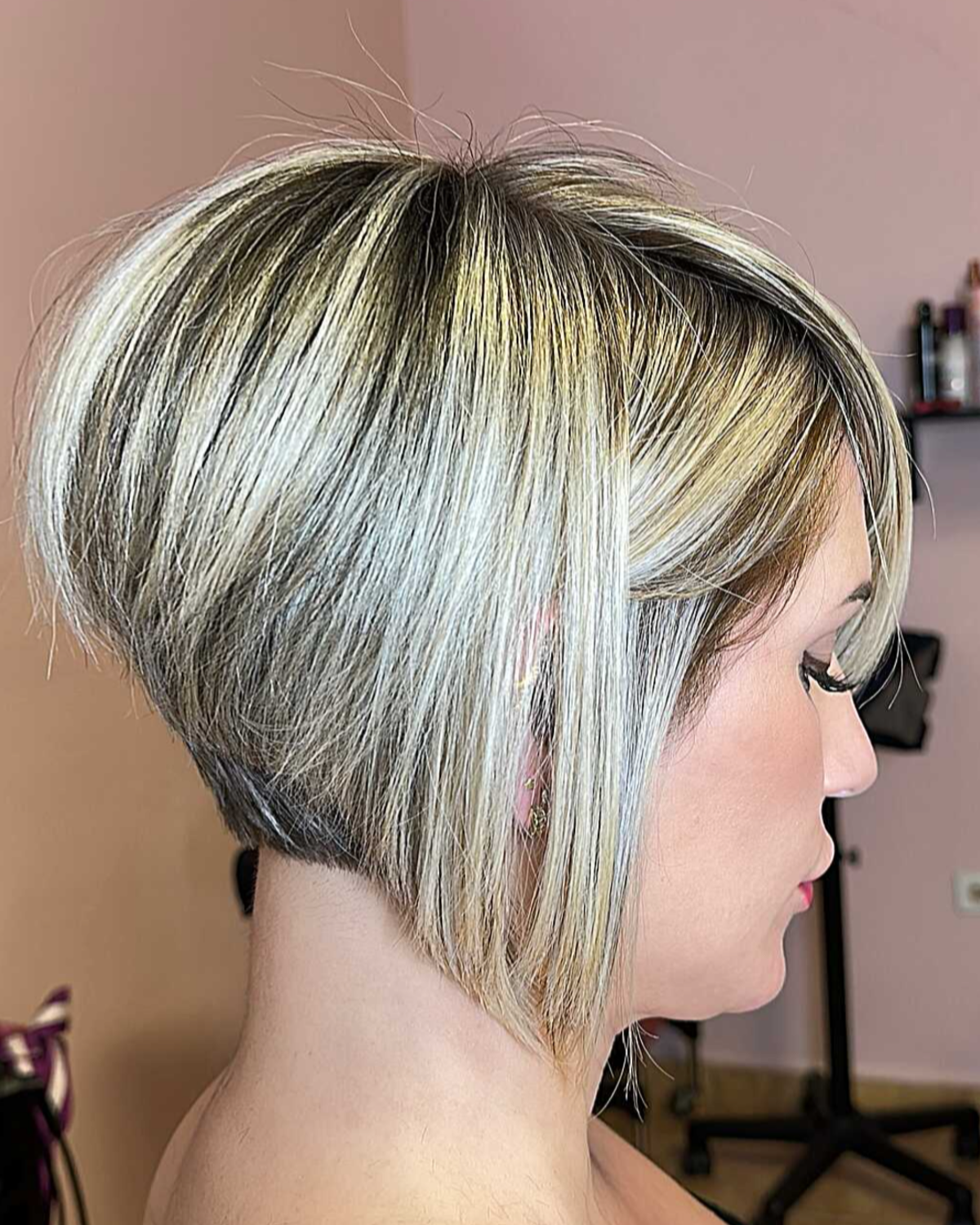
The back sits close to the head with a clean rounded curve, while the top and sides are feathered into softer, lighter movement. Silver and beige tones blend through the layers, which keeps the shape from looking heavy. A stylist can fine-tune how much stacking sits at the crown if you want the roundness to read stronger or softer.
Textured Crop With Fringe
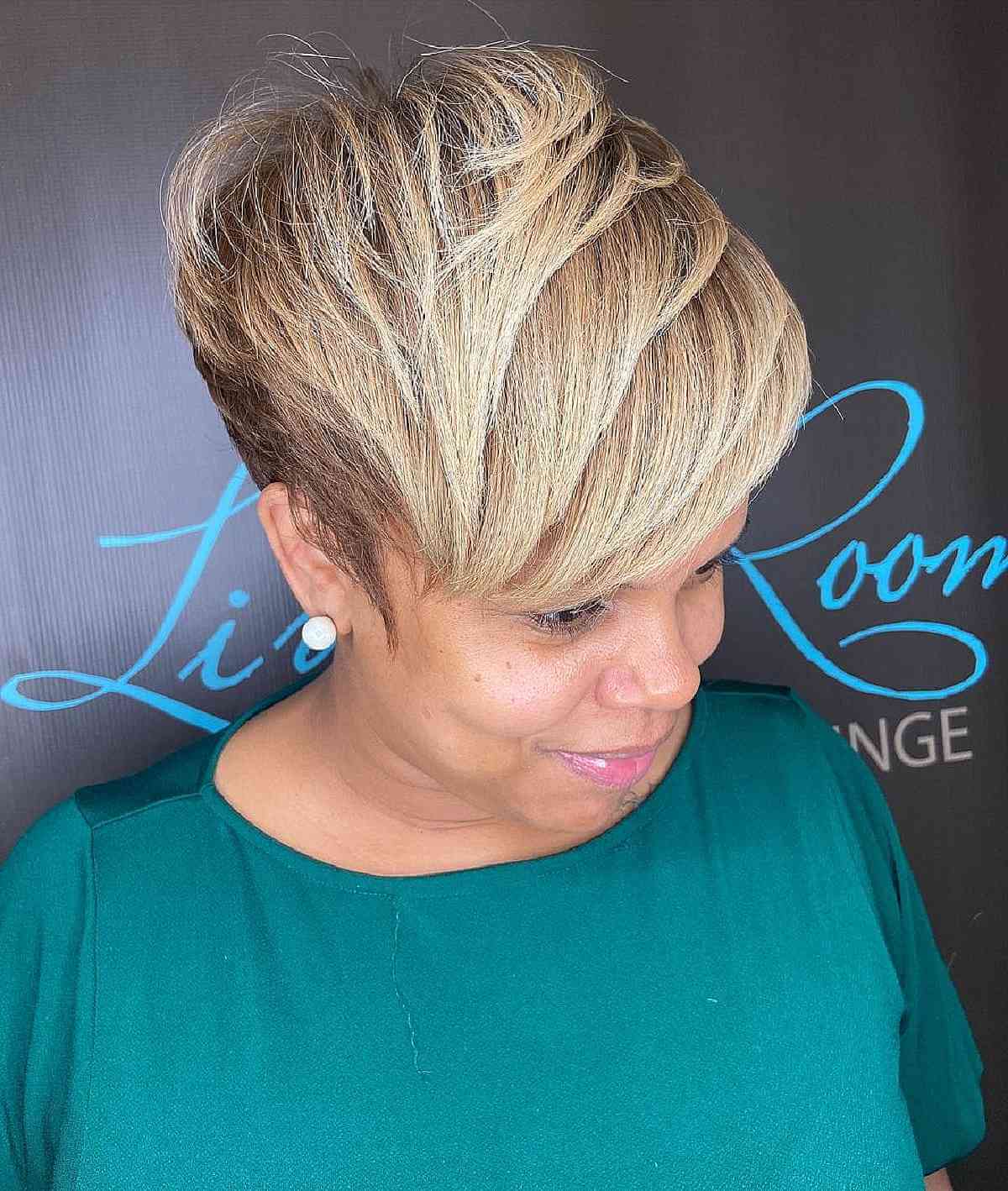
This cropped style uses short sides, a fuller top, and visible texture through the crown for a lifted, directional shape. The fringe is light and forward-falling, while the color variation adds depth through the top layers. To keep the outline balanced, ask whether the longest front pieces should stay over the brow or be trimmed higher for a more open look.
Neck-Length Feathered Bob
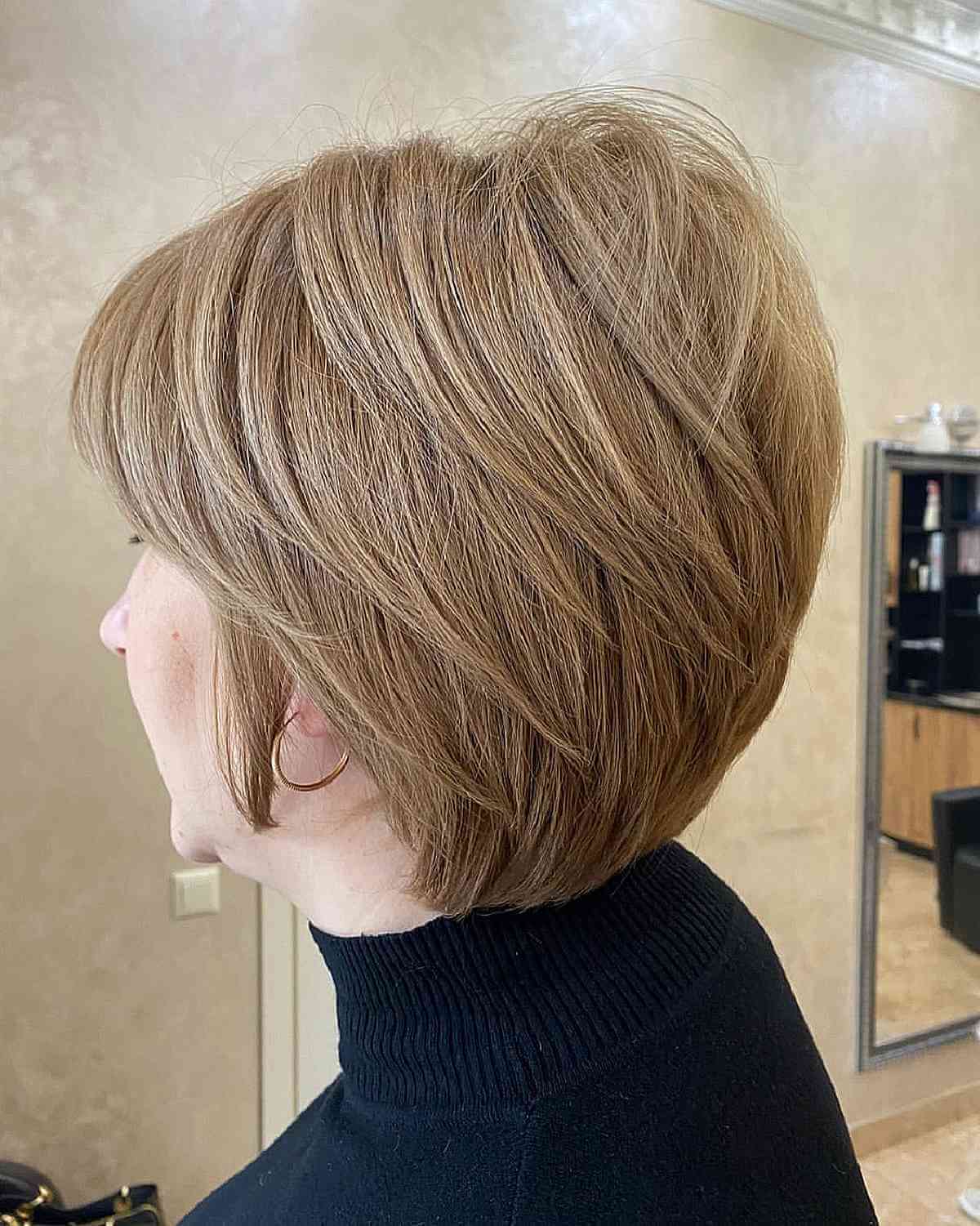
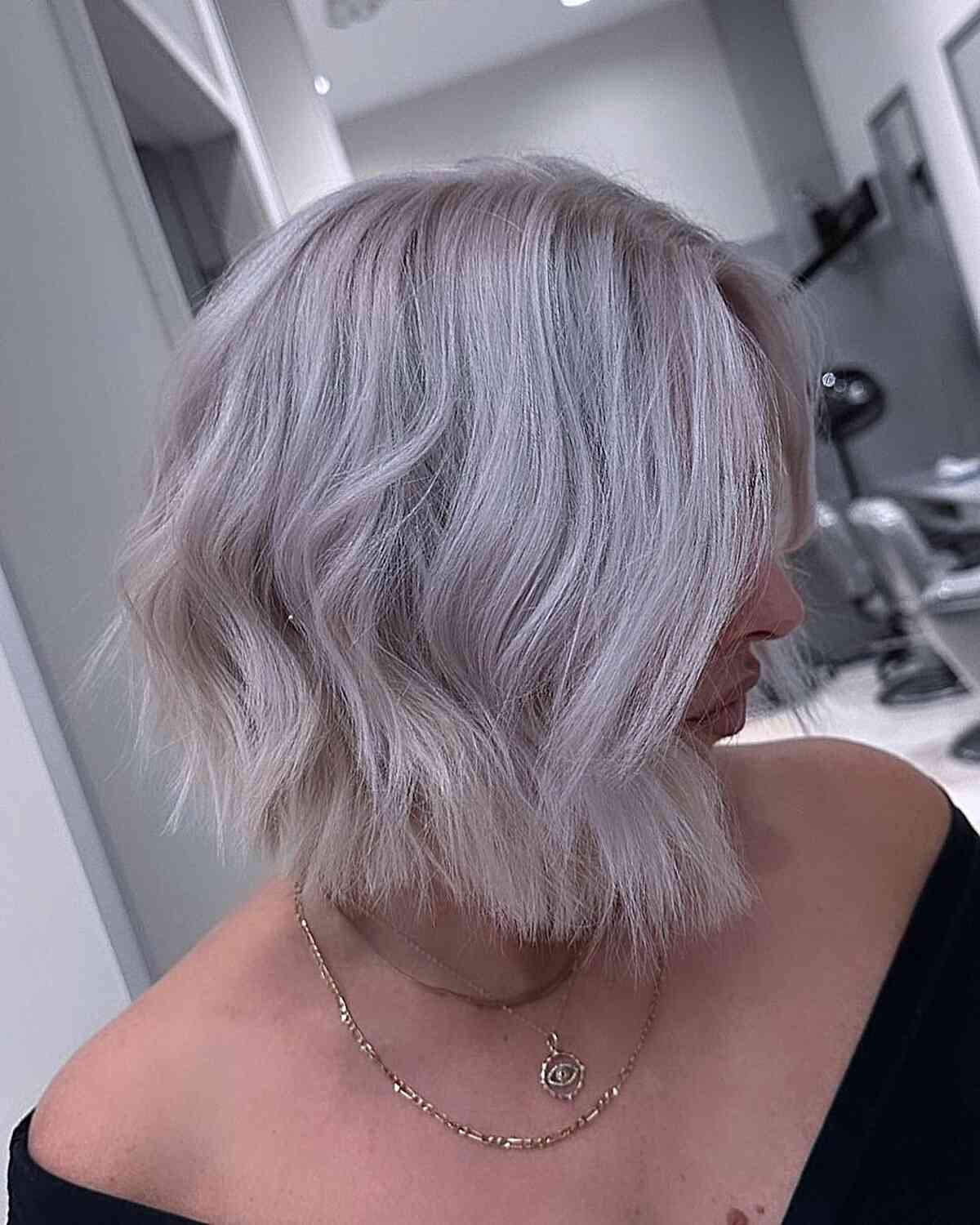
The cut brushes the neck and curves inward at the ends, giving the profile a soft, tucked shape. Layers are concentrated through the mid-lengths and top, where they create a feathered surface instead of a blunt edge. This is a useful photo to bring in if you want to discuss how much weight should stay at the nape versus the sides.
Rounded Stacked Bob Layers
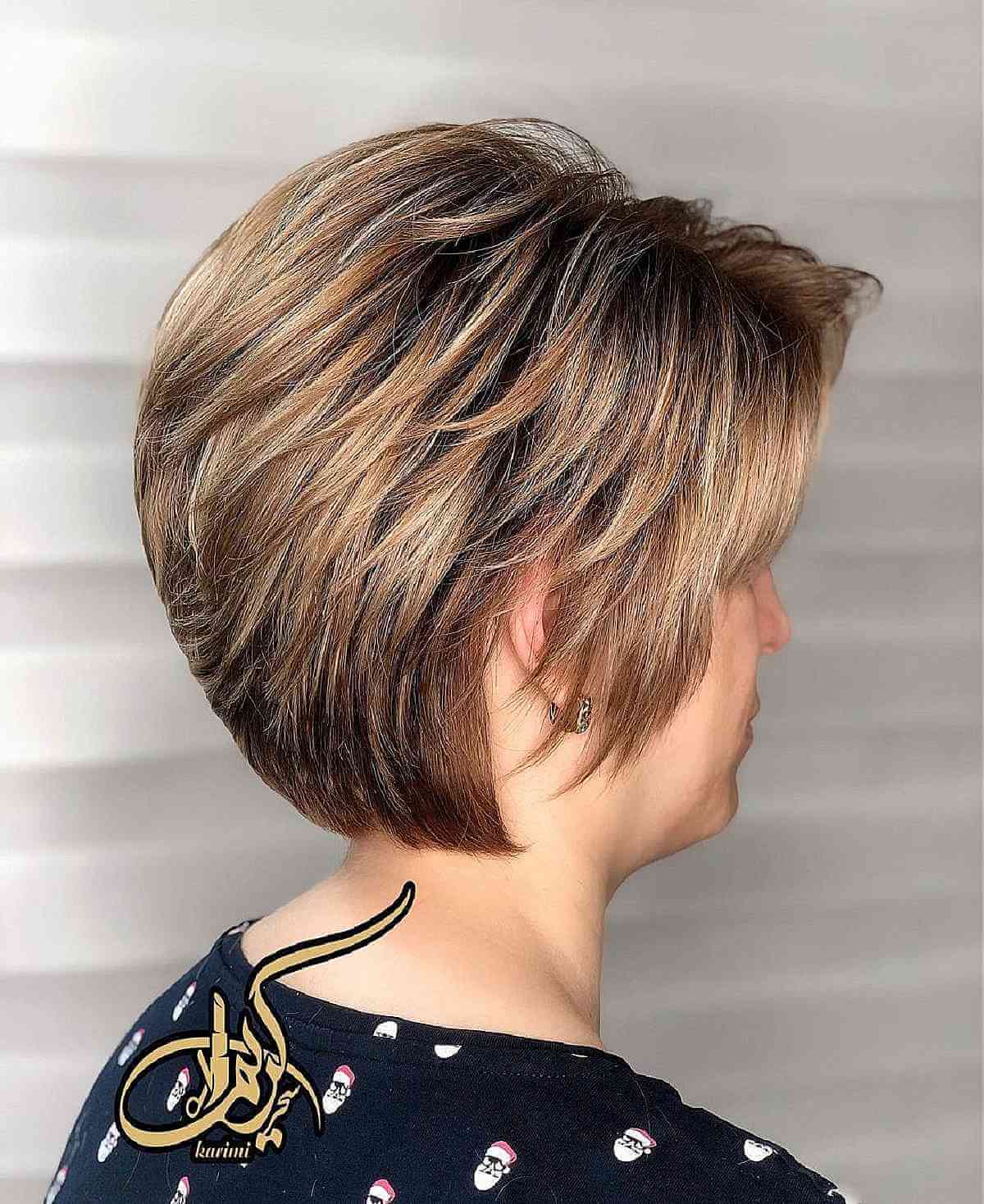
A full crown and stacked back give this bob a rounded silhouette, while the top layers are broken up to keep the shape from looking rigid. Lighter highlights run across the upper sections and emphasize the curve toward the nape. If you like this balance, ask your stylist how much internal layering will support the round shape without thinning the outline too much.
Feathered Tapered Pixie
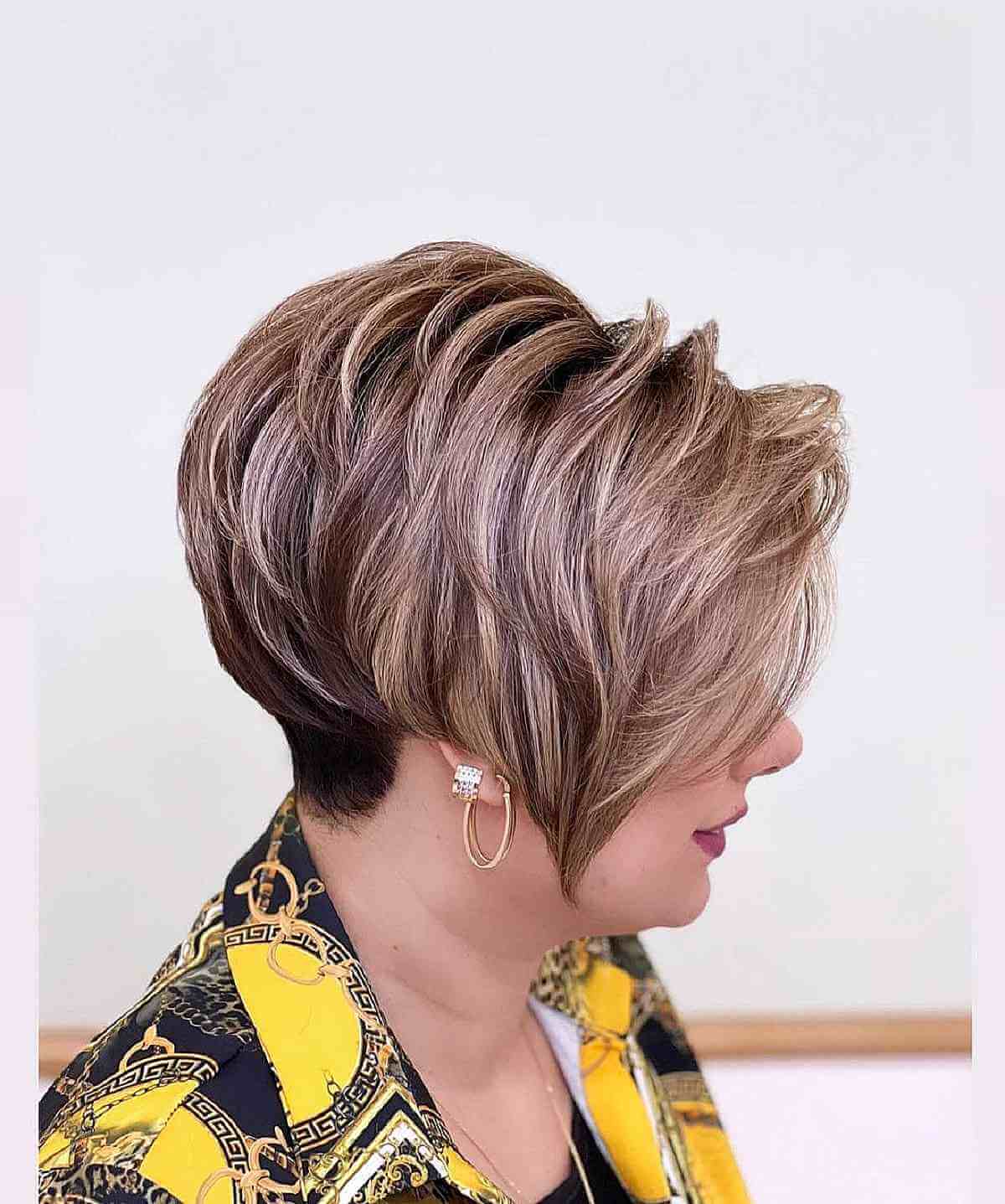
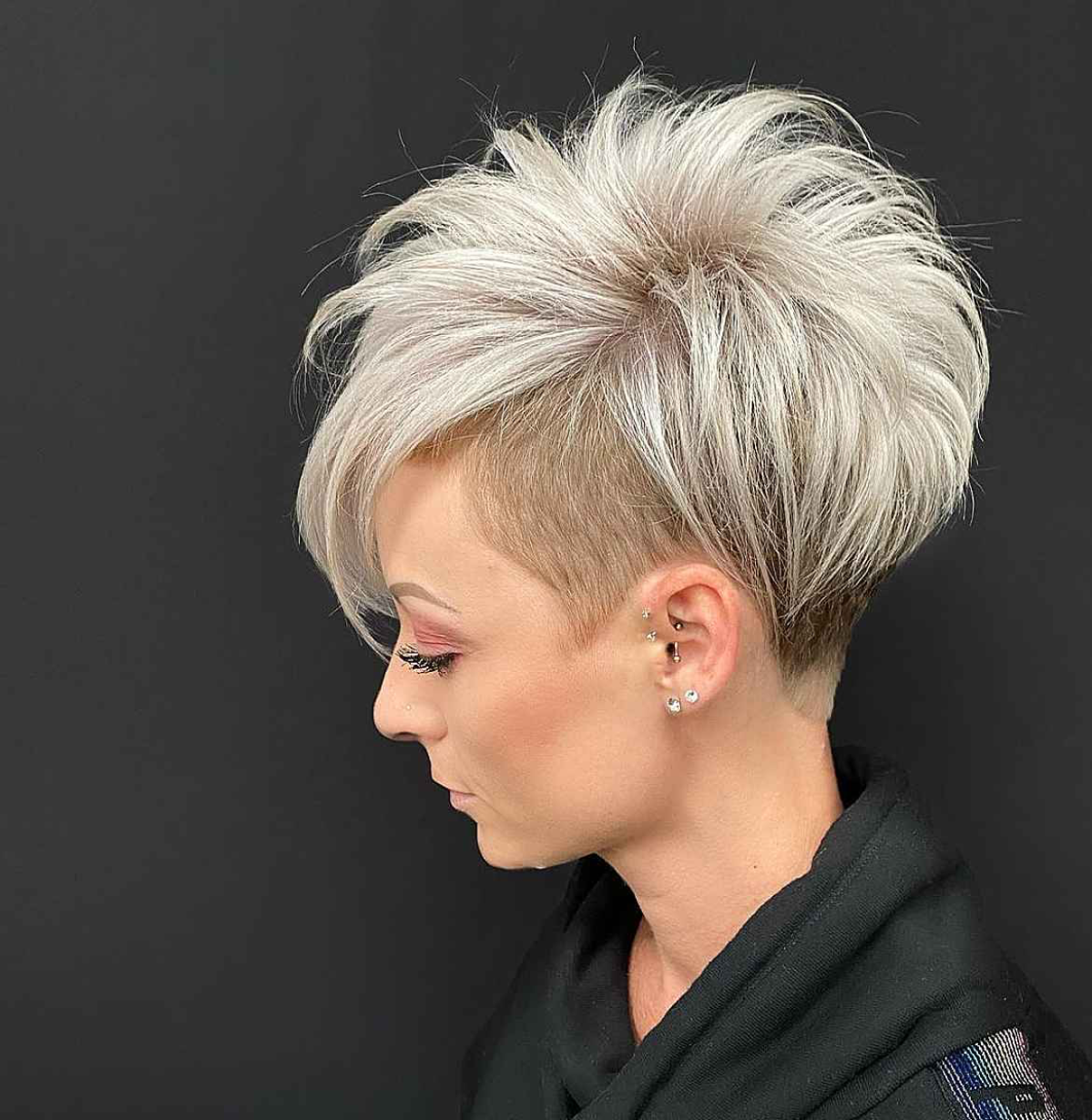
Shorter lengths are tightened through the back and below the ears, while the top stays longer and feathered enough to sweep forward. The result is a curved profile with a defined nape and soft movement through the crown. A salon consultation can focus on how tapered you want the back to feel compared with the fuller top.
Piecey Side-Swept Pixie
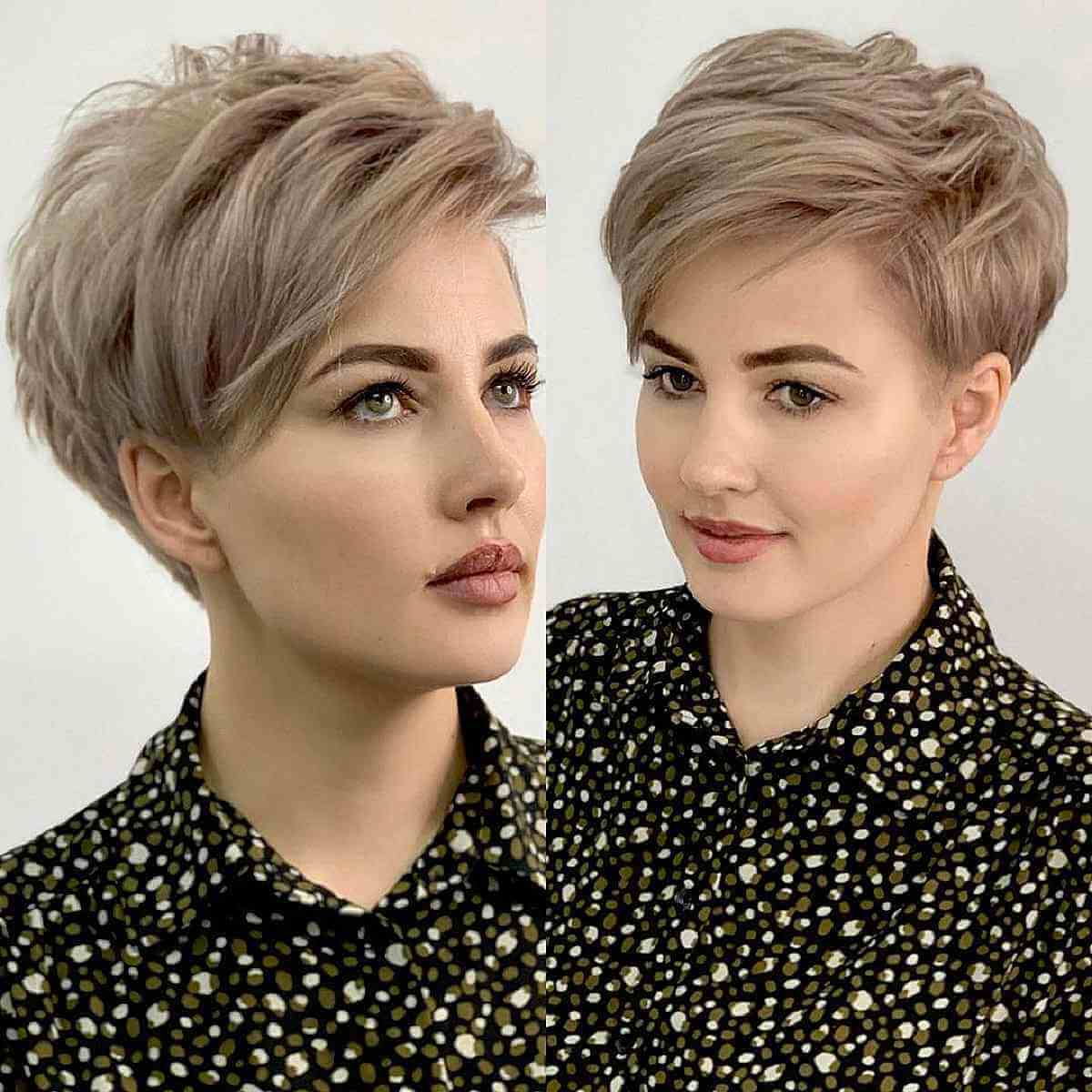
This pixie uses short sides, a longer top, and separated layers that sit in distinct, piecey sections. The front is swept diagonally across the forehead, which keeps the outline soft while still showing texture. To maintain this look, talk with your stylist about whether the top should be point-cut or left heavier so the pieces read clearly when styled.
Airy Feathered Shag Bob
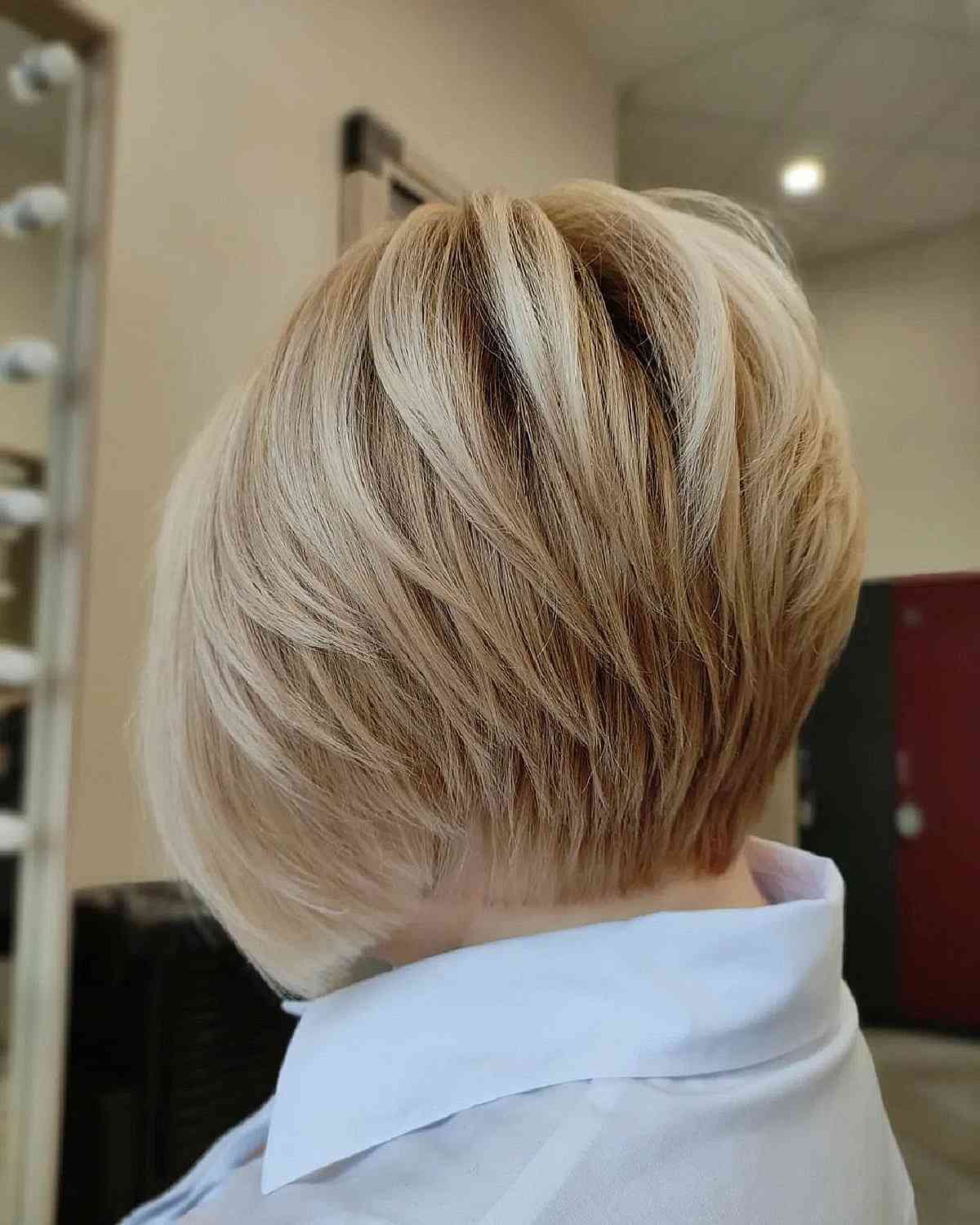
Visible layering runs from the crown through the ends, creating a light, airy shape with movement around the face and across the back. The blonde brownish dimension makes each feathered section easier to see. If you plan to wear it with volume, ask about how much layering should stay at the top so the ends don’t collapse into one solid line.
Choppy Shoulder-Skimming Layers
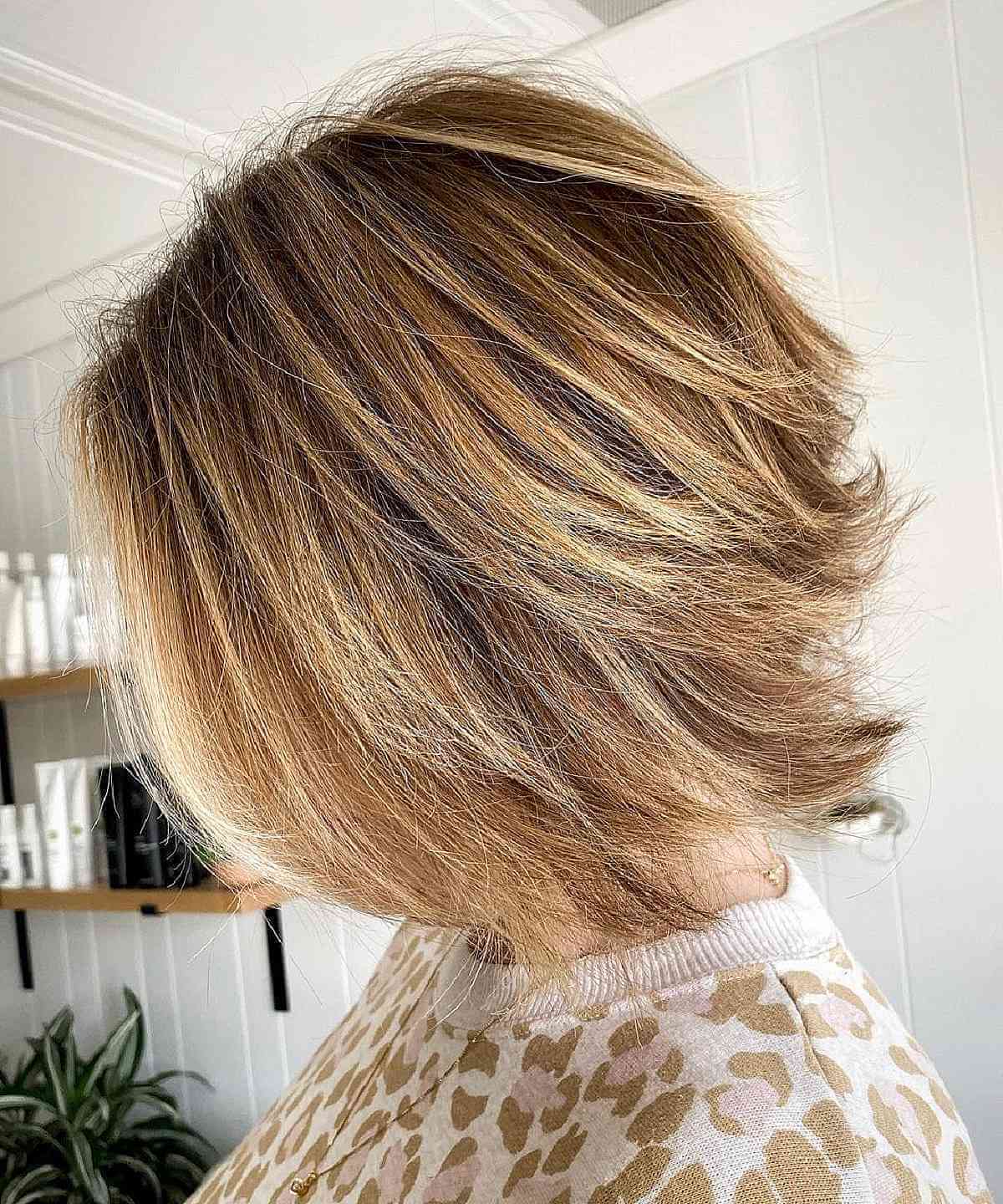
The cut falls just past the jaw and into the upper neck area, with choppy layers that flip outward at the ends. The darker roots and lighter lengths give the feathered shape more separation and visual movement. A stylist can help place the shortest layers so the perimeter keeps its soft, slightly flipped finish instead of turning boxy.
Polished Curved Bob
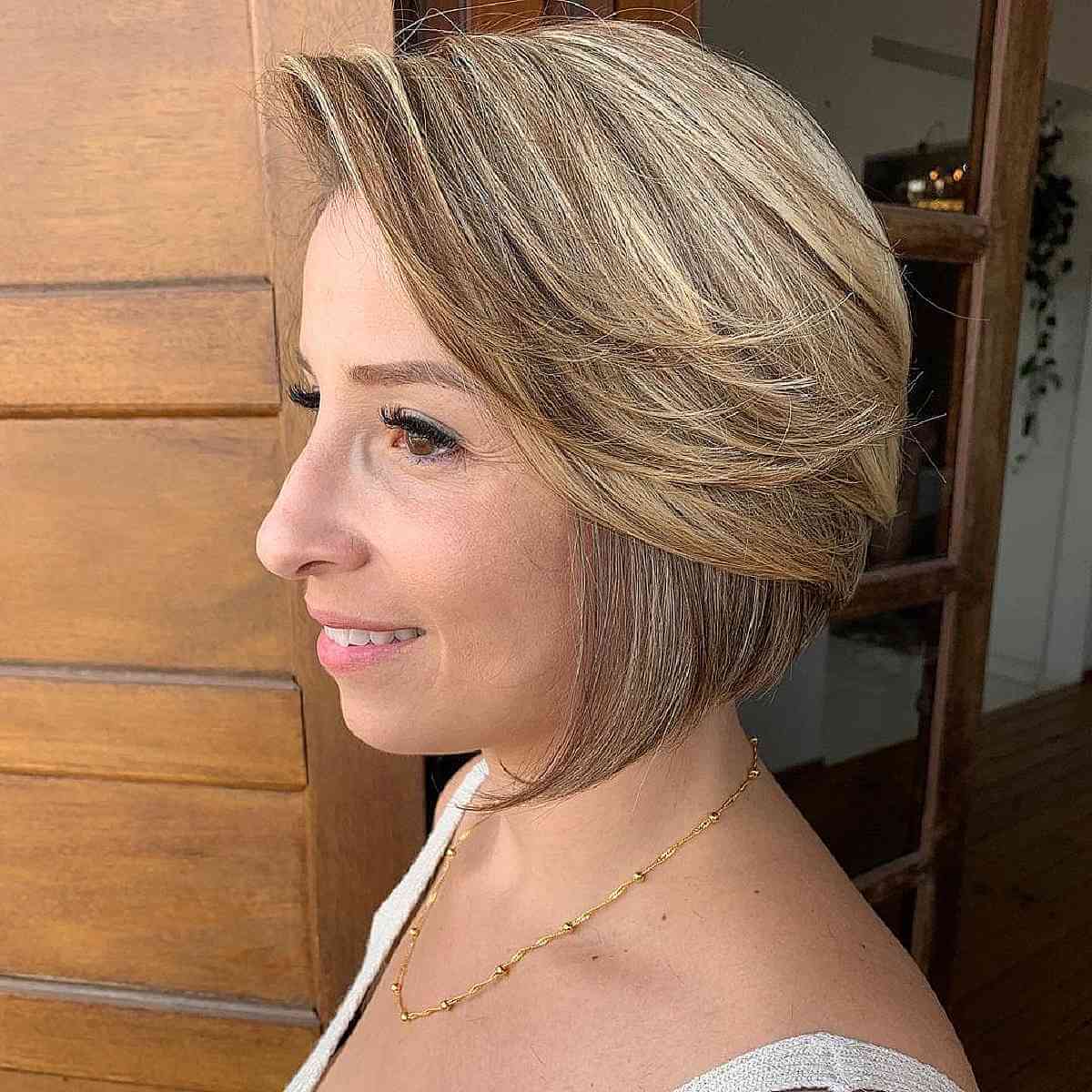
This bob has a smooth, rounded outline with a longer front section that curves along the cheek and a softly tucked nape. The top layers are brushed back and over for a polished finish that still shows some feathering in the shape. Bring this photo if you want to talk about how long the front should stay before it starts to feel more face-framing than compact.
Platinum Rounded Crop
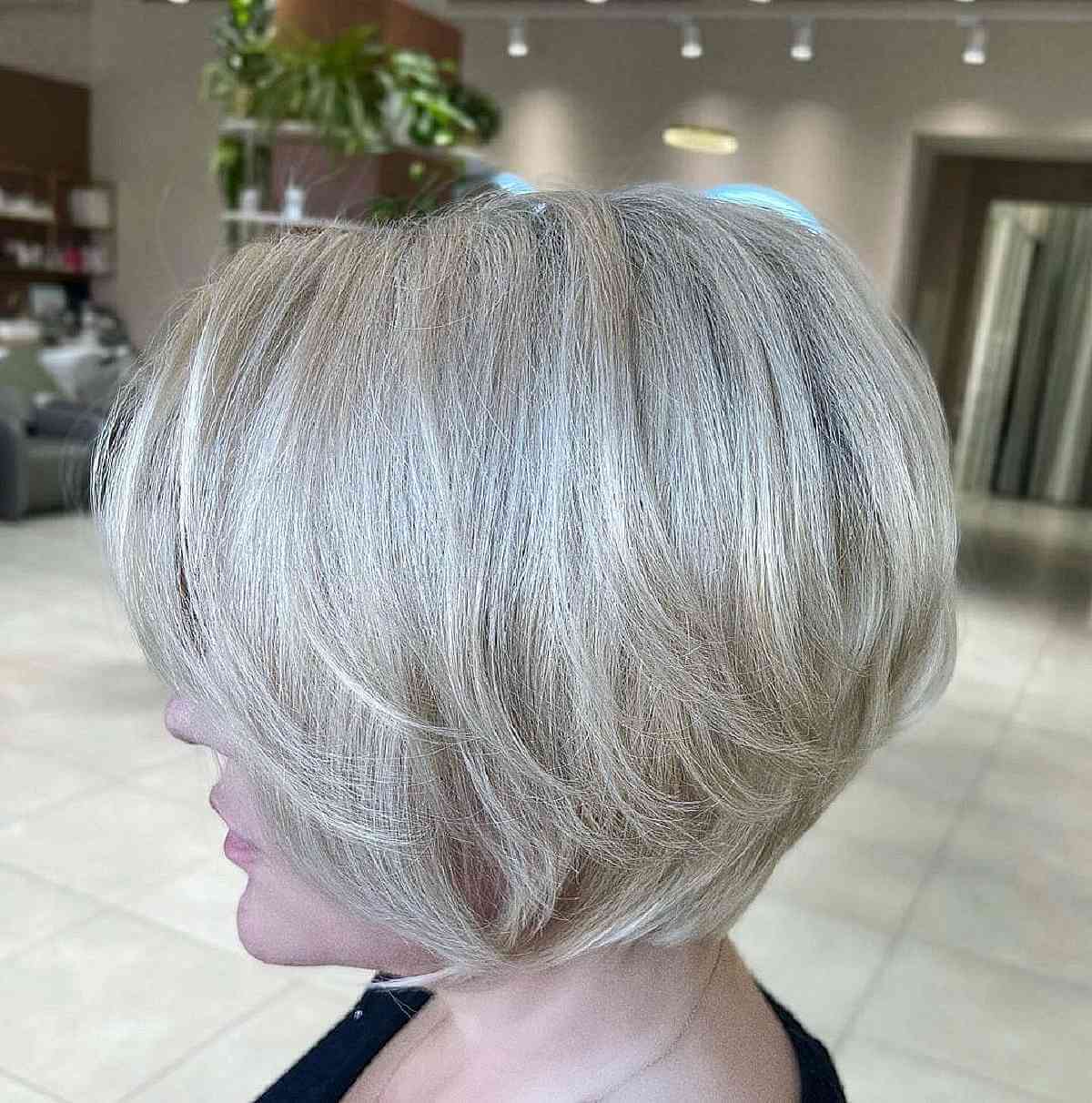
The silhouette stays compact and rounded, with a smooth surface and soft internal layering that keeps the body close to the head. Pale blonde color gives the shape a clean finish, while the ends curve inward at the nape and sides. If you like the rounded outline, ask your stylist how much weight to leave at the bottom so the shape holds its curve.
Layered Blonde Bob
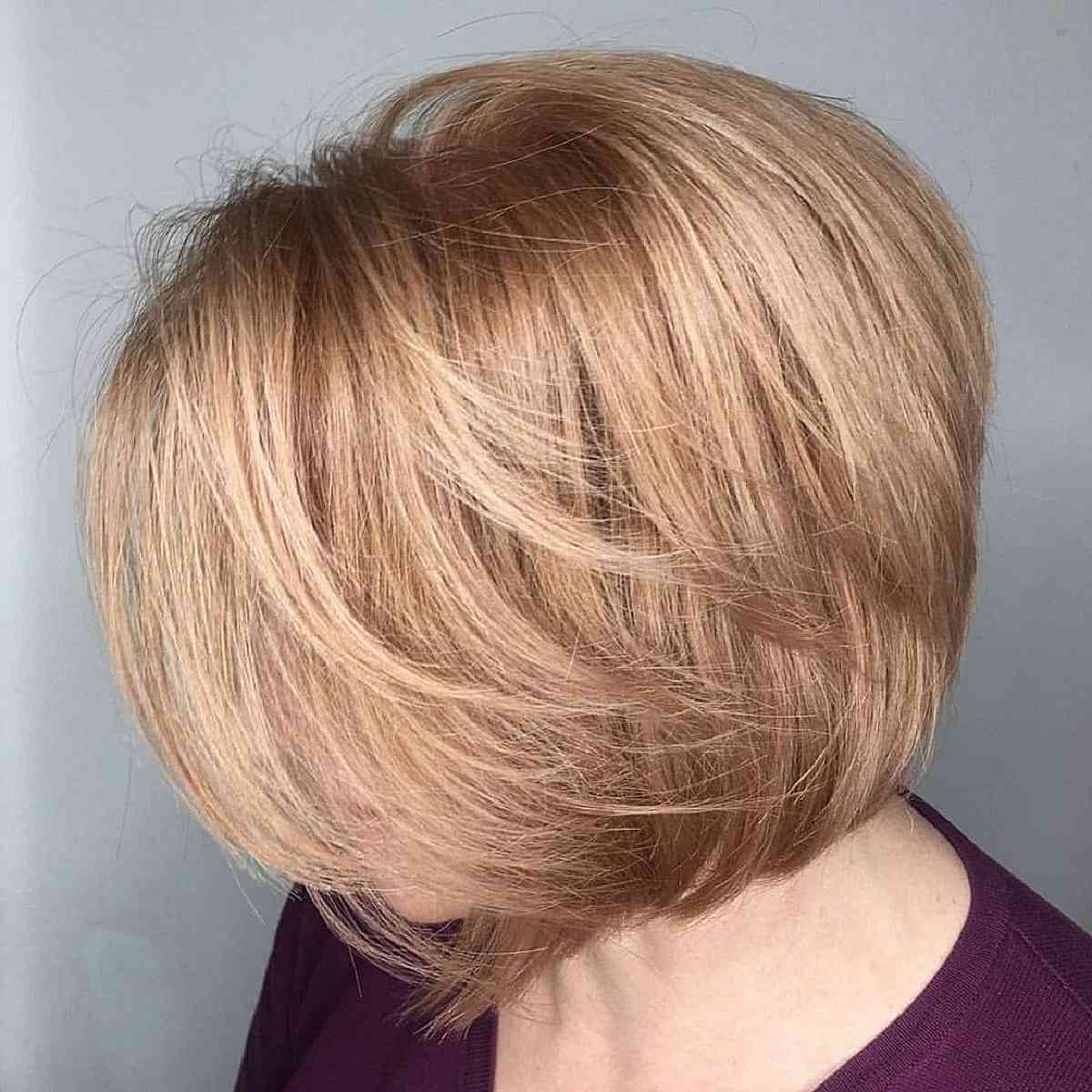
Soft layers fall through the crown and sides, creating a rounded bob with plenty of visible movement at the ends. The blonde color shifts subtly from darker roots to lighter lengths, which makes the feathered texture stand out. For upkeep, discuss whether the lowest layers should be kept longer than the top to preserve the lifted shape around the back.