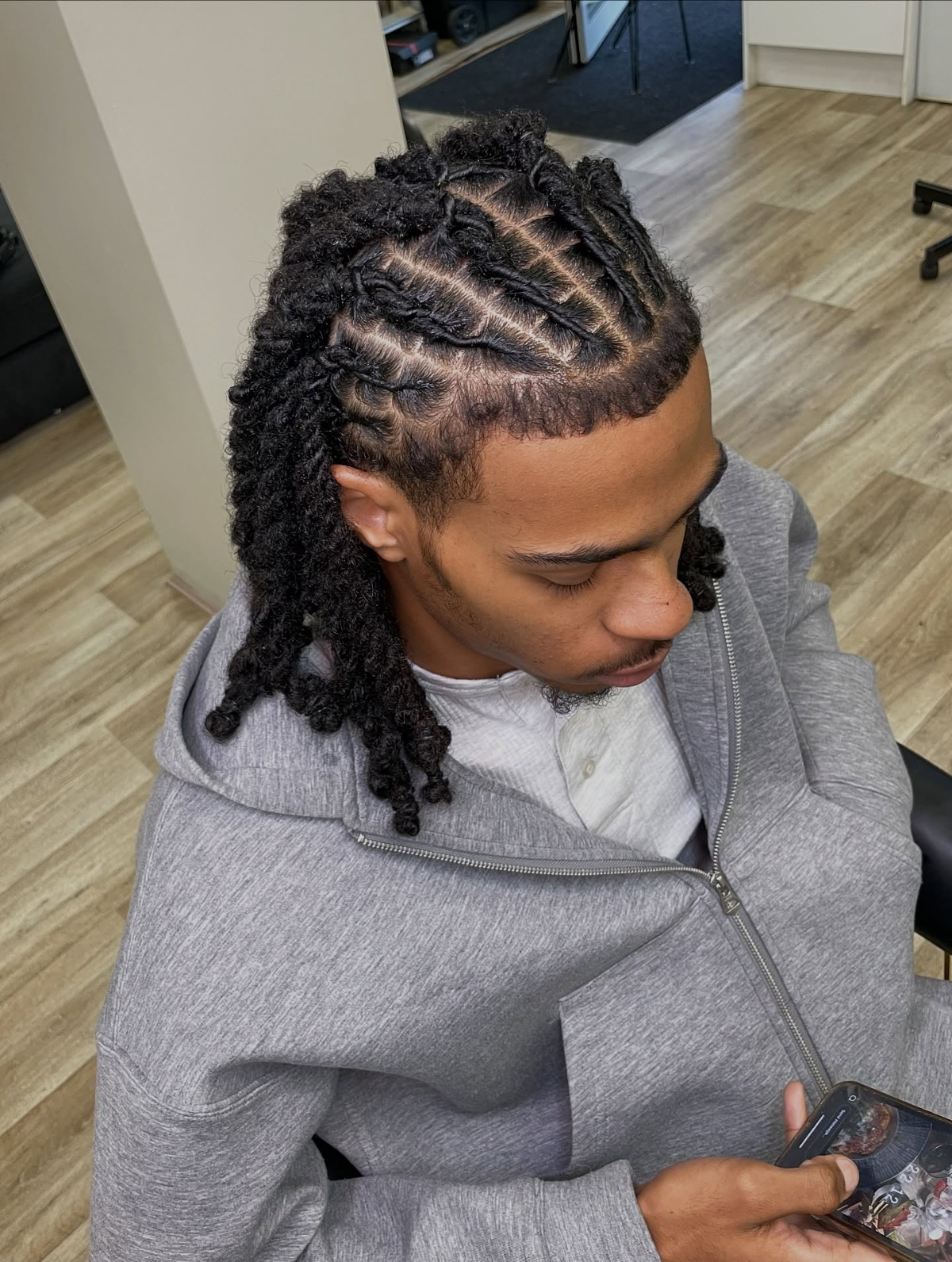
Quiff cuts can look sharply tailored, loose, or heavily textured depending on how the top is shaped and how tightly the sides are tapered. These images show a range of profiles, from compact versions with neat fades to longer, brushed styles with more movement through the fringe. Rather than chasing one formula, the useful details live in the balance between front height, side length, and finish. Below, each look is described only from what is visible, with one practical note you can bring to a stylist.
Compact Brushed Quiff Fade

Dark top hair is brushed upward and slightly back into a compact quiff with visible texture and a neat outline. The sides sit short and tapered, creating a clean contrast without losing softness around the temple area. A natural side part is faintly visible in the front styling. Ask for enough length on top to build lift while keeping the fade low and controlled.
Full Volume Skin Fade Quiff
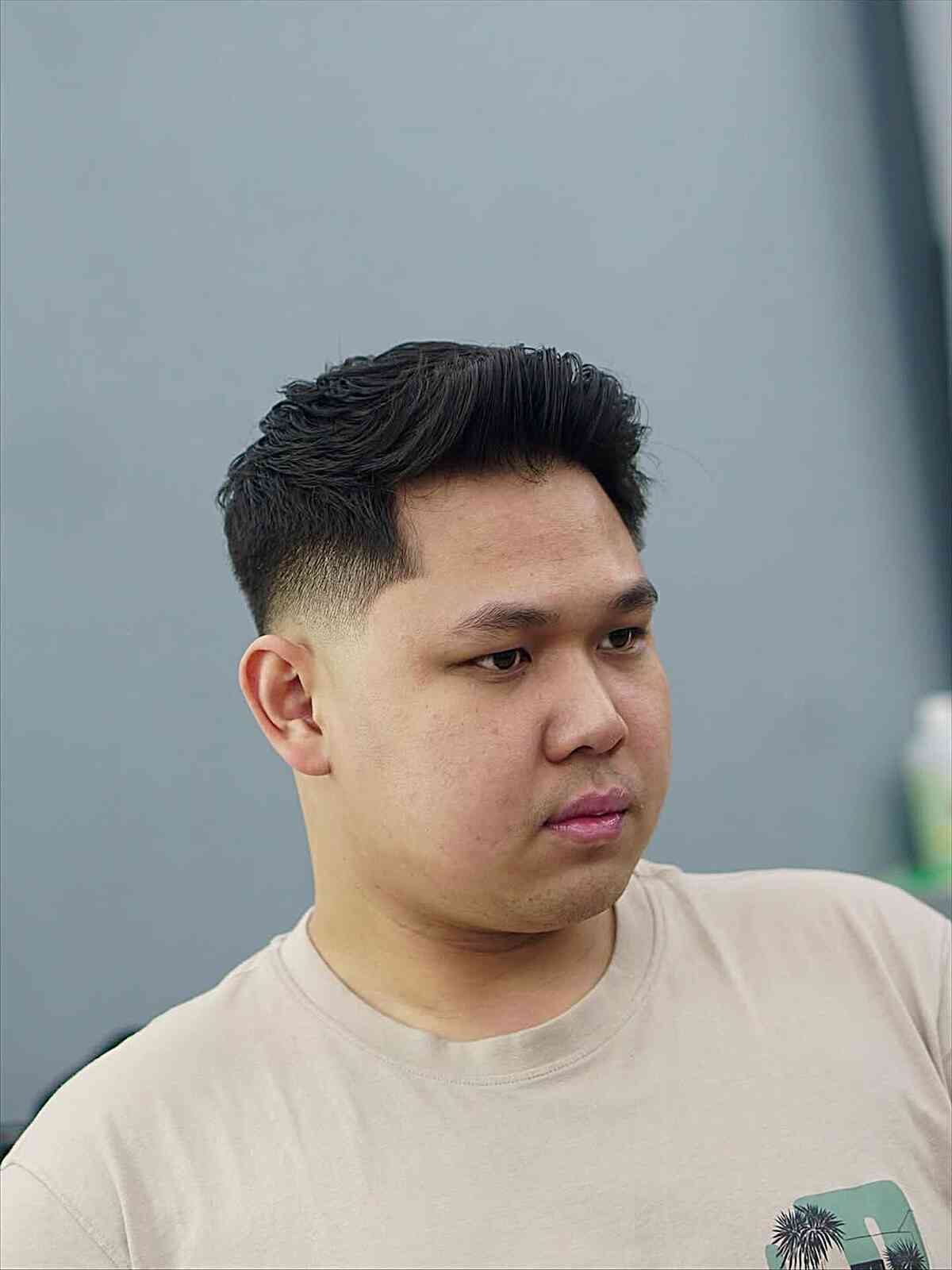
The top rises high and forward before sweeping back, giving the quiff a fuller silhouette and a smooth, rounded front edge. The sides are taken down close to the skin and blended tightly beneath the heavier top. The finish looks polished with some soft movement through the crown. A barber can adjust the front length if you want more lift or a flatter profile.
Vintage Sculpted Quiff
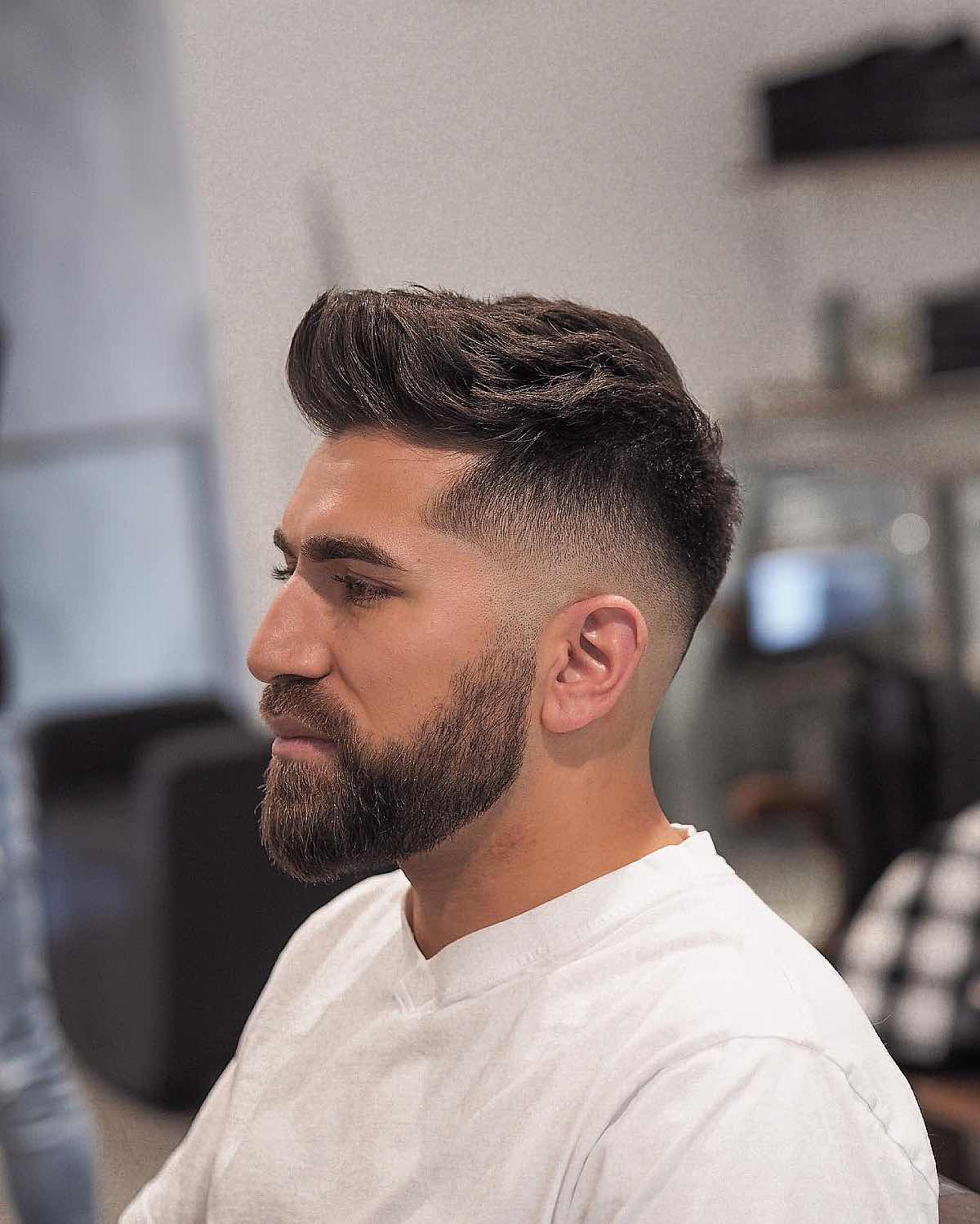
This cut features a tall front ridge and a broader, swept-back top that reads more classic than casual. The sides are faded high and clean, while the top keeps enough length for a molded shape with subtle separation. The beard is groomed to a tidy edge, which reinforces the overall structure. Bring a reference for the front height so the shape stays balanced.
Disconnected Blowback Quiff
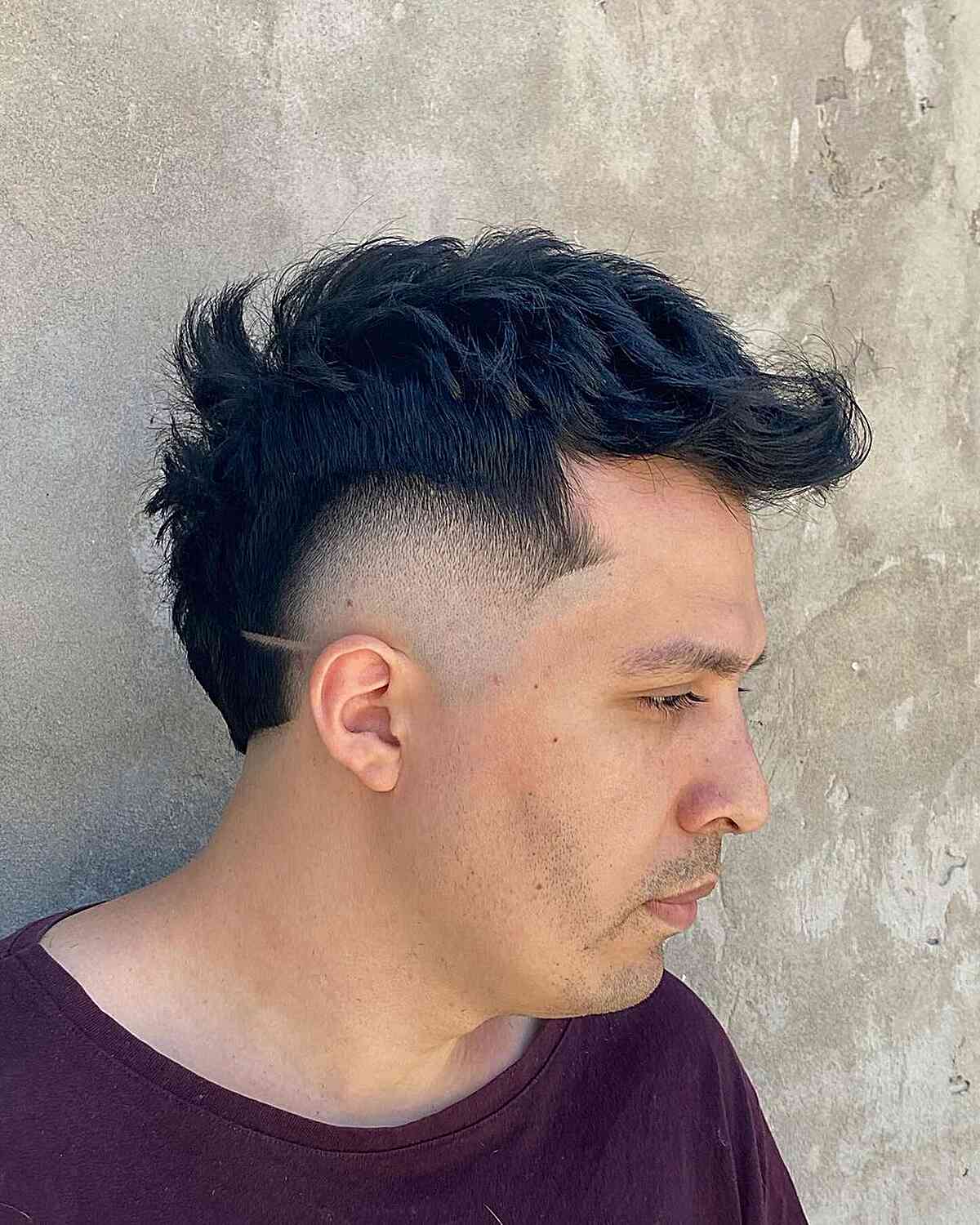
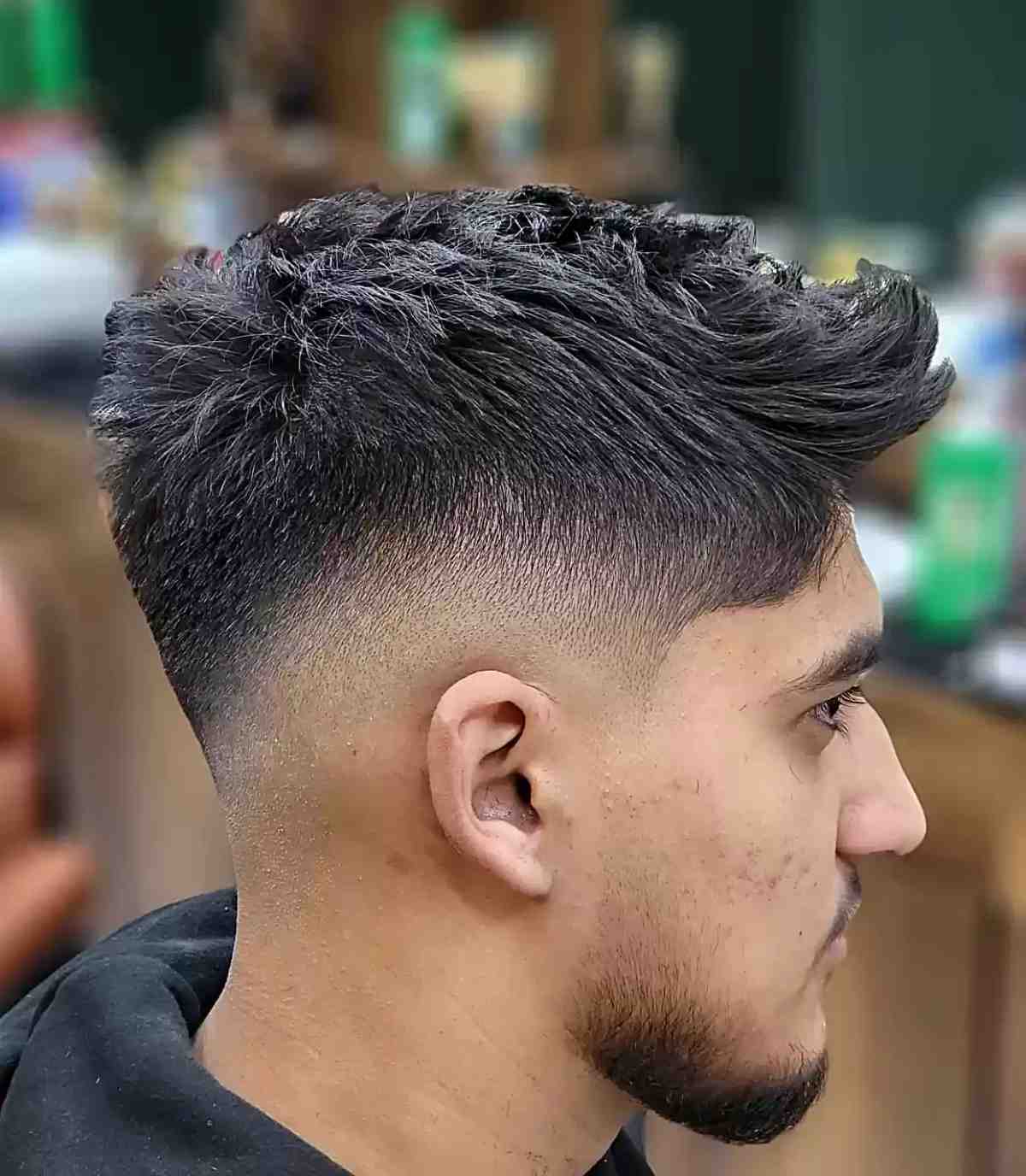
Heavy texture sits on top with a lifted, windblown finish, while the sides drop sharply into a high skin fade. A hard disconnect makes the top look especially dense and dramatic from the side. The front lifts into a loose quiff rather than a tight roll. If you like the contrast, ask for a strong separation line and enough top length to keep movement.
Side Swept Quiff Part
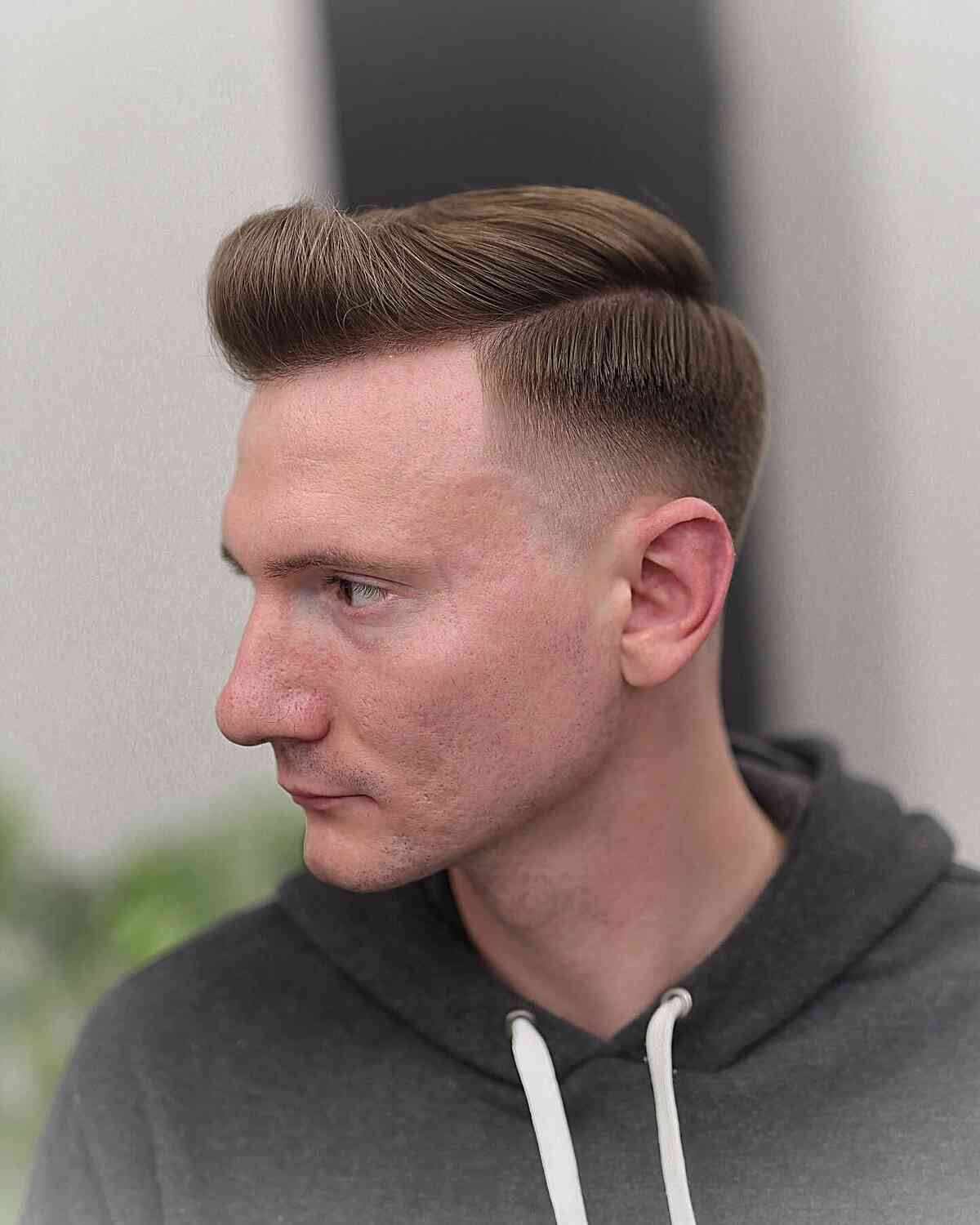
A defined side part directs the top into a smooth, side-swept quiff with a clean front wave. The sides are closely tapered and the top stays neatly controlled, with enough length to hold direction across the head. The finish is tidy and precise rather than messy. Show your stylist the part placement you want, since the line changes the whole shape here.
Salted Crop Quiff
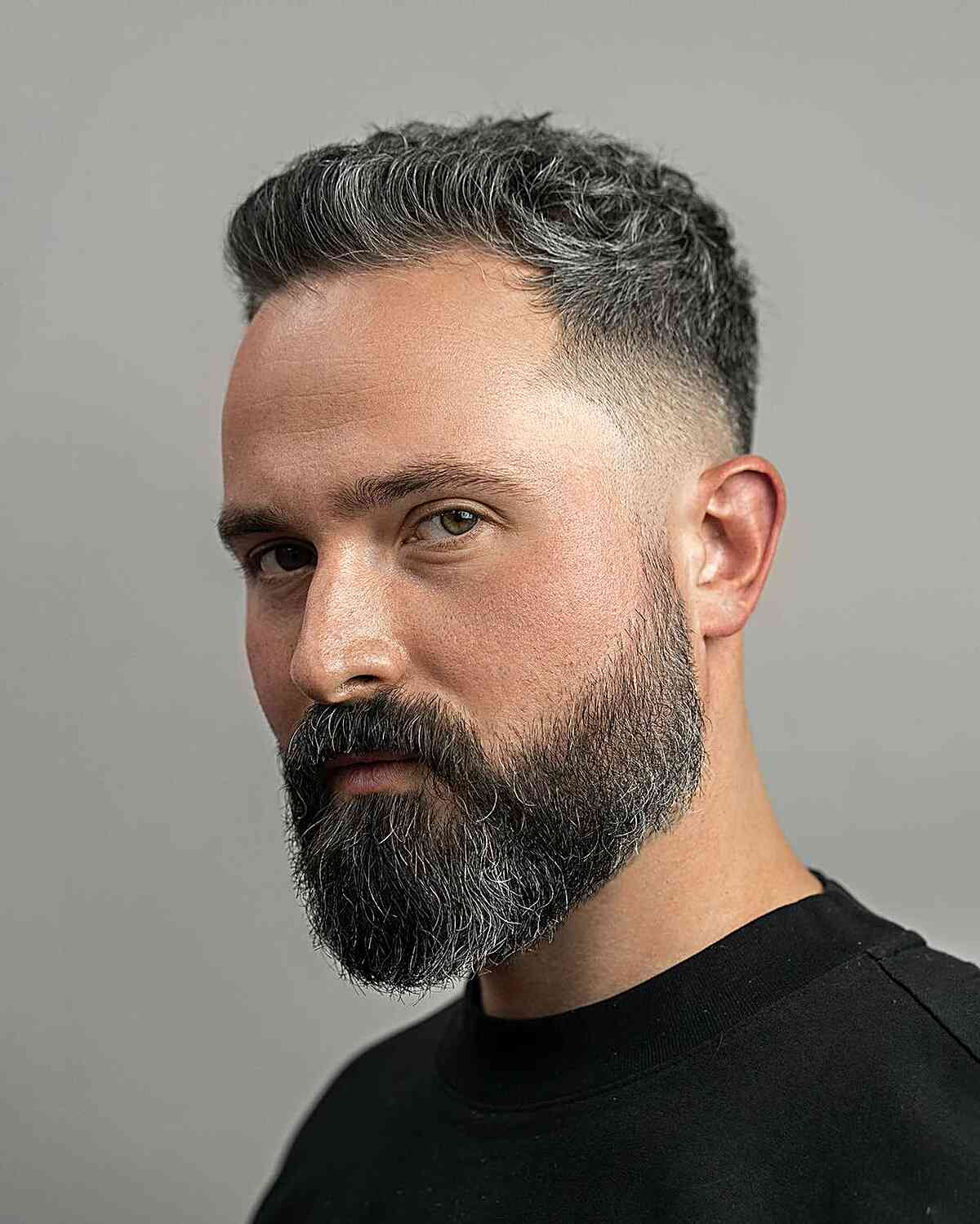
Short hair on top is styled upward with a lightly textured quiff and a soft forward edge. The sides fade cleanly down to the skin, while the color reads dark with silvery strands visible through the top and beard area. The result feels compact and tidy from every angle. A matte product would suit this shape if you want separation without shine.
High-Contrast Side Quiff
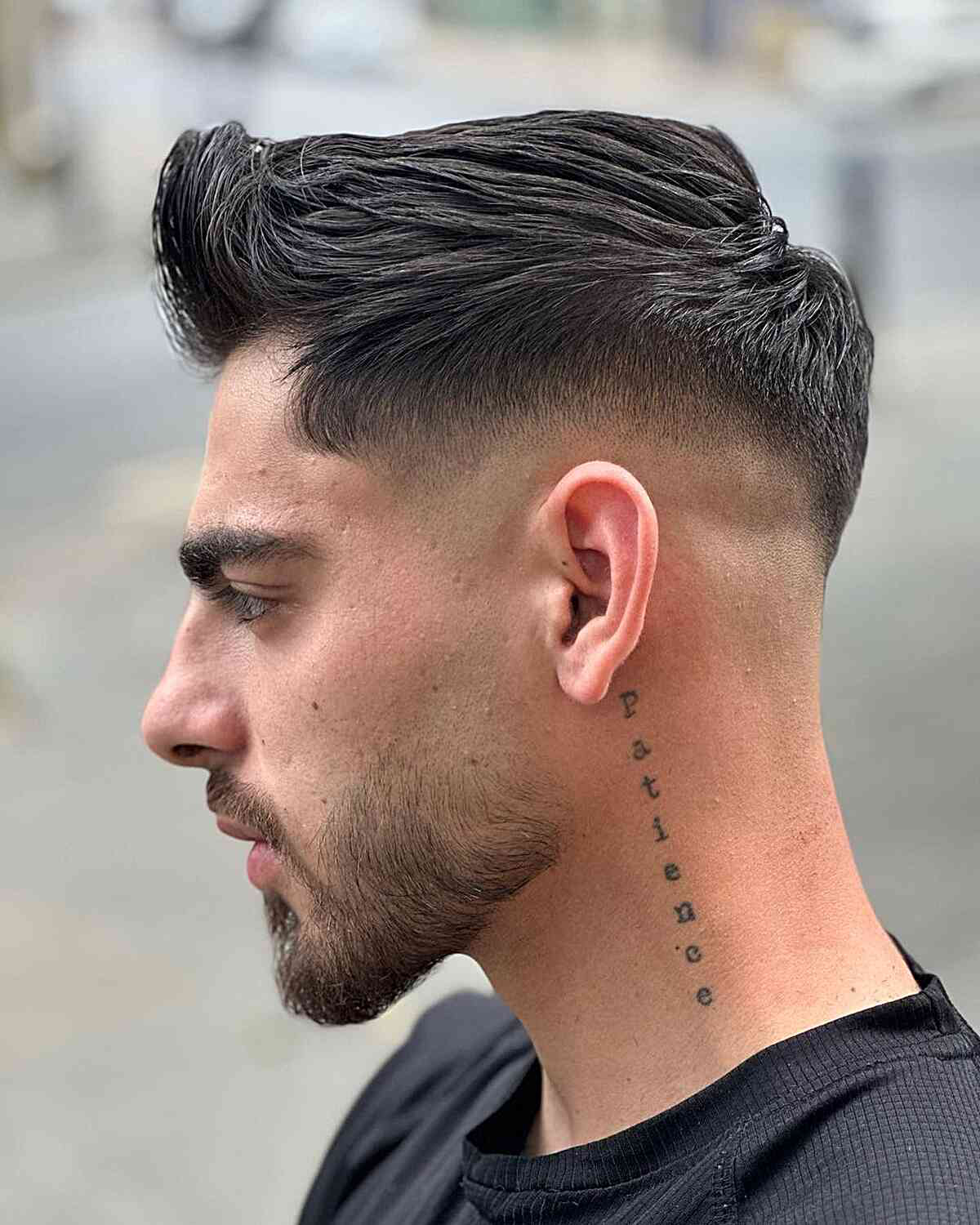
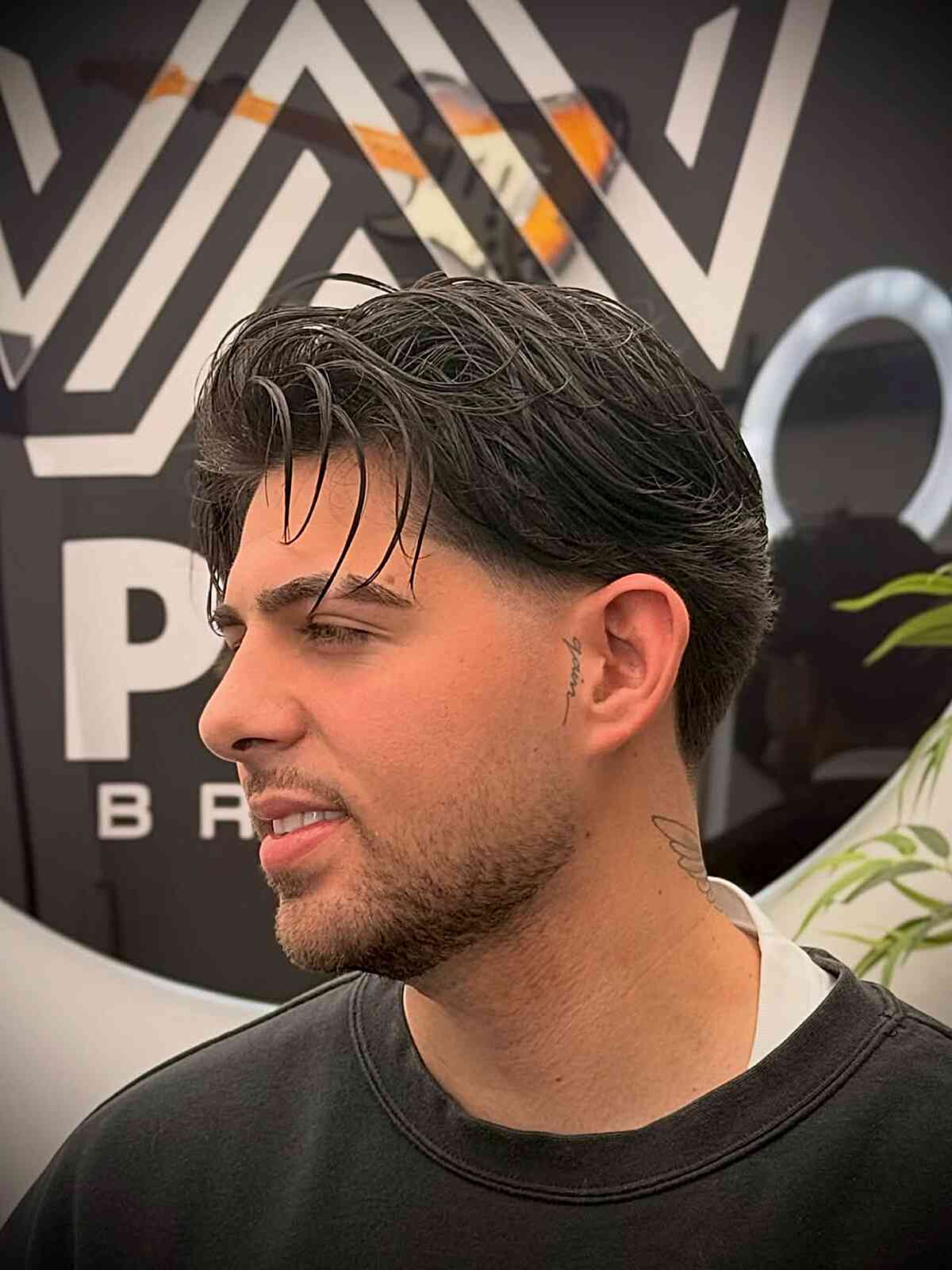
The top is swept over in a broad wave with clear height at the front and a smooth curve through the crown. Below it, the fade drops very low and clean, leaving a sharp boundary between top and sides. The beard is edged with a rounded outline that matches the haircut’s crisp profile. Keep the top long enough to preserve that side-swept ridge.
Neat Textured Quiff Fade
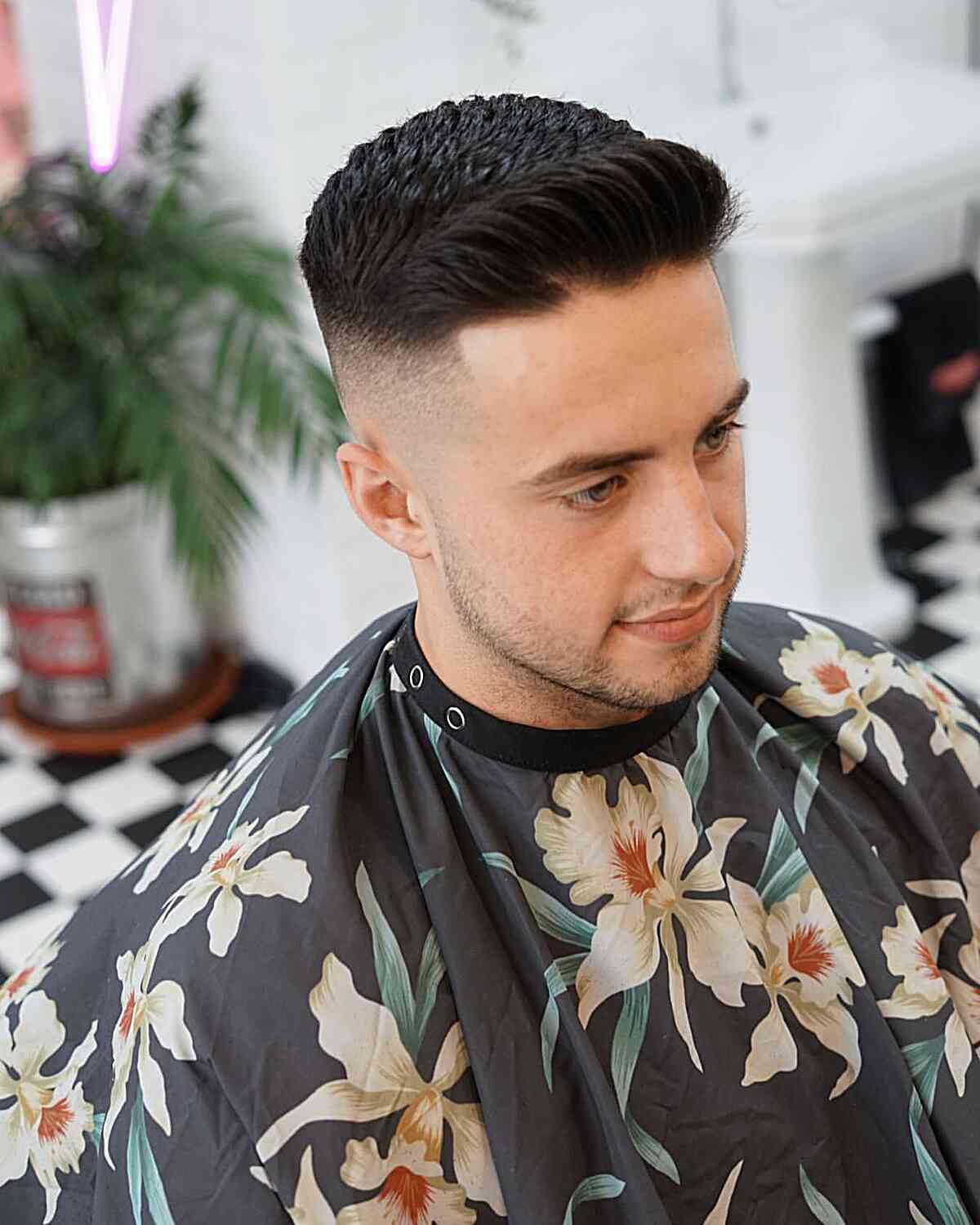
This style keeps the top short and upright with a neat, textured finish and a compact front lift. The sides are faded tight, then blended upward into a smooth transition that keeps the haircut looking clean. The shape stays controlled rather than tall, making the front easy to define. Ask for short length through the fringe so the quiff doesn’t collapse forward.
Crew-Inspired Front Quiff
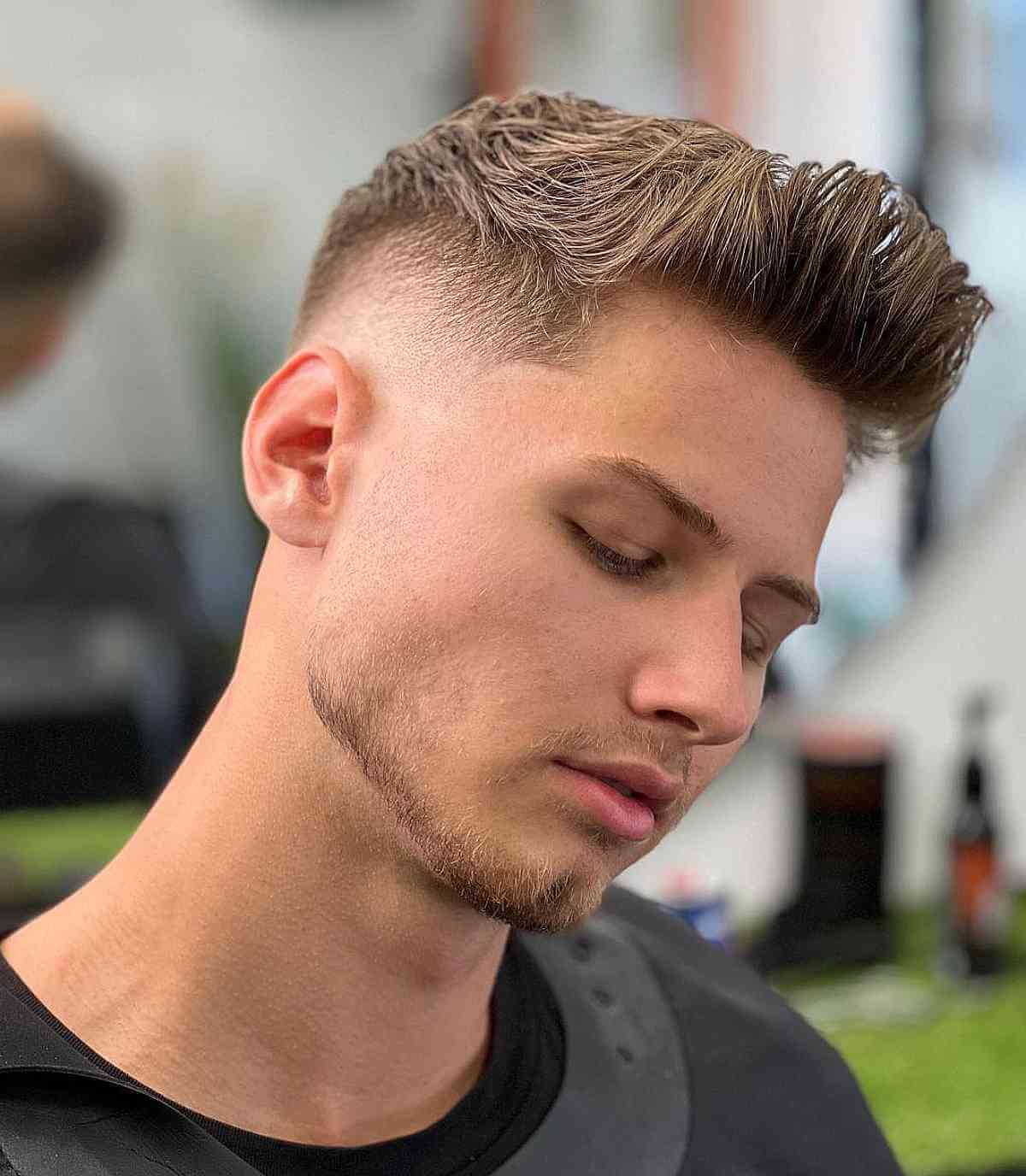
A close-cut base is paired with a raised front section, so the haircut reads like a crew cut with extra volume at the hairline. The top is short but styled upward, and the sides fade down smoothly for a streamlined profile. The overall finish is tidy and light. If you want this effect, ask for extra length only in the front third.
Loose Curved Quiff
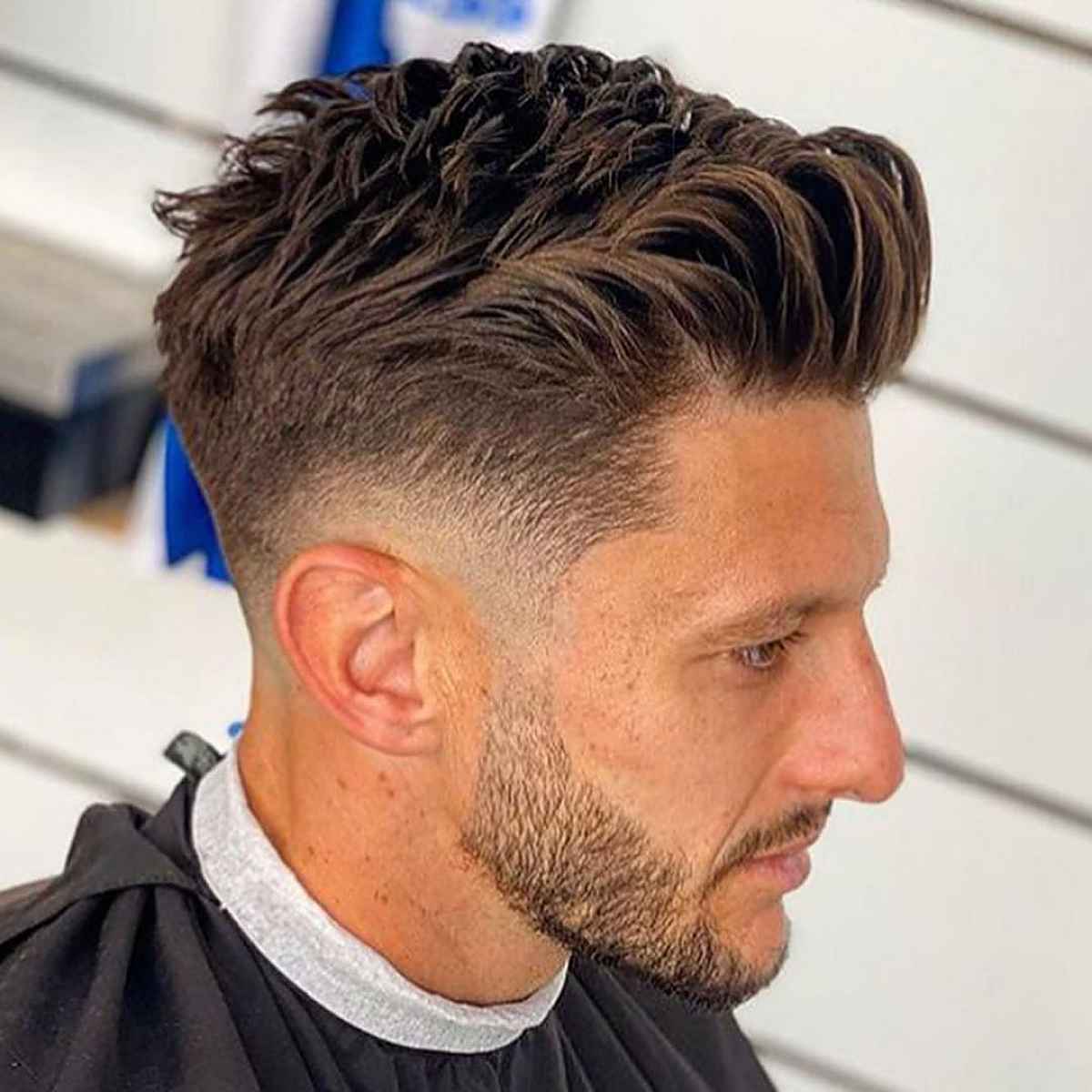
The top is longer and more relaxed, with a curved sweep that moves from the front into a soft side direction. The sides are faded low and tight, leaving the crown volume as the main feature. Texture is visible through the lifted top, giving the style a less rigid finish. A stylist can leave more weight in front if you want a fuller arc.